
World Cup
Plus: Three of the top five World Cup scorers are still playing — can you name the other two?
You’re reading Boston.com’s World Cup 2026 newsletter. Sign up for everything you need to know about the tournament, including watch parties and things to do around Massachusetts, tickets and transportation options, and more.
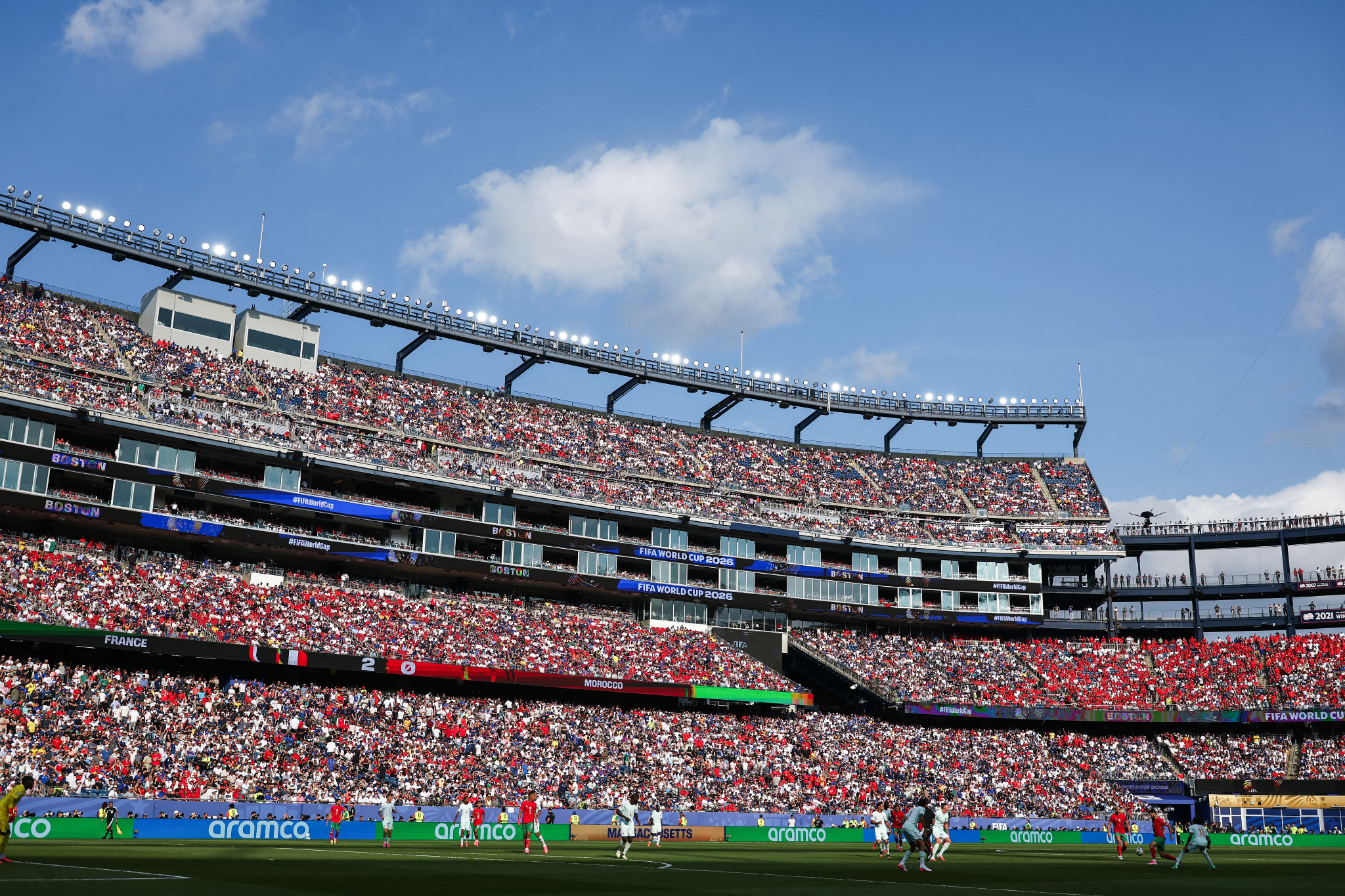
The grass field has already been ripped out, and the Gillette Stadium signs have re-emerged as “Boston Stadium” becomes a term consigned to the pages of history.
The Boston World Cup experience is officially over, with France emerging victorious in Thursday’s quarterfinal matchup, the last of the seven games held in Foxborough. The grass field has already been ripped out, and the Gillette Stadium signs have re-emerged as “Boston Stadium” becomes a term consigned to the pages of history.
It marks the end of an eventful chapter for the area. From the pre-tournament local drama to the arrival of the Scots, Norwegians, Haitians, and other nationalities who were almost universally well regarded as guests, Boston’s involvement appeared to end on an upswing.
The takeaway for many Bostonians has been a sense of pride in the city. A SeatPick ranking of U.S. World Cup venues in late June placed “Boston Stadium” almost unbelievably at the top of the list. Between that and such joyous outcomes as Boston and Glasgow establishing a formal connection following the popularity of the Tartan Army, it has inevitably invited a few locals to set their sights on other sports projects.
“I really hope it opens it up for a possible Super Bowl here,” Foxborough resident Cal Davis told The Boston Globe’s Danny McDonald in a recent piece.
There have even been a few who have allowed the hottest of takes to bubble back to the surface from the murky depths of its 2015 demise: Maybe Boston should host the Olympics?
Without diving too far back into talking points that Bostonians would’ve been familiar with during that brief fever dream of Olympic candidacy in the first half of 2015, let’s just say hosting the World Cup is slightly different from its more sprawling sports counterpart.
For starters, a World Cup obviously involves just the sport of soccer, contained within one local stadium amid other hosts around North America. Even with those modest parameters, the event is still expected to cost Mass. taxpayers a sum approaching (and possibly exceeding) $100 million, spent mostly on MBTA and commuter rail improvements in Foxborough.
An Olympics, by contrast, involves an ever-increasing number of sports and events. Los Angeles 2028 promises to hold 36 Olympic and 23 Paralympic sports, with more than 800 competition events. It will be held in more than 40 different venues.
Los Angeles, which held the Olympics in 1932 and 1984, is also uniquely well positioned to host without having to build a substantial number of new venues.
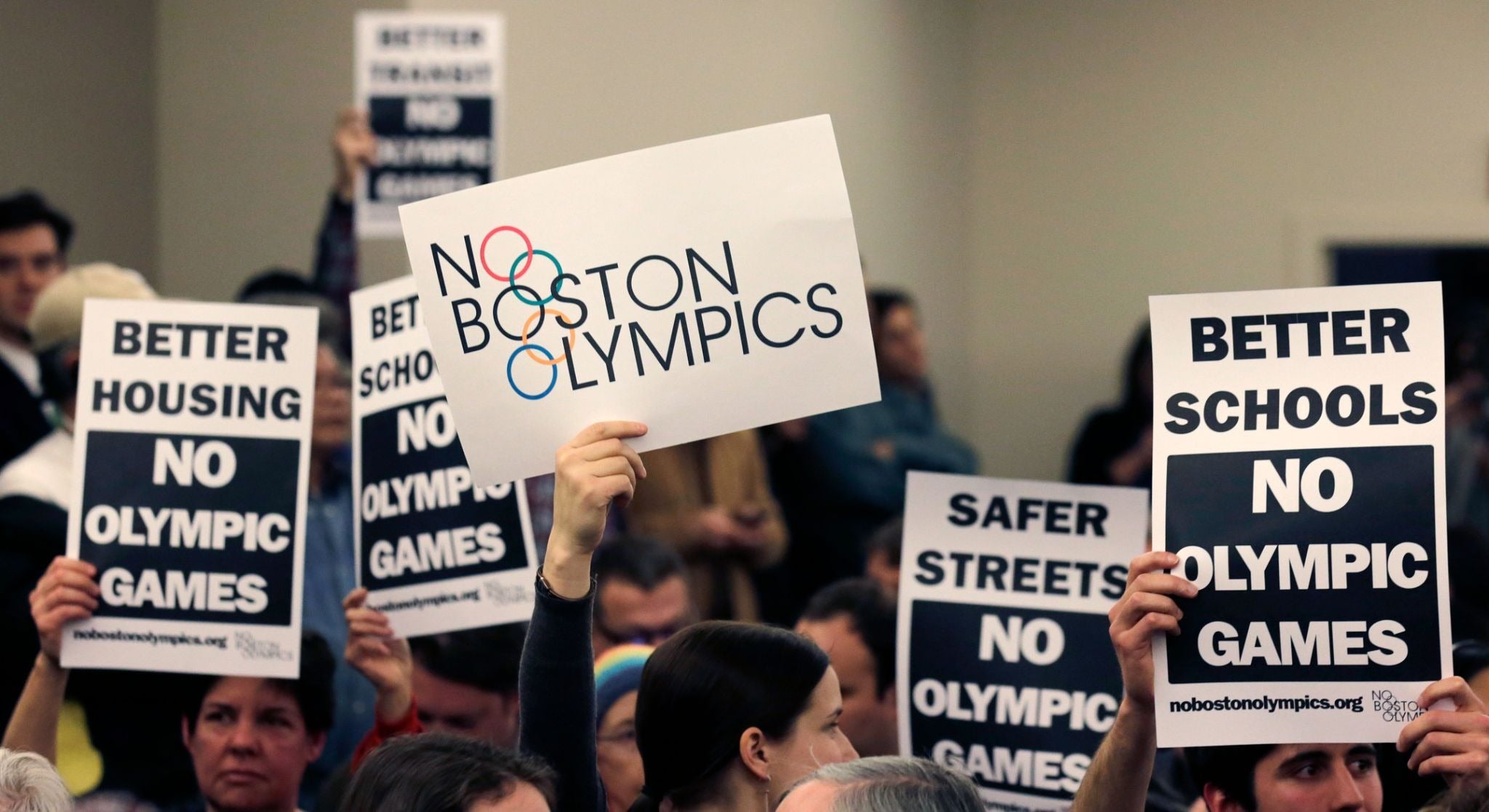
Boston’s bid, for those who forget, would’ve required massive construction. Because of increasingly specific IOC requirements, many of the region’s most recognizable sports venues would not have even been viable.
Gillette Stadium has no track, and therefore would not have served as the main Olympic stadium (a temporary 69,000-seat venue was planned to be built in Widett Circle). The Boston Marathon route, due to its elevation changes and point-to-point course design, would not have been used. Even the Charles River would likely not have been the site of rowing, as the bridge piers were deemed to be too close together.
An Olympic village, a velodrome, and an aquatics center would’ve all been required building projects. The total price — far from the “mere” amount of $100 million for the World Cup — was expected to be $4.7 billion in the bid’s original estimates.
And as anyone who lived through the debate will remember, Boston’s Olympic bid was widely criticized for lowballing its costs, a concern that was later validated by a state-backed report warning of more than $3 billion in potential overruns and by Tokyo 2020, whose budget ultimately more than doubled.
So while Boston’s beautiful, blissful World Cup summer moment is one that we should savor — I know I am — it shouldn’t be leveraged to make another Olympic pitch. We said no to that scam once. That should be enough.
Trivia
As of July 10, three of the top five all-time men’s World Cup leading scorers are actively playing in the tournament (Lionel Messi, Kylian Mbappe, and Harry Kane). Can you name the other two non-active players on that list?
Hint: One is German, one is Brazilian (Gerd Muller is technically tied with Kane for fifth).
Keep reading for the answer.
Stoppage time
France have been based in Boston for the World Cup, renting out the entire Four Seasons Hotel. This has not only been a positive experience for the players, but — because of the format of the tournament — has allowed them to travel significantly less than their rivals. A study by The Athletic calculated that France have traveled the least of all quarterfinalists (1,921 miles), while England have trekked 10,903 miles to play the same number of games.
Trivia answer: Miroslav Klose, Ronaldo (Nazário)
⚽ Get the latest World Cup news
Receive updates on the 2026 FIFA World Cup