
Volunteer firefighters have spent a grueling week extinguishing a roughly 3-acre wildfire along a stream in the Penobscot County town of Bradford.
Bradford Fire Chief Desmond Murray said a pilot spotted smoke west of Route 221 and the Maine Forest Service alerted his department around 5 p.m. on July 21.
They eventually pinpointed the blaze along a portion of the Mohawk Stream, Murray said, and access was an immediate challenge.
“It’s approximately a mile from any paved road as the crow flies, and it’s well over a mile on trails,” Murray said in a phone interview Tuesday.
By the time a reliable route to the scene was established, sunlight was not in their favor.
“As a rule of thumb with wetland fires, if it’s not spreading rapidly, you don’t fight the fire without seeing it in the daylight first,” Murray said.
So, the first of seven days along Mohawk Stream for volunteer firefighters began July 22.
That morning, a small crew of Bradford firefighters and a forest ranger went to the scene and found one area actively on fire, but mostly brush that had already burned.
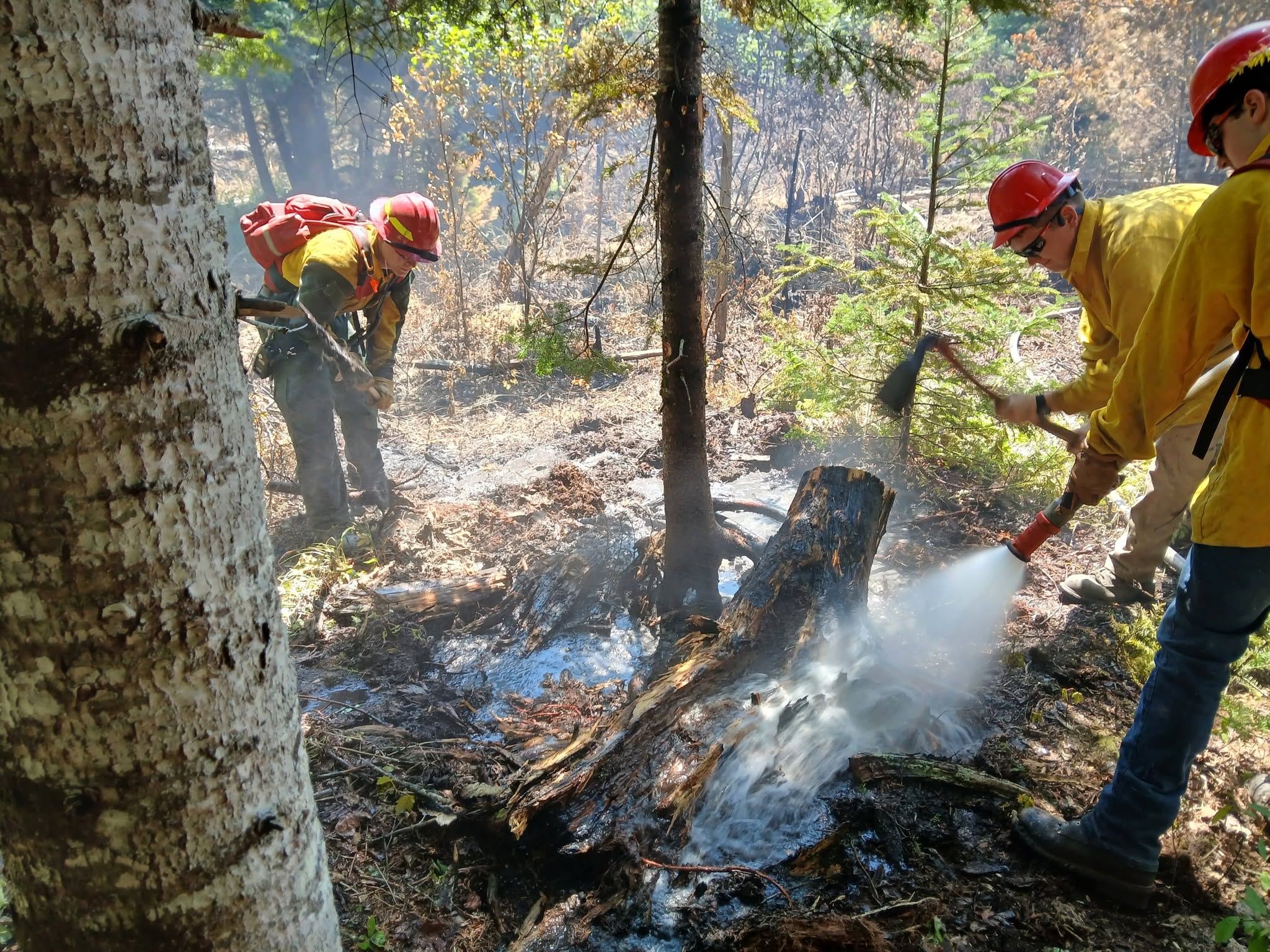
“They refer to it as a ‘dirty burn,’” Murray said. “There was still a lot of fuel in the ground that could burn, and a lot of it was still hot.”
The small crew got to work setting up portable pumps so they could use the stream as a water source. They also had reason to be optimistic.
“On that first day it was kind of drizzling,” the chief said. “We were kind of thinking, ‘Oh, this could be a minor thing … We’ll put it out, no big deal.’”
They soon realized what they were truly up against.
BOG DAYS OF SUMMER
The area of the fire was in a peat bog, Murray said.
“There’s no real dirt in a peat bog,” he explained. “That vegetation goes so deep underground, all the roots, that the fire was down in the ground burning under the stumps, under everything.”
Terri Teller, a fire prevention specialist and ranger with the Maine Forest Service, said warm temperatures and a lack of rain make fully extinguishing fires in these environments a time-consuming affair. She said pockets of dry ground fuels can contain heat and be easily rekindled by wind.
The Bradford department called upon firefighters from neighboring towns to assist them into the evening of July 22 to get the fire mostly contained. They spent the rest of the week digging and pumping water to wherever flames and smoke cropped up.
The department declared Friday that the fire was under control, but hotspots persisted. By then, their primary water source — the stream — had run dry, Murray said, and trucking in water along trails “was not ideal.”
Mother Nature to the rescue.
“We were able to find a pond that had a beaver dam in it, so it had held some water,” Murray said. “We were able to have a continuous flow of water again.”
Over the weekend and early into this week, firefighters continued to play a fiery game of whack-a-mole. Areas firefighters had doused with water would start burning again hours or even days later, Murray said.
“There’d be a tree smoking hundreds of feet away from where the rest of the fire was,” he said. “It was traveling through the roots underground and burning until it found a spot to pop up.”
After one last push Tuesday morning, Murray said, there are no remaining hotspots. Officials are optimistic a few days of rain in the forecast will put this wildfire firmly in the rearview mirror. But Murray said his department will have eyes on it, just in case.
“We’re going to continue to monitor probably for the next week because of how stubborn and deep-seated it is,” Murray said. “It’s to the point where we’re paranoid.”
‘BURNT OUT’
On Monday, Murray said it was clear that his crews were “pretty much spent.”
He said his firefighters — all volunteers — have worked the scene for about 70 hours over the past week, and “we all have full-time jobs.”
That doesn’t include the hours put in by neighboring departments, including crews from Corinth, Charleston, Hudson, Kenduskeag, Glenburn, Brownville and Milo.
“All these small town fire departments … not one of them got paid the whole time,” Murray said. “It takes a lot out of my department. My department is so burnt out after all this.”
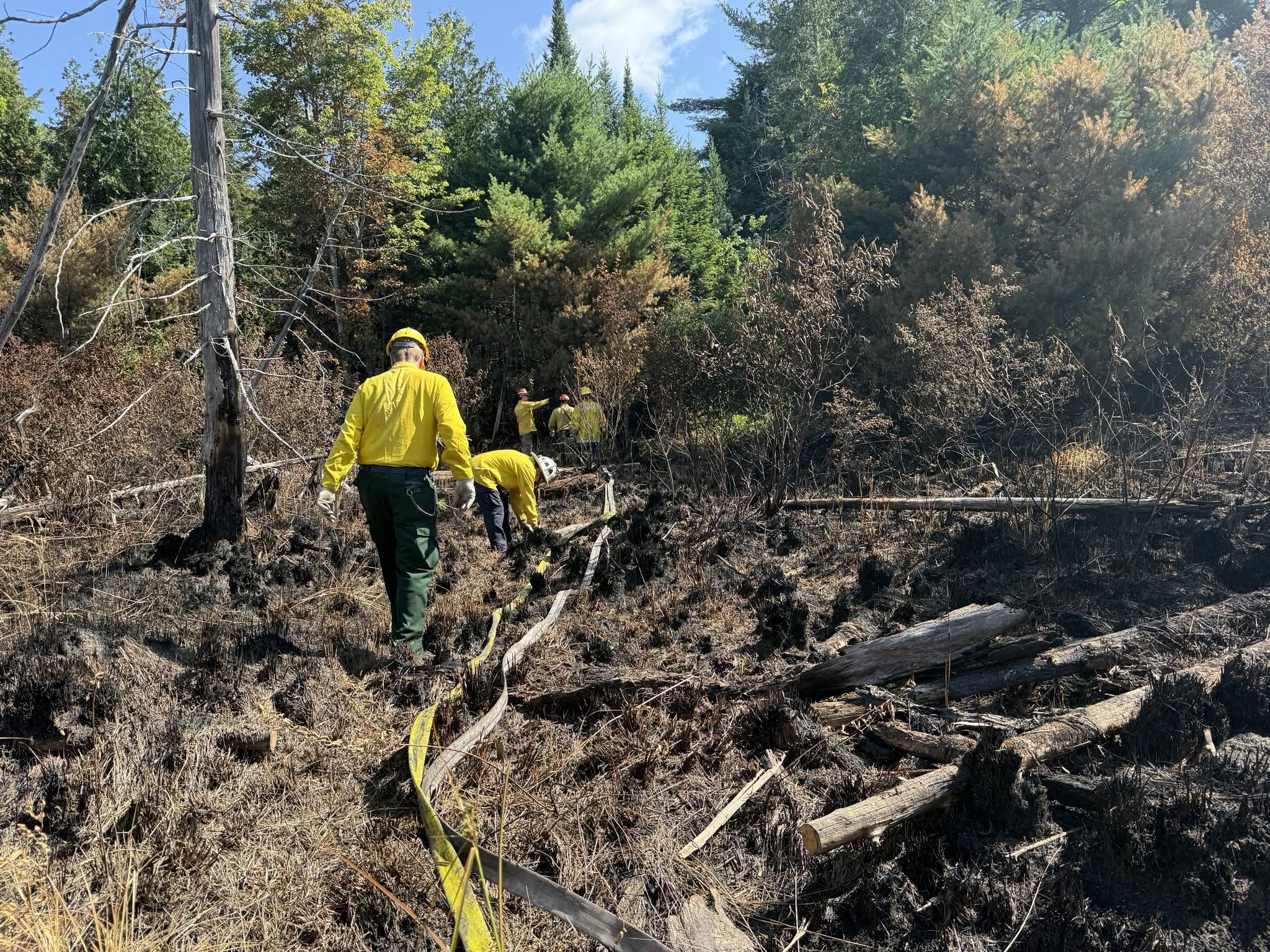
For that final push Tuesday, firefighters from farther away were rallied, Murray said, including from Orrington, Etna and Milford.
“We had a crew of about 14 guys, another ranger,” Murray said. “They went in and spent all day mopping up the area, being very aggressive.”
Murray emphasized his gratitude for all of the firefighters who lent a hand, but also community members for valuable assists. A nearby landowner helped firefighters find better routes to the fire as the days dragged on, Murray said, while trail users would stumble upon the scene and offer to help however they could.
“‘Use my ATV if you need to carry something’ or ‘I’ll give you a ride,’” the chief recounted. “It was great to have that support.”
The cause of the fire is believed to be related to open debris burning, Teller said. About 90% of wildfires are caused by humans, according to the Maine Forest Service.
So far in 2026, Teller said, 488 wildfires have burned about 273 acres of land, which is within the state’s 20-year average for fires through July. She said Maine averages between 650 to 700 wildfires per year.