
In late May, Granville County teachers and administrators met around a U-shaped table to review the results of an experiment that had pushed the small district north of Raleigh outside the mainstream of public education in 2026.
At the beginning of the school year, Superintendent Stan Winborne had declared Tuesdays and Thursdays “tech-free.” The Chromebooks and iPads now ubiquitous in American classrooms were replaced by old-fashioned pencils and paper across all grade levels.
Winborne had invited teachers to advise him on the experiment through a task force he called Balance Forward. He asked Karl Johnson, an assistant professor at UNC-Chapel Hill’s Gillings School of Global Public Health who also works for Granville Vance Public Health, to help evaluate the results.
In a conference room decorated with students’ handcrafted art, the teachers pored over Johnson’s preliminary survey data. Middle school teachers, especially, had reported that students were less distracted on tech-free days and more likely to interact with their peers.
“Students tended to engage more deeply with their work,” one middle-school teacher wrote, according to Johnson’s summary. “Completing tasks on paper required them to slow down and think through each step, which led to stronger understanding rather than rushing to an answer.” The more than two dozen elementary, middle, and high school teachers on the task force concurred.
Wendy Wilkins, a third-grade teacher with 26 years of classroom experience, offered an observation: There were a lot more tears than usual on the last day of school. “I want to come Monday. I want to come to school,” kids told her. “Can you just be open? Can you just be here?”
She took it to mean that the students really connected with their teachers this year. She thought it also signaled a society-wide over-dependence on devices: “These kids go home, and they don’t have face-to-face conversations. But we had two days a week that were just intentional with them, and it really affected them a lot.”
While the use of educational technology was already on the rise pre-pandemic, deployment expanded dramatically when students were stuck at home and the federal government sent local school districts unprecedented funding for tech acquisition. The devices became central to instruction, and continued once students were back in schools.
But now, especially in affluent areas, parents are growing increasingly concerned about stunted learning, short attention spans, and addictive behaviors, and are demanding changes like those implemented in Granville County. Parents in Wake, Mecklenburg, and Buncombe counties have signed petitions and provided emotional testimony at school board meetings urging less screen time and more parental control over which technologies their children use.
Many private schools have already retreated from assigning every student a digital device, having concluded that tech companies’ promised learning gains were a pipe dream. Some private schools, primed to receive a flood of public dollars through the state’s recently expanded voucher program, have begun advertising themselves as “low-tech” or “no-tech.”
The tech backlash got a boost last month when Los Angeles Unified School District, the second largest in the country, approved strict new screen-time rules in response to intense parent lobbying.
The decision came on the heels of an American Academy of Pediatrics report that evaluated evidence and concluded that “high-quality, well-designed digital media with learning goals, used in moderation, can be associated with children’s learning of mathematics and reading,” but “excessive digital media use is associated with lower academic achievement, weaker attention control, and weaker cognition,” among other problems.
“Completing tasks on paper required them to slow down and think through each step, which led to stronger understanding rather than rushing to an answer.”
feedback from a Granville middle school teacher
The U.S. Surgeon General’s Office issued a report in May recommending that schools go back to using computer labs instead of personal devices; reinvest in physical textbooks; and prioritize pen-and-paper curricula, hands-on activities, and social and extracurricular activities for all grade levels.
Granville’s initiative to reduce screen time was among the earliest and most decisive in North Carolina public schools. In this rural area, where a federal prison and a Revlon factory are among the largest employers, there was no parent outcry that prompted it.
The driver was Winborne, who took the helm of the district in 2023 after serving as assistant superintendent for curriculum and instruction. He had noticed that Granville’s early adoption of technology hadn’t delivered the expected gains in academic achievement and that data increasingly seemed to support the idea that digital devices were dragging down student learning.
First, the district put in place a restrictive cellphone policy in 2023—“off and away all day”—for elementary and middle school, later extended to high school. Discipline rates went down, and academic performance improved.
“After the second year of our cellphone restrictions, we began to notice that some of the behaviors that the students were doing on their cellphones were migrating over to their Chromebooks,” Winborne said.
He checked the district’s data. Many students were watching YouTube videos when they should have been on other tasks. Michael Spradlin, the district’s IT director, calculated that distracted screen time was costing students the equivalent of 31 instructional days a year.
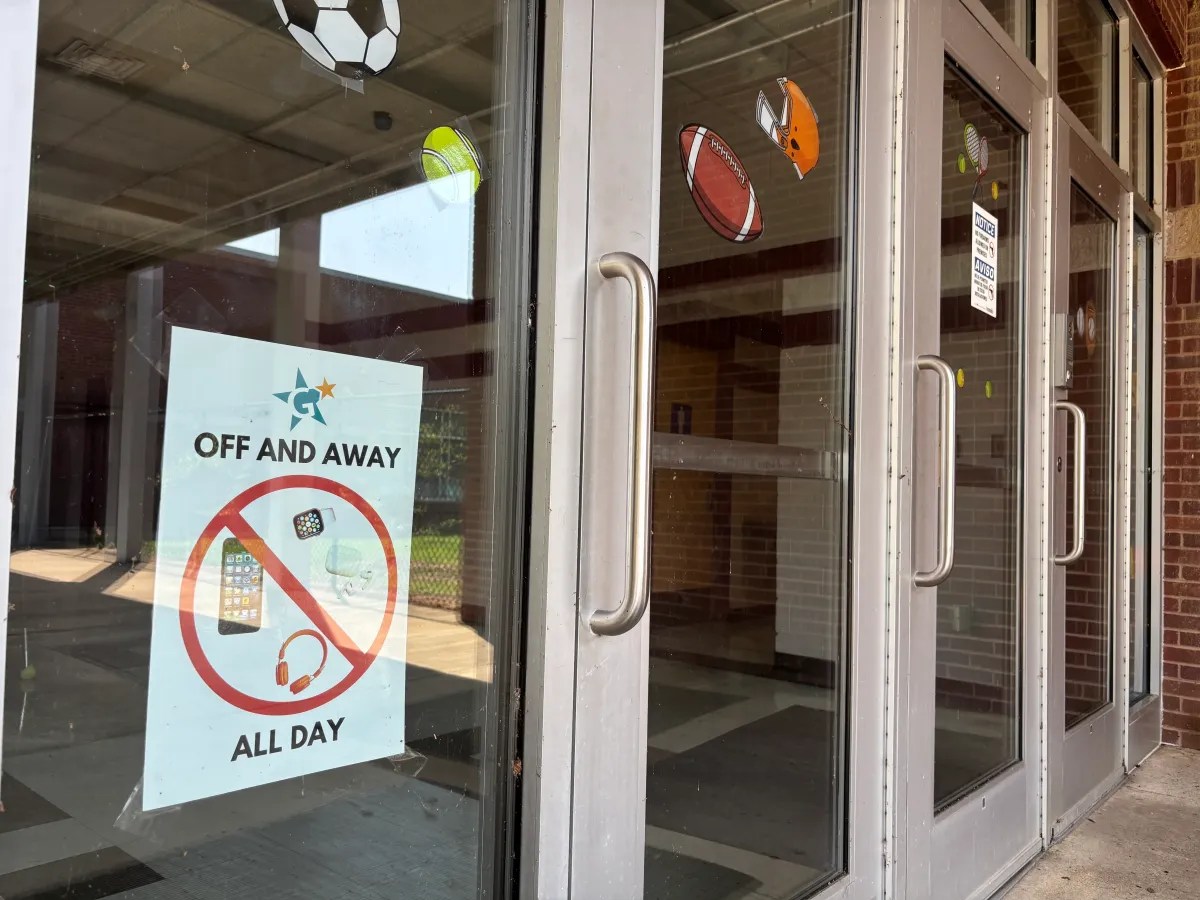
The early results, and the support of the school board, emboldened Winborne to take more aggressive action. Last August, the board passed a resolution, modeled on one adopted in Burke County, that encouraged “the thoughtful and limited use of digital devices in classrooms, reserving screen time for instructional activities that offer clear, evidence-based benefits to student learning.”
But even with the support, it can feel like a risky position to take in our digital world. “I worry that I’m making a mistake,” Winborne said. “But it’s not like I’m abolishing technology. I’m just saying, look, let’s strike a balance here.”
Examining the Evidence
Some of the teachers on the task force came to the meeting with dog-eared copies of The Digital Delusion, a self-published book by neuroscientist Jared Cooney Horvath that has helped fuel the backlash in other parts of the country. The book, which argues that a critical mass of data shows that digital tools undermine learning, is expected to be re-released by an imprint of Penguin Random House this August.
Published in the wake of Jonathan Haidt’s The Anxious Generation, which catalyzed a wave of laws and policies limiting cellphones in schools, The Digital Delusion reassured Winborne that there was plentiful data supporting his intuitive sense that the way technology was being used in schools was part of the problem. Horvath analyzed international standardized test results and found that “the more time students spent on screens at school, the further their scores fell.” All of the teachers on the task force have read the book; Winborne organized a group discussion.
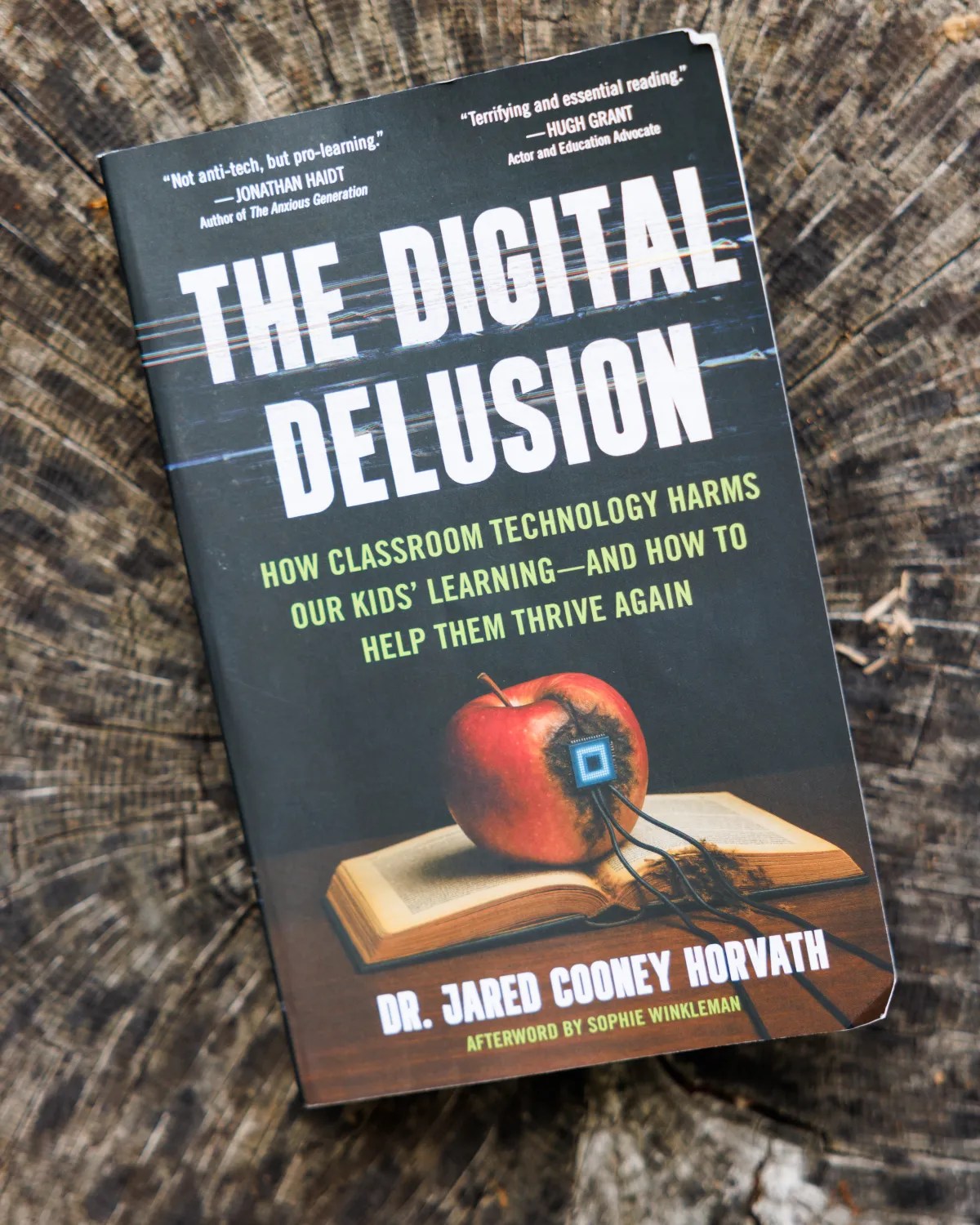
Horvath has been criticized for the methodology underlying one of his biggest claims—that educational technology “doesn’t even come close to the minimum threshold for meaningful learning impact.” But key elements of his argument are backed by extensive research. For example, it’s well established that people better comprehend and remember information they read on paper rather than on a computer and take notes by hand rather than typing.
The Digital Delusion converted at least one teacher on the task force. Fourth-grade science teacher Abigail McKenzie Stumpo said the data, combined with her experience as the parent of a middle schooler, made it clear that lowering screen time in school was necessary. She’s now an evangelist for tech-free days. “I firmly believe that when you know better, you have a responsibility to do better,” she told the group. She wanted to brainstorm how to get more of her colleagues on board.
An obstacle administrators have encountered is that many younger teachers never experienced school without omni-present technology. It’s hard for them to reimagine their lesson plans.
Although administrators prepared a playbook with example lessons last fall, they now recognize they need to offer more support. Almost 15% of the 222 teachers who participated in the spring survey said they felt “not at all prepared” to adjust to tech-free days.
Student feedback underscored the need. “It would be better if teachers plan activities that are really suitable for tech-free days (more physical, group, and social activities) instead of just transferring online activities to paper,” one high school student wrote.
Several teachers, especially those who teach high school, bristled at what they saw as infringement on their autonomy. Math teacher Steve Eisenhart told the other members of the task force that they wanted more flexibility in how to meet the underlying goals of the initiative, perhaps coordinating by department.
“I worry that I’m making a mistake. But it’s not like I’m abolishing technology. I’m just saying, look, let’s strike a balance here.”
Stan Winborne, Granville superintendent
He said that while he always taught math concepts on paper first, he thought it was problematic “to go a whole day without being able to get online” to use Desmos, a tool with calculator and graphing functions that is integrated into the state-mandated end-of-course tests, as well as AP, ACT, and SAT exams. He also praised some of the applications the district has made available, including Edia and Delta Math, because students are forced to show their work and get the answer right to move forward.
Instructional coach Mary Warehime cautioned that she still sees distracted students as she walks around the room—a lot of “quick snaps and chats” on other platforms that the classroom teacher doesn’t seem to notice.
Technology is still being used “as a means to get things done, perhaps quicker,” Warehime said, but it was often not effective at tailoring instruction to each student’s needs—the main selling point for companies.
Johnson, the public health researcher, asked teachers what they thought of most students reporting that they did not feel calmer or less stressed on tech-free days.
Many educators attributed it to students’ habitual reliance on technology and underdeveloped social skills. “They’re so used to having it that they don’t know what to do without it, so then their anxiety goes up,” said Daniel DuLany, the district’s coordinator for SparkNC, a program to help students enter high-tech careers.
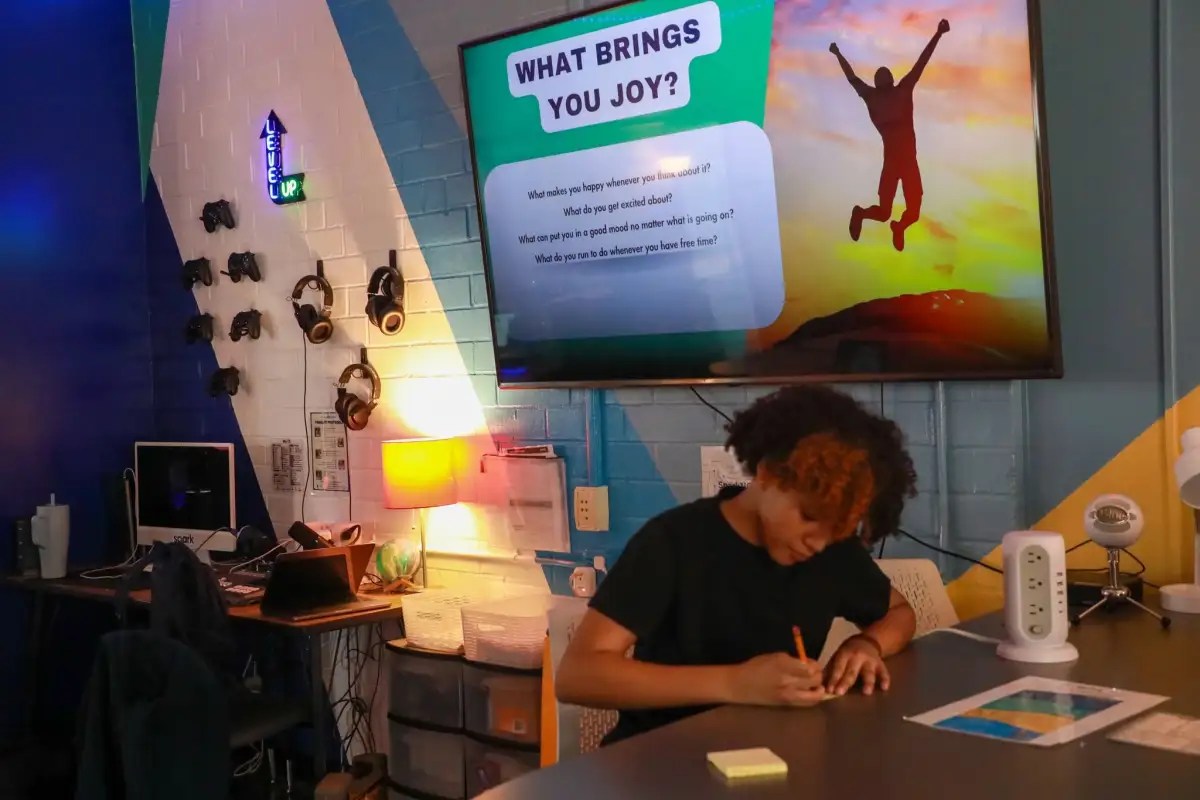
“The anxiety also goes up when they’re asked to think,” said Lynn Cooper, a middle school social studies teacher. “When they’re asked to interact with their peers in an academic way. When they’re asked to demonstrate what they know in a way where they cannot have access to somebody else’s brain through ChatGPT.”
“We want our kids to be thinking,” she said, “and perhaps some struggle is good.”
A Bipartisan Concern
The impact of digital devices on learning is a growing concern to state lawmakers on both sides of the aisle. Two bills introduced in the past legislative session sought to drastically curtail screens in schools.
Senate Bill 948, sponsored by Triangle-area Democrats Sophia Chitlik and Jay Chaudhuri, would give parents the right to opt their child out of most school technology use, bringing home a school-issued device, or even being issued one at all.
The bill would require districts to have a policy that, at minimum, banned digital devices in kindergarten through fifth grade and allowed only shared devices in sixth- through eighth-grade classrooms. High school students could be issued an individual tablet or laptop, but screen time would be limited to 1.5 hours during the school day and 1 hour to complete assignments at home.
Chitlik said she was motivated by much of the same evidence Winborne cited.
“We actually see that loneliness and isolation is going up and learning outcomes are going down,” said Chitlik, who emphasized that she is not anti-technology. “We’re spending all of this money on ‘solutions,’ but they are not yielding the results that we need and that our students deserve.”
Sen. Jim Burgin, a Harnett County Republican who chairs the chamber’s major health care committees, sponsored an even more aggressive bill. Senate Bill 913 would eliminate digital devices in schools almost entirely.
At least 16 other state legislatures have considered screen-time limits, NBC reported, and Republicans are leading many of those efforts.
Influential conservative institutions such as Hillsdale College, which advises classical schools including Greensboro’s Buffalo Academy and Mount Airy’s Millennium Charter Academy, are also now promoting screen-free instruction.
The N.C. Family Policy Council has made the issue a major topic on its podcast, interviewing Horvath and Winston Brady, the director of curriculum for Thales Academy, a chain of classical private schools founded by major Republican donor and school choice advocate Bob Luddy.
Brady said that Thales, which has 11 North Carolina schools, stopped providing iPads to every middle schooler in part because teachers concluded that managing student distraction was consuming too much instructional time. “We’ve already seen advantages,” he said, including “comprehension, retention, better handwriting.”
Thales also brought back recess and added more movement into the school day, Brady said, because confining students to a desk seemed to be encouraging poor behavior. The Academy will stop providing tablets to high schoolers next year.
Both Burgin and Chitlik’s bills include appropriations linked to the policy shift, but Chitlik’s comes with a much higher price tag. It provides $930 million annually to put an instructional assistant in every classroom and $4.3 million for grants to teaching assistants enrolled in college programs that will qualify them to become licensed teachers.
“If we’re going to take away screens, which our teachers are relying on basically as a terrible substitute for instructional assistants, we actually need to give them real instructional assistants,” Chitlik said.
For now, though, it appears both bills are dead.
“If we’re going to take away screens, which our teachers are relying on basically as a terrible substitute for instructional assistants, we actually need to give them real instructional assistants.”
state Sen. Sophia Chitlik
Top legislative leaders seem to have a much different vision for technology in schools. They passed a budget last week that includes multi-million dollar investments in AI-based tools, including Khanmigo and MagicSchool, and contracts aimed at shifting high school to a personalized model, “competency-based education,” in part through the use of AI tools.
The bill specified that the Department of Public Instruction “shall take no action to impede public school districts from accessing Learning.com,” the contractor lawmakers previously paid up to $4 million to provide digital literacy instruction in middle and elementary schools.
In the meantime, the state Department of Public Instruction has drafted screen-time guidance that rejects blanket time limits and cautions against “overly restrictive policies that remove opportunities to practice responsible use.” The guidelines instead recommend a progressive approach, where screen time in elementary schools should be brief and focused and students in higher grades get greater autonomy.
Another Way
Dr. Aparna Jonnal made the decision to opt out of public schools over screen time after her older friends shared horror stories at her baby shower.
“They came to us with terror in their eyes, and they were like, ‘Don’t put your kids on screens,’” Jonnal recalled 13 years later. “They just were like, ‘You won’t believe it: Once you start, even a little, they’re hooked. That’s it. It will destroy their childhood.’”
Jonnal, an emergency room physician, and her husband, Dave NeSmith, decided to take the advice. It wasn’t a difficult decision for “a weird socialist intellectual who married a punk rock-playing guy who was touring and staying in anarchist squats,” she said. They hadn’t owned a television in more than a decade.
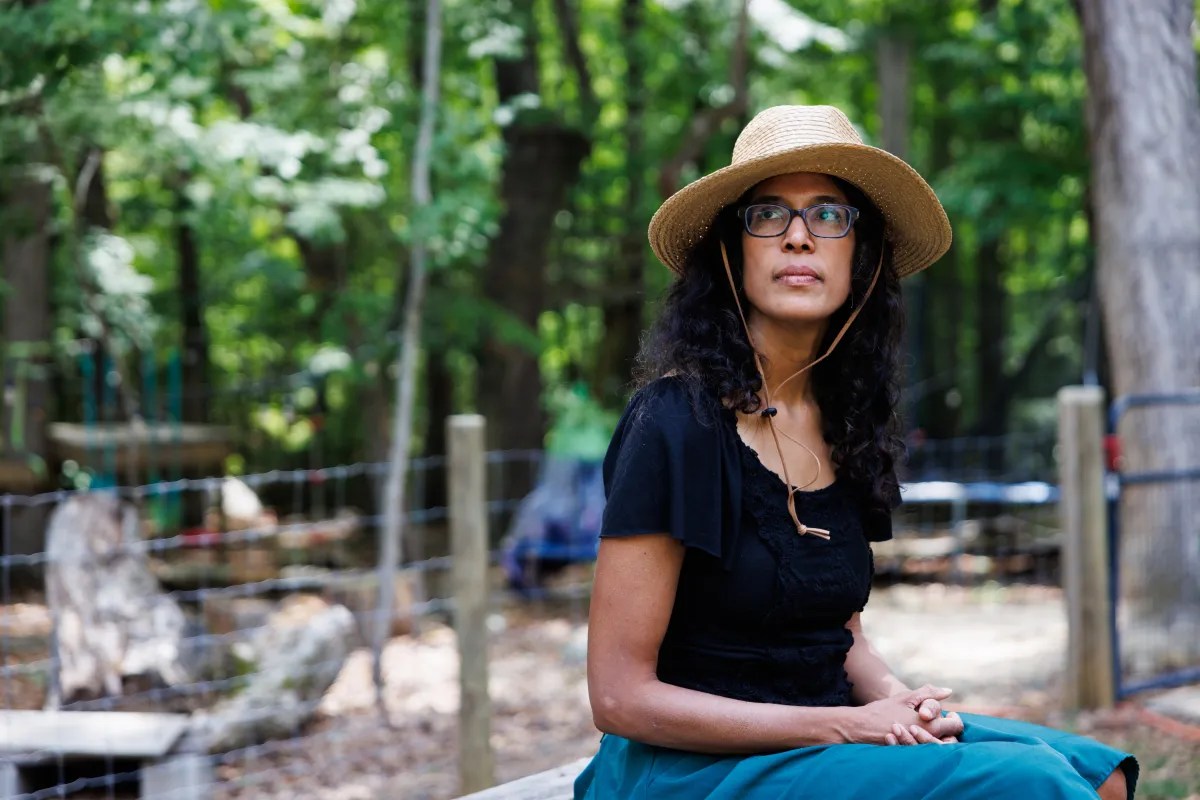
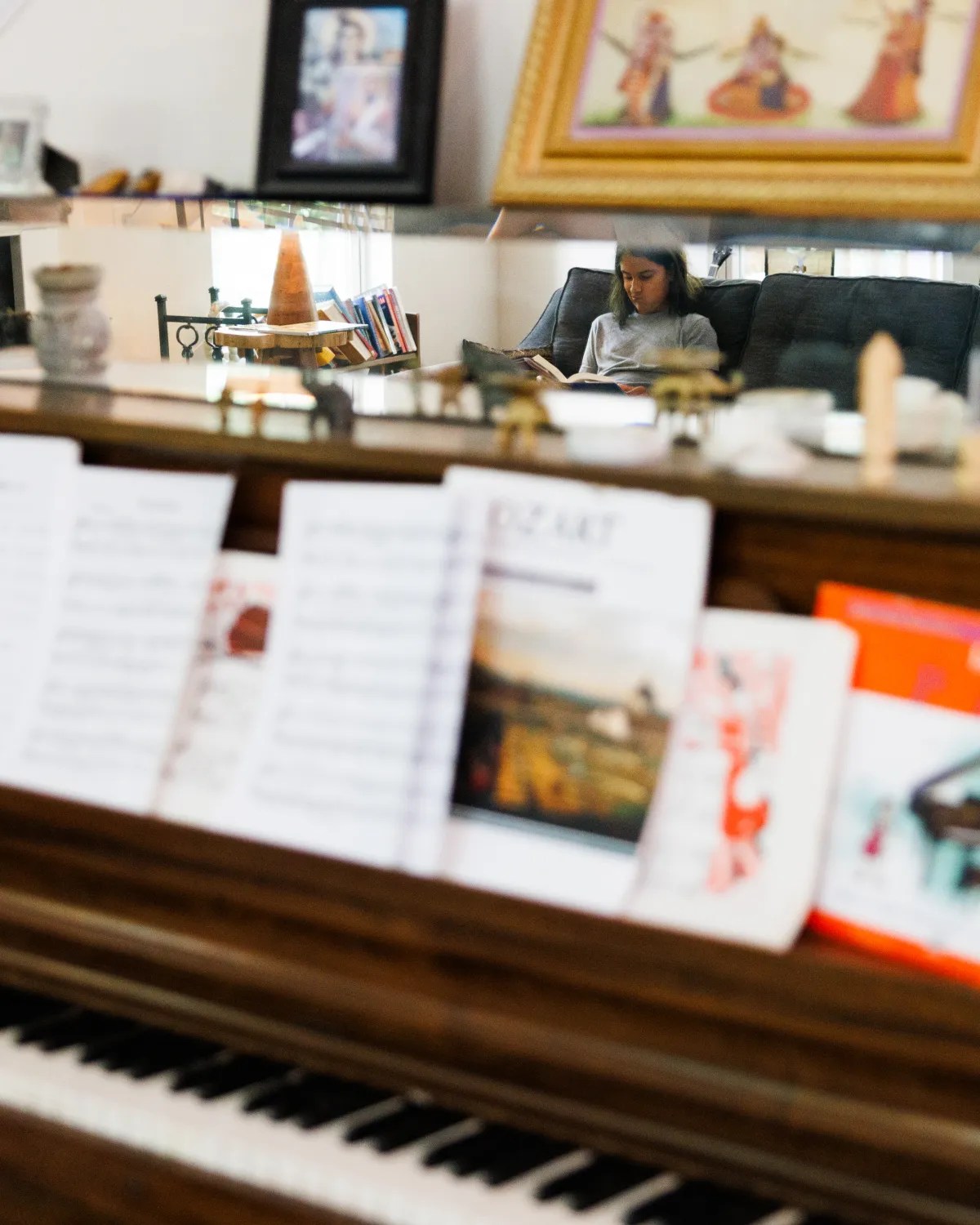
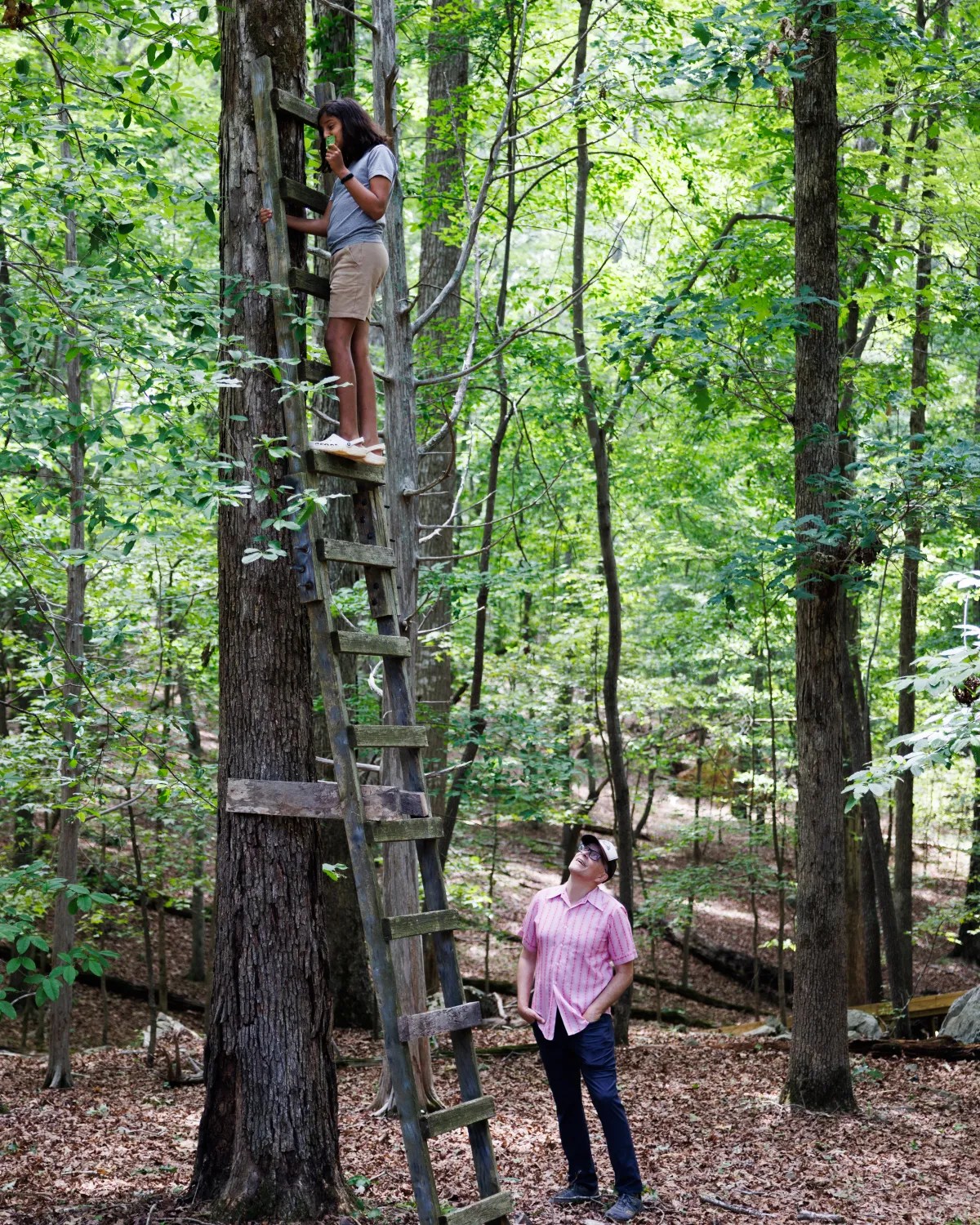
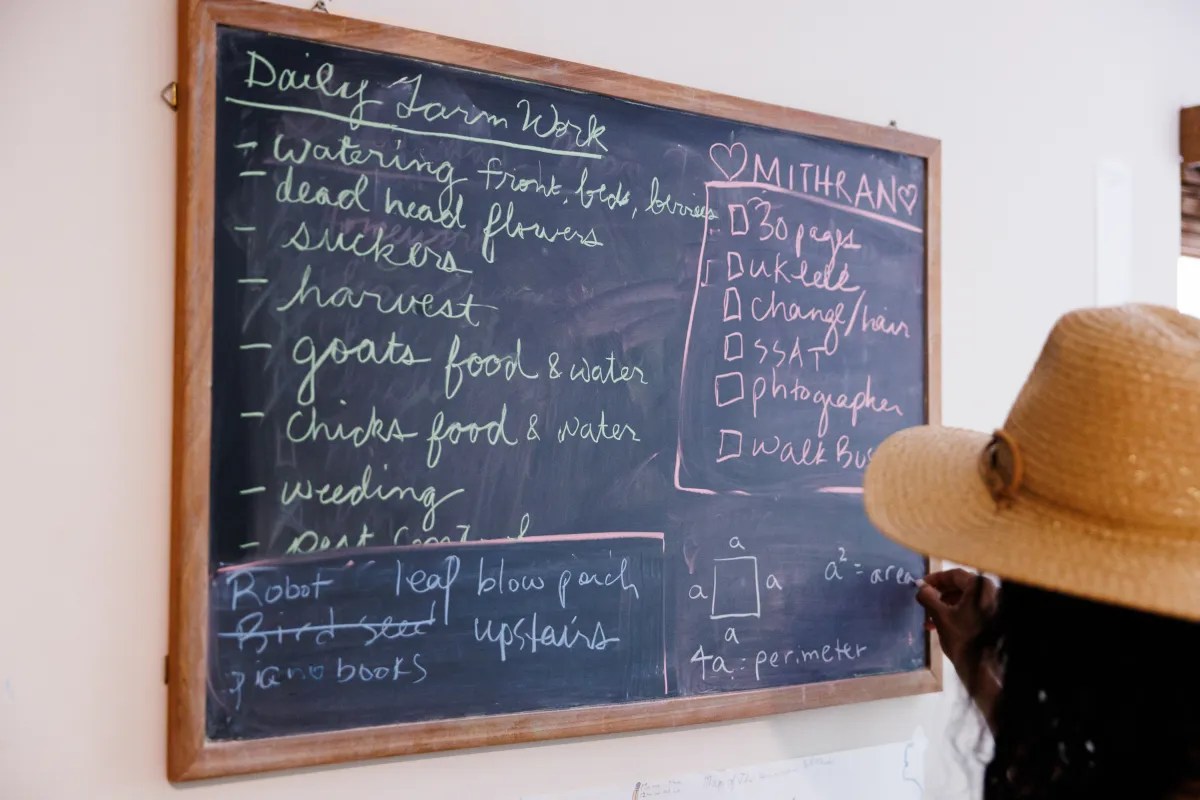
The couple filled their house with instruments and books and built a playground on their Hillsborough farm, where their two kids help tend a garden and raise chickens and goats.
The couple enrolled Suvi and Mithran, now 13 and 9, in the Emerson Waldorf School, a private school in Chapel Hill that is screen-free until high school and teaches “handwork” like knitting, woodworking, and metalsmithing.
Their decision is also grounded in what Jonnal observes in her medical practice, where she’s seen increasing numbers of suicidal children, some as young as 8. She asks her patients and their families about screen exposure and finds that “screens are almost always a main contributor.”
Some parents told her they gave a child a device out of exhaustion or desperation and now the child is “hooked on it, and we fight about it every day, and they don’t go outside and play anymore, and they get bad ideas off those things,” Jonnal said. She advises new parents not to start with devices at all: “I really think screen-free is way easier, because there’s nothing for them to ask for.”
She often invites families to the farm to experience how they live. Instead of sitting inside on screens, her children find creative ways to entertain themselves. Among their recent pursuits: composing music, constructing a mini foosball table in a mint tin, and installing a pond in the front yard.

But now that Suvi is asking for a more rigorous academic education, they’ve decided to enroll him in a school that does use screens. This fall, he will attend Carolina Friends, a private school that is in the midst of its own reevaluation of technology. Jonnal said she plans to join a parent group advocating for less technology use. And if Suvi doesn’t respond well to the new environment, she may homeschool him.
Jonnal also serves on the Orange County Board of Health, which last summer passed a resolution that highlighted the harms associated with digital devices. The board expressed support for the countywide adoption of Chapel Hill-Carrboro City Schools’ Screen-Free Week and urged local schools to ban cellphones during the school day.
Around the same time, Jonnal posted in a local Facebook moms group seeking more like-minded families, as well as soliciting ideas for how health officials can help parents with the screen-time issue. She received hundreds of messages, many with complaints about local schools’ screen policies, and learned that a parent group called CHCCS Parents for Intentional Tech has been pressuring Chapel Hill-Carrboro schools to make changes.
In May, the group convened about 40 parents in the public library for its last get-together of the school year. Its founder, Mary Beth Roche, said she planned to formally affiliate the group with Schools Beyond Screens, the parent organization that recently won major changes in Los Angeles.

Roche ran through many of the L.A. reforms when she addressed the Chapel Hill-Carrboro school board the following month. The district’s new Digital Learning Plan was on the agenda.
“Why is it that a school district with over half a million students can make these changes immediately, but we have to phase out iPads for our youngest and most vulnerable students?” she asked.
Several students testified that they wanted less tech, too. One Carrboro High School student described his Chromebook as a “glowing glass prison.”
Parent Sarah Snyder told the board that she had pulled her sixth grader’s YouTube history from his Chromebook and planned to bring them a printed-out copy, but didn’t because it was 111 pages long—all things he’d watched during the school day, since YouTube is blocked at home.
“They’re in the Google documents, writing notes to each other and then erasing them before the teachers see them,” she said. “They’re emailing proxy gaming sites.”
Other speakers in the college town focused on the higher-education perspective. Johanna Foster, in addition to being the mother of two children enrolled in the district, is an assistant dean at UNC-Chapel Hill’s School for Data Science and Society. “It is not unreasonable to draw a connection between the extent to which K-12 education has outsourced teaching and learning to technology and the lack of skills we observe in students at the post-secondary level,” she said.
“They’re in the Google documents, writing notes to each other and then erasing them before the teachers see them. They’re emailing proxy gaming sites.”
Sarah Snyder, parent
The priority actions listed in the district’s plan include adding more intensive YouTube restrictions and web filtering, requiring teachers to use Go Guardian to monitor device use, and moving from personal iPads in kindergarten and first grade to shared devices reserved primarily for assessments, not instruction.
Administrators promised training for teachers in how to effectively use monitoring technology, as well as on engagement strategies.
Through eliminating and reducing several tech contracts, the district saved $435,000 that it plans to put toward purchasing new math and reading curricula that rely less on technology, Chief Academic Officer Bob Bales said. He emphasized that the plan was just a starting point and would evolve based on the feedback and data collected over the next year.
School board members told Bales they were hoping for something more aggressive—like what L.A. or Granville County have done. But they ultimately approved the plan along with an advisory group to monitor progress.
At the same meeting, they voted to close a school due to financial pressures stemming from declining enrollment that is, in part, caused by more local parents sending their children to charter and private schools.
Board member George Griffin noted that he gets emails from parents who say they’re considering withdrawing their children due to the district’s technology use policies.
“I’ve never said this because I don’t like it when parents threaten me,” he said haltingly. “I do know half a dozen parents are not going to send their kids here next year. They say it’s because of the technology issues. I take them at their word.”
Balance Forward
In Granville County, Winborne has decided to push the limits on technology even further. He knows he has to walk a fine line when it comes to teacher autonomy, but said he’s heard nothing but praise from parents so far.
Next year, there will be very little technology in kindergarten through second grade classrooms, he said during the May task force meeting. Teachers told him they wanted the option to use iPads in the hands-on learning centers their students rotate through, and he decided to allow it, for now.
Teachers in those grades will have five tablets, said Spradlin, the IT director, and if they have an outstanding or beloved device-dependent project, they will still be able to do it.
In third through fifth grade, Chromebooks will be kept in classroom carts.
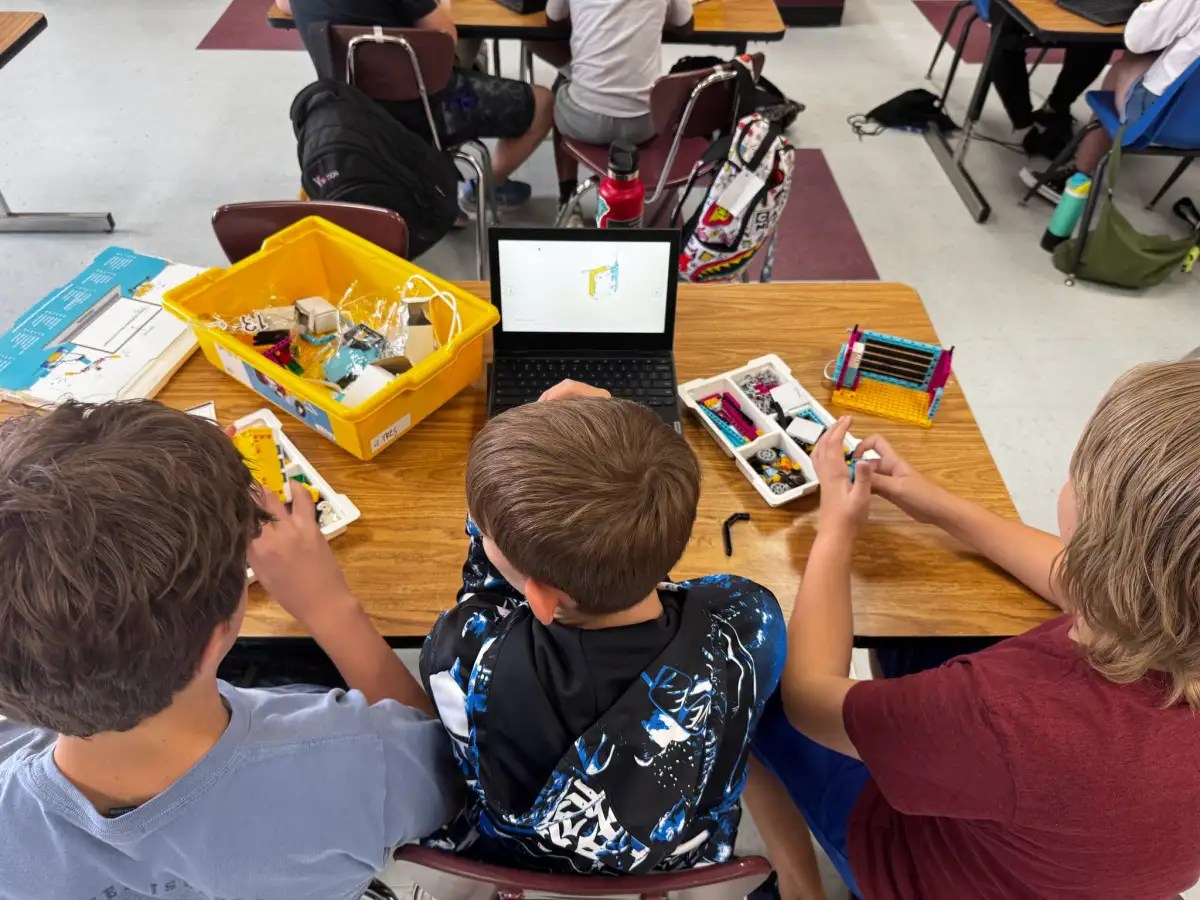
The biggest change will be in middle school, where students will no longer take their Chromebooks home every day. The logistics of how the devices would be managed during the school day haven’t been worked out yet.
In high school, students will still be issued a Chromebook to take home, but YouTube will be blocked.
In response to teacher feedback, tech-free days will be consecutive—Monday and Tuesday, instead of Tuesday and Thursday, Winborne said. They will still apply to all schools.
“I do know half a dozen parents are not going to send their kids here next year. They say it’s because of the technology issues.”
George Griffin, Chapel Hill-Carrboro school board member
A high school teacher asked about giving teachers in the upper grades more autonomy—the persistent flashpoint.
“We took a hard look at that,” Winborne said. “Ultimately, I decided no.” He gave two reasons: compliance would be difficult to monitor, and the tech audit showed that some high school teachers are still ignoring the mandate.
“To me,” Winborne said, “this is about communicating what we value.” Still, there will be some flexibility, including allowing specific classes to use tech as needed and giving principals the authority to permit teachers to use technology on a case-by-case basis.
The district also intends to move away from the software platform i-Ready, which is used to conduct certain state-mandated assessments and administer practice exercises that students have complained are boring. Administrators hope to hire a new company for the assessments, and the mandate for K-8 students to use iReady for 30 minutes a day is over.
The task force brainstormed what professional development should be offered to teachers. They requested hands-on activity kits, opportunities to observe stellar teachers, and training in how to teach using the Socratic method and other “old-school” approaches.
“Ways to improve efficiency of grading paper assessments,” one teacher suggested. “There’s got to be a faster way.”
Many teachers chuckled. One murmured, “ChatGPT.”
“Don’t put any student names into ChatGPT,” Spradlin cautioned. “We’ll talk about that later.”
AI was next on the task force’s agenda.
Editor’s note: Sen. Sophia Chitlik’s father-in-law, Adam Abram, is chair of the board of directors for The Assembly.