We spoke over Zoom in September, while she was prepping to sell her artwork at the upcoming Alaska Federation of Natives convention in Anchorage. Between sewing machine passes, her skillful hands, which transformed multiple fabric pieces into colorful creations, would occasionally whip toward the camera (in a seemingly Chun Kuk Do style, for all you Chuck Norris fans out there), as she emphasized an important point in her story.
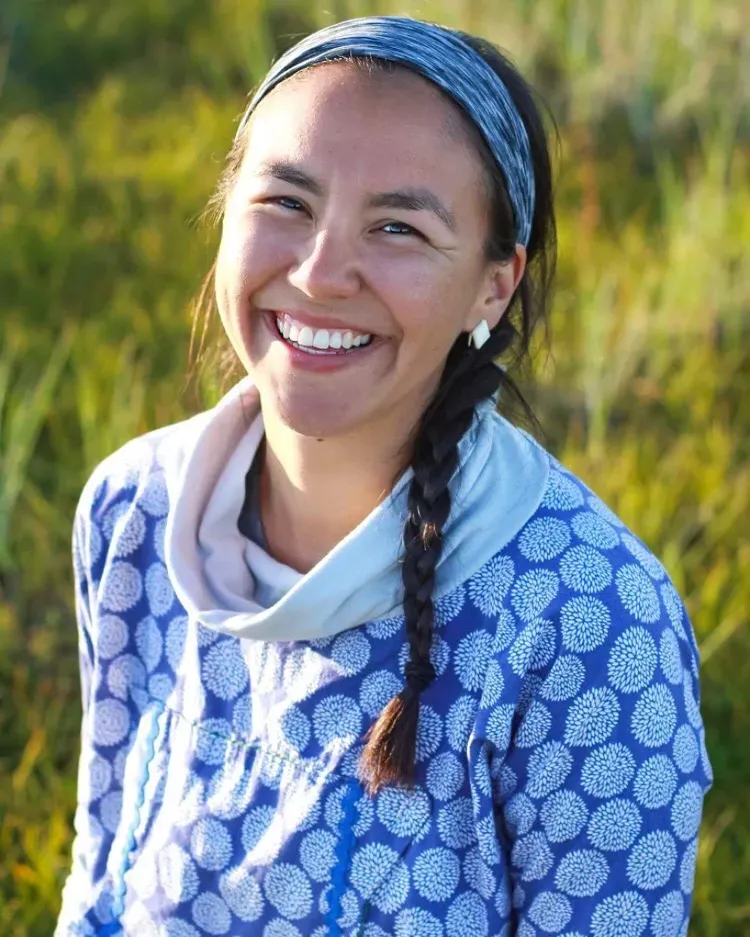 Nikki Quluqaaq Corbett (Courtesy of Nikki Quluqaaq Corbett/Sew Yup’ik)
Dewey: Can you tell me about yourself?
Nikki: Waqaa, wiinga Quluqaugua. Mamterrilleriunga. I’m Nikki Corbett. My Yup’ik name is Quluqaaq. Everyone back home knows me as Nikki Nick. I’m from Bethel, on the Kuskokwim River. I also spent time at my grandma’s village in Nunapitchuk. I grew up going to fish camp with my aunt, picking berries. I have owned and operated a small business since the summer of 2015 called Sew Yup’ik. I’m also going to school to become a psychiatric mental health practitioner, and hope to complete my studies and sit for boards next May. This year, I was lucky enough to snag an artist booth at AFN, so I’m just getting ready for that.
Dewey: What is a favorite memory of yours going to AFN?
Nikki: I love seeing everyone, especially my Elders, in between the madness of selling stuff. I have all my Elders who I run around and try to see. Usually they’re from back home on the (Yukon-Kuskokwim) Delta. It’s also so nice just being around those who want to share their traditional foods, like muktuk. Sometimes we even get a chance to barter. I’m good on seal oil for now. I’m still bartering for cloudberries, which we call salmonberries.
Dewey: I love seeing my Elders and loved ones from all over. I have a buddy who’s a Bethel Hoffman, and since my dad came up from Washington state and married into my late mom’s family here, I sometimes joke with him, “I’m an ila from another vill-ah.” How is it important to protect our ways of life as Alaska Native peoples?
Nikki: As Yuks, as Yup’ik, as real genuine human beings, it’s ingrained in us. We’re taught that if you take care of the land, the land takes care of you. It’s so important seeing where food comes from, hunting and fishing. A huge part of that is making sure that we’re not developing for greed or money, corporate gain. If you think of mining, mining is not gonna take care of the land. If I think about the proposed Donlin Gold mine, which would store millions of tons of waste in a massive tailings pond: Is that taking care of the land? Is that following Qanruyuutet (words of wisdom), the rules that we are meant to follow? What about the Alerquutet (instructions), the teachings that are passed down from generation to generation?
I recognize that we are living in the Western world, and there needs to be economic development in order to pay bills. But I think the risks are too great to take.
If there’s one major spill, you can’t eat a brick of gold. That’s not gonna feed you. Everything has a spirit, including the land, the animals. If you’re not being protective of those things, then they won’t present themselves to you.
Dewey: Baasee’ for sharing that. I was also taught you have to take care and be mindful if you want to have a successful harvest. Do you have any thoughts about ways your communities have adapted to fishing closures on the Kuskokwim River?
Nikki: Our people are resilient and have been able to create ways to harvest. Maybe they wouldn’t always get the species of fish that they would like, but still can harvest pike, whitefish, sheefish, lush. There are ways to make up for not being able to get salmon, to get other food sources.
Dewey: In my family, we started fishing together on the Kasilof River. We feel fortunate to be able to harvest and put up red salmon there. This is after grieving for many years of not being able to harvest together with our extended family on the Yukon River — although this summer we had some amazing experiences back on the Yukon at Ruby culture camp, drifting for salmon with a special permit. Our family had to adapt by traveling to fish at another river. Still, we try to be good relatives.
Nikki: I know, it’s so different than what we’re used to, growing up using a fish wheel. It’s strange to fish that way at first, where you pick them out of a dipnet and bonk them on the head one by one.
We find ways to adapt. Like up north in Nome, when people were unable to fish, I would barter red salmon for berries. I feel lucky that we are able to find ways to get fish today that our grandparents might not have had. Something I remember is roasting fish hearts on the campfire. My cousins and I would fight over who could get the biggest heart. We would make jerky out of the fish esophagus, igyamcuk. So, there are things you do that are so normal growing up, and then you think later on, “How did our grandparents know all these things?”
Dewey: Is there anything you wanted to share that you didn’t have a chance to yet?
Nikki: I always encourage people to know where you come, to know your family, your background, if you can find that information — so that you can carry that history with you.
Also learn your [Alaska Native] language. Start small. I didn’t grow up speaking Yugtun. I learned it in elementary through high school, and eventually college. It’s so important that you don’t wait for someone to take your hand and show you how to do something. You have to create those movements forward to be able to continue learning where you come from and who your family is.
Dewey: All right, we’ll probably see you at AFN, Nikki. Quyana cakneq for sharing with us today!
Nikki: Quyana Chuck Norris!
The Anchorage Press is a reader-driven publication. If you’re already a subscriber, we’re grateful for your support; if you’re not, $130 will buy you our undying gratitude AND a hard copy of the Press in the mail each month!
