
If you’re like most Americans, Suriname is not a place that exists for you. If you’re like me, it exists down there — maybe an island, maybe not. If you’re a Jeopardy champion, it sits between French Guiana and plain ol’ Guyana, which it turns out also exist.
Related Stories
Plus the International Vegan Food Festival returns and the Four Seasons hosts Spring in Bloom Afternoon Tea
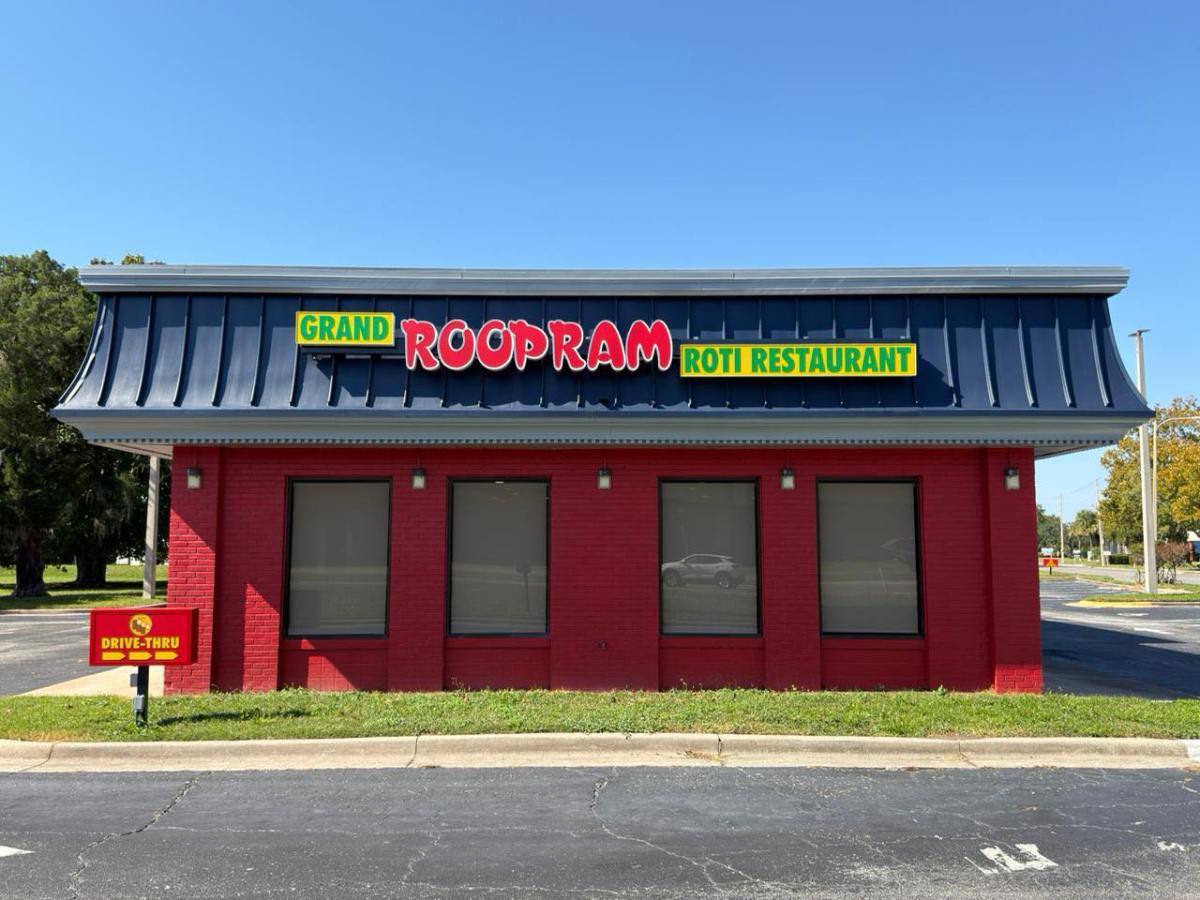
Look, I know things. I know Suriname has planted a flag in Orlando. A splash of yellow, red and green at the corner of Lee and OBT that shouts “Grand Roopram Roti Restaurant.” And while I won’t feign prior familiarity, I now know Surinamese cuisine is a mashup of Indian, Indonesian, African, Chinese and Dutch traditions. I also know the version dished out at the restaurant colloquially referred to as “Roop” is quite good.
The Rosemont outpost of Roop opened in April. It’s a no-frills counter-order affair, fast-foodie but spotless, the first Stateside location of a chain anchored in Suriname and the Netherlands, a chain that’s been serving up soul-hugging eats for over a half a century. The clue to what Roop does is in its name: roti — an unleavened flatbread gifted to Suriname by the Hindustanis. I enjoy the bread, and also the word: roti, roti, Don Quixote picked goat roti from his goatee. If I had a beard, Roop’s goat roti would occupy it. Those less pro with bread as utensil will find themselves sauce-faced.
But I digress before I progress. There were starter nibbles: traditional phulourie ($2.99), Indian-inspired split-pea fritters dipped into tomato chutney and addictive as hushpuppies, and barra, a spiced fried lentil dough eaten as handheld. We opted for barra with saltfish ($9), a street food staple. The bread offered lovely crunch-and-give, yielding mouthfuls of nicely spiced fish. (Caveat: You must like saltfish, with its preserved headiness. I do and did.) In Suriname, roti refers to both bread and bread-with-stuff, that stuff largely being curried proteins. Those who come to Roop often come for its signature roti curry chicken ($13), the comfiest of Surinamese comfort food. The curry is mellow, loose and Maggi-forward, the chicken tender and ample — more homey than nuanced, but I’m down with homey. But I found roti curry goat ($20) a flavor step above, with a richer gravy; the meat just-right gamy, tender enough to swirl in mouth and loosen bone — mop it up with green beans, potato, hit it with fiery pepper sauce and away you go. The roti bread accompanying both was soft, hot, flaky and easy to shape into a scoop.
The melting pot cuisines of Suriname and the Dutch Caribbean are similar, but the former pulls deeper from its Chinese roots. Case in point: tjauwmin and fried rice. Portions called “small” ($8.99) are not, and come topped with a roasted chicken leg. Tjauwmin arrives as a mound of thin egg noodles slicked in a deeper, sweeter and more complex sauce than its chow mein namesake, buoyed by soy, five-spice and the smokiness of BBQ pork. Both it and the fried rice were similarly flavored and equally enjoyed.
Along with roti, Roop is known for turmeric fried chicken ($2.50 for a breast). It hits with a visual thud, seemingly thick and sans turmeric, but the batter is actually thin, locking in wonderfully moist bird and a burst of woody, earthy spice. A tablemate texted after, “My mustache smells like turmeric and I love it.” We’re now charter members of Turmeric Mustache, the most unofficial of Roop fan clubs. It’s easy to stan; generous and affordable food, simple, tasty and true to its origins (and origins of its origins), food that’s antithetical to our times. Roop’s slogan is “Roti from Roop always tastes good.” I’ve been twice. If twice qualifies as always, I agree.
Grand Roopram Roti Restaurant, 3200 Parkway Center Court, 407-420-0306, grandroopramrotirestaurant.com.


Related Stories

Central Florida’s best and only professional musical theater grandly opens its fresh new doors
And a cafeteria-style, pork-free, veg-friendly, soul food restaurant opens in Altamonte Springs

Trump wants ICE stops to continue despite a recent string of ICE-involved deaths across the country.
This article appears in July 15-21, 2026.
Related
Source link