
As Florida’s six-week abortion ban continues to leave pregnant people with fewer options in the Sunshine State, the state government is continuing to invest in programs aimed at intercepting people in Florida who are seeking licensed abortion providers.
For the third year in a row, Florida’s state budget for the 2026-2027 fiscal year includes funding for an anti-abortion “telecare” program run by the Human Coalition, an anti-abortion group based out of Texas that aims to “make abortion unthinkable and unnecessary,” according to its website.
The state budget also includes $29.5 million in taxpayer dollars for the Florida Pregnancy Care Network, a state program that promotes controversial anti-abortion pregnancy resource centers.
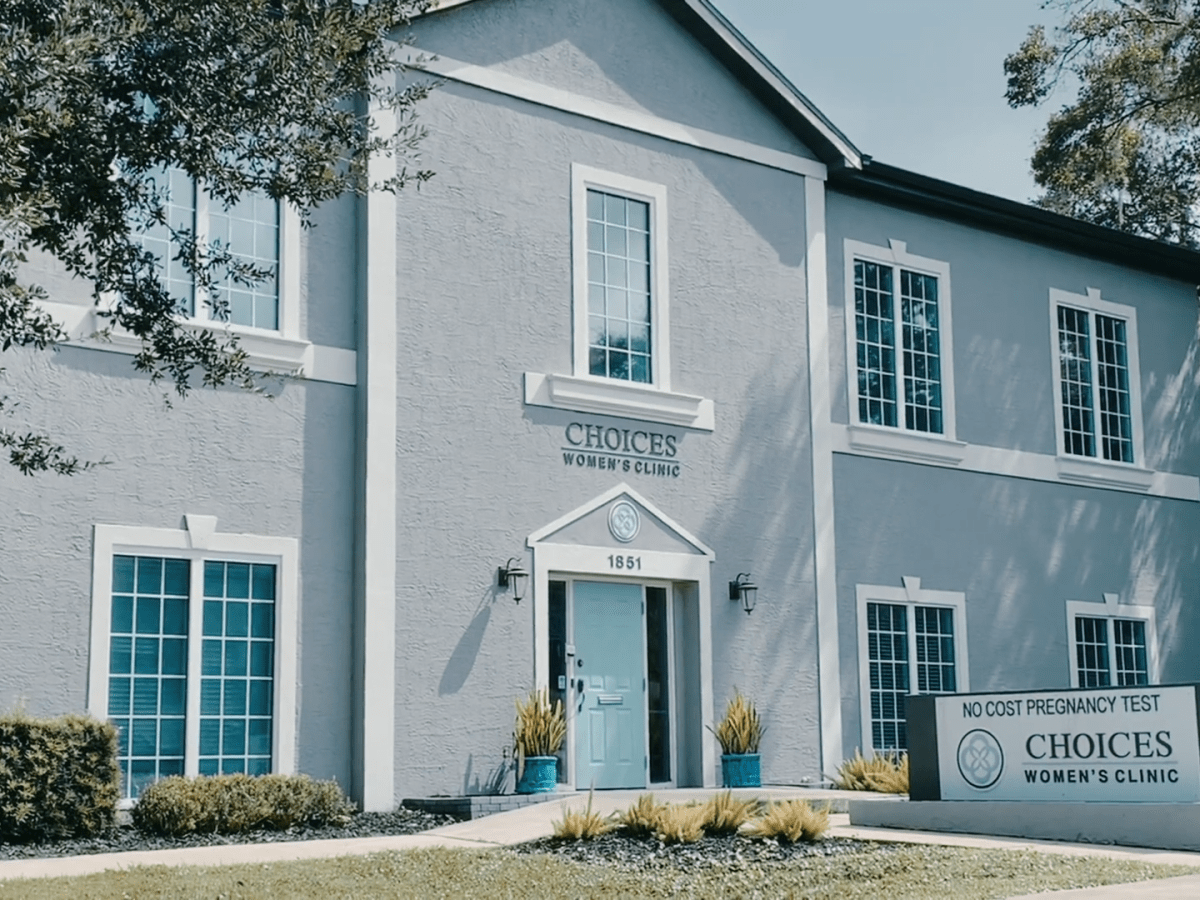
These facilities, also known as crisis pregnancy centers, often depict themselves publicly as actual abortion clinics, but are — in practice — largely unregulated facilities that aren’t legally bound to federal privacy laws and aren’t required to have licensed medical professionals on staff.
They’re typically run by Christian organizations or churches. Some have misleading names such as “Choices.” And in at least 21 states, including Florida, many are funded in part on the taxpayers’ dime.
“It’s just incredibly disappointing that the state is investing in an organization that uses deceptive tactics like the Human Coalition does to lure people in who are looking for comprehensive resources about their sexual health, and instead are going to be met by a narrow political agenda,” said Cheyenne Drews, deputy communications director and Reproductive Freedom Program director for Progress Florida.
She pointed out that Florida is one of the last holdouts in the U.S. to expand the public Medicaid health insurance program, leaving nearly one-third of uninsured, non-elderly Floridians who would be eligible for health coverage without coverage.
Meanwhile, the state has also hidden its maternal mortality data, drawing concern from abortion rights advocates. Research has found that maternal health outcomes are generally worse in states with abortion restrictions.
Even Florida GOP Congresswoman Kat Cammack, an opponent of abortion rights, has publicly shared her own near-death experience after suffering an ectopic pregnancy.
But instead of blaming the state’s abortion laws and how they complicate doctors’ ability to treat pregnancy complications, she instead recently blamed “misinformation” from abortion rights supporters. “It was absolute fearmongering at its worst,” she told the Wall Street Journal, which broke the story, last June.
Making it harder to find care
Along with Florida’s promotion of non-medical pregnancy resource centers — where staff urge against abortion as an option for unwanted pregnancies — the state has also recently made it harder for Floridians to find safe, licensed abortion clinics.
As Orlando Weekly first reported in February, an online licensed medical provider search tool operated by the state Agency for Health Care Administration got rid of the search category for “abortion clinics” sometime last year.
More recently, some providers, including Planned Parenthood locations, appear to have been removed from the state’s search option for healthcare providers entirely.
Drews, who flagged the search issue for the Weekly, said this lack of transparent information about the state’s open, licensed abortion clinics has confused not just state organizations, but national abortion clinic directories, too.
“It’s really concerning that, even between state and national partners, we’re having a hard time even like, pulling a final list of what’s open right now,” she said. The Agency for Health Care Administration did not respond to our request for an explanation on this change to its search tool.
As of 2025, Florida had 49 licensed abortion clinics that were still open, according to the Guttmacher Institute — an 8 percent decrease from 2024. Crisis pregnancy centers, meanwhile — described by critics as “fake clinics” — outnumber Florida’s abortion clinics more than three to one.
A ‘pro-life’ telecare program funded by the state
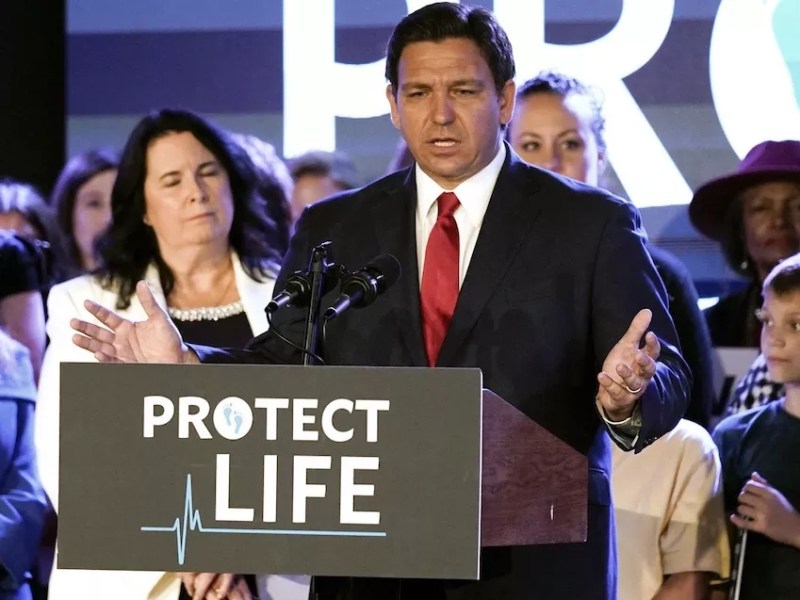
Florida Gov. Ron DeSantis, a fierce opponent of abortion rights who poured taxpayer money into an effort to fight a pro-abortion rights ballot initiative in 2024, signed into law last week a state budget for the fiscal year that began July 1. The budget included $500,000 for a “Florida telecare program” to be run by the Human Coalition.
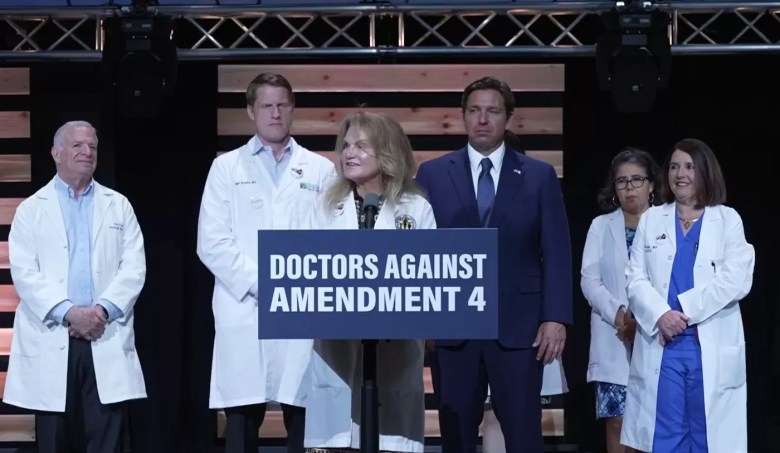
The funding request was submitted by GOP Rep. Jenna Persons-Mulicka, who co-sponsored the Florida bill in 2023 that banned most abortions after six weeks of pregnancy. The six-week ban officially took effect May 1, 2024, after winning a battle in court. Persons-Mulicka has submitted funding requests for the Texas-based anti-abortion group each year since 2023.
Altogether, the Human Coalition has received $3 million in Florida taxpayer funds since then, according to Drews — although the details of its “telecare” program are scarce.
Most of the money, said Drews, appears to be going towards marketing. She submitted a public records request last year for more information about the program, which is explicitly described in Florida lawmakers’ funding requests as a program to “promote family formation” and “support childbirth as an alternative to abortion.”
Although she’s received the Human Coalition’s contract with the state and a tax form, she said she has yet to receive records disclosing what its program looks like in practice. “I can’t find what phone number is even affiliated with this ‘telecare’ program,” she said.
Annual impact reports from the Human Coalition posted publicly to its website reveal little about its impact in Florida. The group has also received millions of taxpayer dollars from state governments in Texas, North Carolina, Georgia, Indiana, Louisiana and Tennessee, according to its latest impact report. State lawmakers in Oklahoma are similarly considering funding the out-of-state group, to help support its anti-abortion “Choosing Childbirth” program.
“Over the past year, your support has enabled the launch of telecare in Florida and Indiana!” the Human Coalition’s 2024 Annual Impact report reads. “This is part of a comprehensive state-by-state plan to support women while working to end abortion.”
According to the report, more than 1,450 families had been “served” by its telecare program in Florida as of 2024. Florida is not mentioned at all in its 2025 impact report.
A spokesperson for the Human Coalition, when initially reached by the Weekly, declined to set up an interview with our reporter about their work in Florida after the Weekly declined to send the group our questions ahead of time, per our standard interview policy.
The spokesperson shared in a statement afterward, however, that “Human Coalition is honored to walk alongside Florida women and families during pregnancy and as they welcome their babies.”
“The mothers we serve face real, everyday challenges, from unstable housing to finding reliable childcare and steady work,” the spokesperson added. “Human Coalition helps connect them with the practical support and community resources that make a lasting difference. We’re proud of the stability and hope Florida families have found. We remain committed to standing with Florida moms as they build a bright future for their children.”
A ‘duplicative’ use of state funds
Still, based on information that’s publicly available, it’s unclear what the Human Coalition actually does for the state with its generous cushion of taxpayer dollars.
According to the most recent funding request, the Human Coalition’s telecare program “shall provide direct services, supports, social services case management, and referrals to biological parents of unborn children and biological or adoptive parents of children under the age of two years.”
But is it a hotline? Without a phone number associated with the program, it’s unclear how exactly it works.
What is clear, however, is that the state already has a 24/7 “option line” run by the state-funded Florida Pregnancy Care Network — the phone number that’s listed on the notorious anti-abortion billboards all along the state’s highways. It’s unclear to Drews whether the Human Coalition has its own hotline or simply supports the hotline run by the FPCN.
“It seems entirely duplicative,” she noted. “If anything, maybe their intercepting techniques, and their marketing might be more aggressive. But it seems very duplicative.”
Records show Persons-Mulicka and Martin originally requested $1 million for the Human Coalition’s telecare program this year. Only half made it into the $117.6 billion state budget. The Governor’s Office praised the spending plan, sharing in a statement that it “reflects nearly eight years of conservative leadership anchored by fiscal discipline, responsible governance, and strategic investment.”
Florida Democratic lawmakers have attempted to strengthen regulation for state-funded crisis pregnancy centers and explicitly claw back funding for the Florida Pregnancy Care Network to eliminate the state’s subsidization of anti-abortion propaganda.
Related Stories
If you didn’t know your tax dollars support the anti-abortion movement, now you do.
But, as the minority party in Florida — where the number of Republicans in the state Legislature dwarfs that of Democrats — they’ve been unsuccessful in that effort.
“The continued investment in routing people to locations that have no medical or safety standards is just deeply concerning on the taxpayers’ dime,” said Drews, who formerly worked as a public affairs consultant for Planned Parenthood of South, East, and North Florida.
“Just the idea that equipment going inside a patient’s body might not even be sanitized in between patients — because that’s how little regulation they have — is so concerning in a time when the governor just vetoed what, nearly a billion dollars in things that local governments needed,” she added. “Meanwhile, millions of dollars are being routed to these places that have zero accountability.”
Related Stories
Plenty of talking points about abortion medication are repeated that are not based on scientific fact or evidence, according to experts
A Planned Parenthood spokesperson confirmed that the Orlando location remains open and has expanded services to ‘help fill gaps created by these politically motivated barriers.’
The Florida Agency for Health Care Administration until recently offered a clear search function on its website to find abortion clinics.
Related
Source link