
Nearly four dozen water systems that provide drinking water across Maine would be at risk of violating new limits on “forever chemicals” if the state began enforcing updated rules on the toxic substances today, showing how much work they have left to do to meet new requirements.
In 2025, 44 public water systems had a well that tested above at least one of the state’s tightened thresholds for the chemicals, called per- and polyfluoroalkyl substances, or PFAS, according to a state dataset. The systems include 15 schools, nearly a dozen mobile home parks and five water districts from across Maine that together provide more than 25,000 people with drinking water on a regular basis, an analysis conducted by The Maine Monitor showed.
Without reducing the quarterly average of their PFAS levels by April 2029, the systems could be subject to fines or other enforcement measures from the Maine Department of Health and Human Services, according to the new rule. The more stringent limits are effectively a fifth of what they previously were and mostly apply to individual PFAS compounds, not total sums.
How communities successfully reduce PFAS to minute levels could be a question of how much public funding is available to plan, purchase and install filtration systems before the deadline. Then, when treatment is in place, schools, water districts and communities have to budget for their upkeep.
That’s less difficult for a larger utility such as the Sanford Water District, which already has qualified technicians on its payroll, according to its superintendent, David Parent, but strenuous for others.
“I think that [Maine’s] largest challenge hasn’t actually been systems like us or Augusta,” Parent said. “It’s been dealing with the schools that have very high levels and making sure that they have the maintenance staff. They have things on their plate other than running your drinking water.”
Some schools and water systems that tested for elevated PFAS levels in 2025 have reduced concentrations to undetectable levels in 2026. Others have not.
Holden Elementary School, for example, tested at 20.2 parts per trillion for state-regulated PFAS last November, just above Maine’s interim limit of 20 parts per trillion. Two months later the chemicals were undetectable.
Meanwhile, Lake Region High School in Naples tested at around 28 parts per trillion last December and then again a month later.
The state has distributed around $40 million in grant money since 2022 to help at least a dozen schools and communities install PFAS treatment facilities, or connect to new water sources and reduce concentrations, according to Maine Department of Health and Human Services grant databases.
Four years later, some larger PFAS projects, such as Sanford’s, are still in the planning or construction phase. Budgeting the time and resources required to install the PFAS systems becomes a balancing act as Sanford juggles existing maintenance plans.
When factoring in Sanford’s prescheduled projects to replace aging or leaking water mains, even the district’s $10 million in grants for PFAS filtration will only go so far, Parent said. Sanford’s two proposed treatment facilities come with a $25 million price tag and would cost more than $200,000 per year to operate, with the first facility scheduled to go online in 2029. (Sanford has two wells that have hovered around the state’s new PFAS thresholds at 13.32 and 11.75 parts per trillion of total-regulated compounds as of early March. The second well may be retired instead of revamped with a filtration system, Parent said.)
Parent said loans and settlement money the district may receive from lawsuits against PFAS manufacturers would balance out the initial operation costs of the first facility, cushioning ratepayers. But a few years down the line, when loan payments are due and a second facility might start up, costs will spike, which is why Sanford Water District has started making incremental annual rate increases of 1.5 percent now, Parent said.
“That way, when this large new debt service hits, and when [the new operation] really starts hitting us, we won’t have anything to make up,” Parent said.
One of the primary grants that Sanford received is funded by the 2021 Bipartisan Infrastructure Law and managed by the U.S. Environmental Protection Agency, which allocates money to states for water filtration projects in small or disadvantaged communities.
Sanford and four other Maine water districts are slated to receive $7.4 million from the grant in 2026, according to a Maine project list. The congressional funding behind the grant is scheduled to lapse after the end of the fiscal year in June, meaning future PFAS filtration systems in Maine could require a new primary funding source.
And aside from the 44 Maine water systems that tested above the stricter threshold in 2025, there could be more that exceed standards when the new deadline to increase statewide PFAS monitoring kicks in next April and systems have to start testing more regularly.
As their name suggests, PFAS are persistent and difficult to break down, causing them to accumulate in the environment and humans over time. Peer-reviewed studies have linked PFAS exposure to various health conditions, such as kidney or testicular cancer, repressed immune responses, developmental delays in children and heightened blood pressure in pregnant women.
Their widespread presence comes from the broad swathe of industrial and consumer products that manufacturers such as 3M and DuPont first developed more than 75 years ago, including non-stick cookware and packaging.
PFAS, which also show up in human waste, have seeped into groundwater and wells across Maine after contaminated sludge was spread for years on local fields as a type of fertilizer.
Environmental engineer and Fairfield resident Nathan Saunders has been analyzing data from a former state program that authorized the spreading of the PFAS-laden wastewater sludge. The amount of sludge spread by the Kennebec Sanitary Treatment District in Fairfield alone had so much PFAS it could have contaminated New York City’s annual drinking water supply for four years, according to his analysis of recent soil samples and documented volumes of sludge deposits. (His analysis has not been peer reviewed.)
The findings show that drinking water contamination will likely continue in Fairfield and other sludge hotspots unless deliberate measures are taken to remove PFAS-contaminated soils, Saunders said.

“The potential for contamination is absolutely enormous,” Saunders said. “Without the water coming down and dissolving the PFAS, which is sitting on the top of all these fields, we don’t get it in our well.”
The water from his home well has consistently tested hundreds of times above the state’s former, more lenient PFAS limit, spiking during periods of heavy precipitation and decreasing during droughts, according to Saunders.
He and roughly 500 other Maine residents have installed and maintained individual PFAS filtration systems through a fund from the Maine Department of Environmental Protection. With $16.5 million remaining in the fund as of last year, the department has projected it will soon run out of funding to install additional filtration systems and maintain existing ones.
Meanwhile, seepage from sludge-soaked fields into the water table risks contaminating additional wells, Saunders said. The cost to swap out one of the PFAS filters on his well cost $2,000 alone; without state funding, Saunders would be left with the bill.
“Lots of people are going to have a lot of trouble with … maintaining a system of those kinds of costs,” he said.
Public water systems are facing a similar potential funding lapse, according to Roger Crouse, general manager of the Kennebec Water District in Waterville and president of the Maine Water Utilities Association.
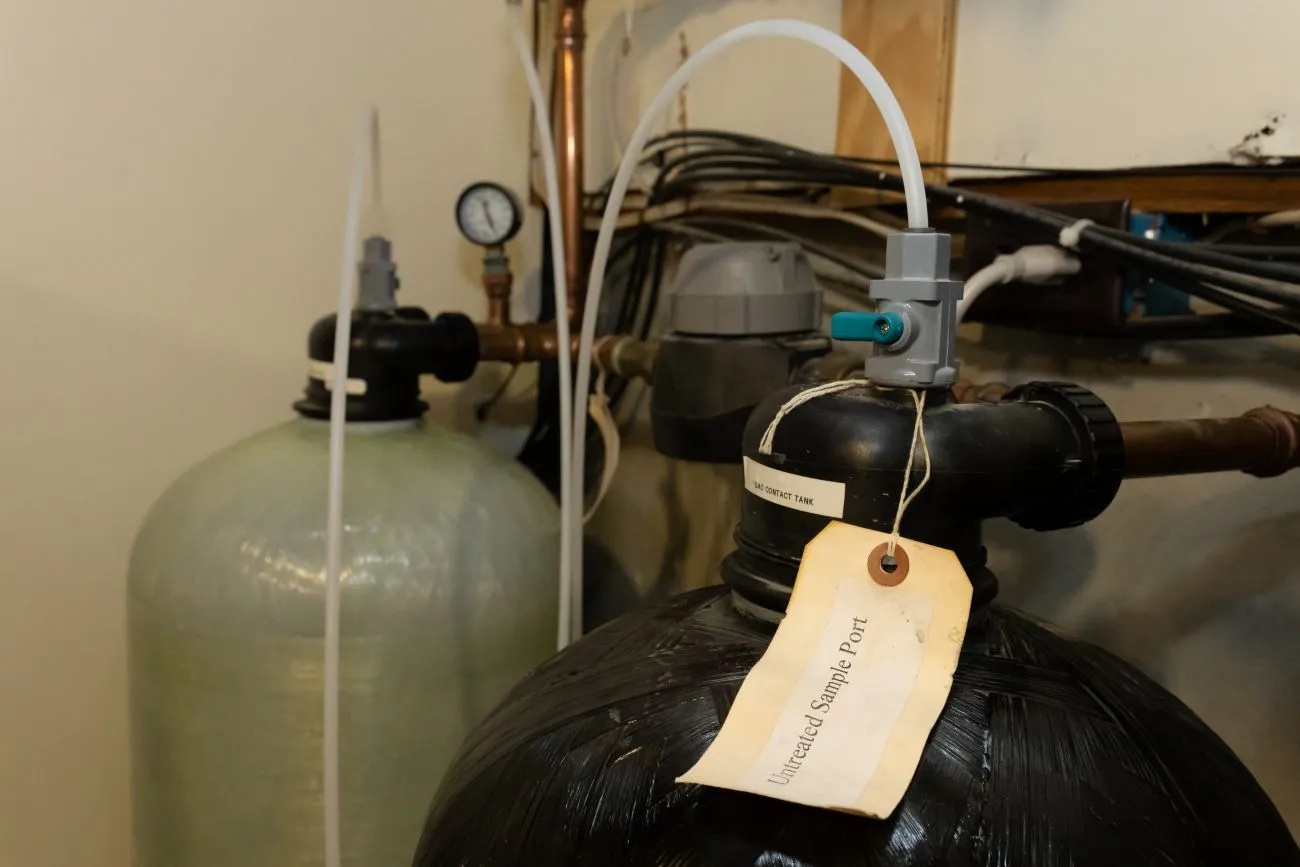
“We’ve been fortunate to get some money into Maine from the federal government” for PFAS treatment, said Crouse. “That money is essentially gone.”
Like Sanford, the Kennebec Water District received grant funding to build a PFAS filtration system that’s slated to begin construction next year. The grants will cover most of the project’s $8 million estimate, and PFAS lawsuit settlement funds and loans will cover the rest, according to Crouse.
Based on the current federal funding outlook, Crouse predicted the district will be shouldering the costs when those funds are exhausted and system maintenance expenses ratchet up.
The state Department of Health and Human Services did not respond to questions from The Monitor about whether additional grants were likely. There are smaller state grants and loans, but not of the size of the PFAS grants.
“It seems unlikely there’s going to be any additional PFAS money coming from Congress,” Crouse said. “After the 2026 cycle, we’re all on our own for PFAS treatment.”
Both Crouse and Parent said their districts take active measures to protect against future PFAS contaminations commonly caused by stormwater runoff or shifts in the water table, but the risk still lingers: There’s documented sludge application on land near the boundaries of the water district’s watershed.
It hasn’t caused any spikes in PFAS concentrations in China Lake nor the broader basins the district draws its water from, according to Crouse. He said the district does what it can to reduce potential PFAS spikes, such as maintaining forest buffers around the watershed, but the persistence of the chemicals is impossible to plan for.
“This is such an amorphous contaminant that comes in so many different things and at such incredibly low levels, it’s really hard to predict whether we will prevent new PFAS contamination,” Crouse said. “It seems unlikely that we would see new PFAS contamination within the watershed, but I can’t predict very far.”
Ultimately, Maine water districts are a downstream victim of PFAS. The lawsuits they’ve joined against PFAS manufacturers such as 3M, DuPont, Tyco and BASF are an attempt to compensate for the costs they and their ratepayers have incurred to filter PFAS from their drinking water.
Parent emphasized that Maine shouldn’t lose sight of the root cause of PFAS contaminations as it continues to grapple with the consumer products they come from.
“We’re not the source of it,” Parent said. “We’re the unwilling recipients.”
This story was originally published by The Maine Monitor, a nonprofit and nonpartisan news organization. To get regular coverage from The Monitor, sign up for a free Monitor newsletter here.