
The numbers on gas station signs across the state are approaching a threshold Mainers hoped they’d never cross again. With regular gasoline now nudging $4 a gallon and diesel surging toward $6, the pain is no longer confined to the pumps.
From the lobsterman in Stonington to the logger in the North Woods, the rising cost of crude — fueled by the ongoing conflict in Iran — is triggering a ripple effect that touches every corner of the Maine economy.
When the cost of a mile goes up, so does the cost of a gallon of milk, the wood used to build our homes and the bait used to catch Maine lobster. Here is how the rising price of fuel is trickling down through the Pine Tree State.
While the $3.92 average for a gallon of regular gas in Maine captures the headlines, the real crisis is found in the $5.82 average for diesel, which farmers, fishermen and forest product companies call the lifeblood of the state’s working lands and waterfronts.
THE IMPACT IN THE NORTH WOODS
For the logging industry, the cost to move timber from the forest to the mill to the end user has skyrocketed. The recent price jump is siphoning an estimated $80,000 a day out of the Maine economy, according to Eric Kingsley, an economist specializing in the forest products sector.
With mud season approaching the North Woods, loggers are finishing their end-of-season cuts and have begun transporting wood from on-site storage piles to pulp and paper mills, said Dana Doran, executive director of the Professional Logging Contractors of the Northeast.
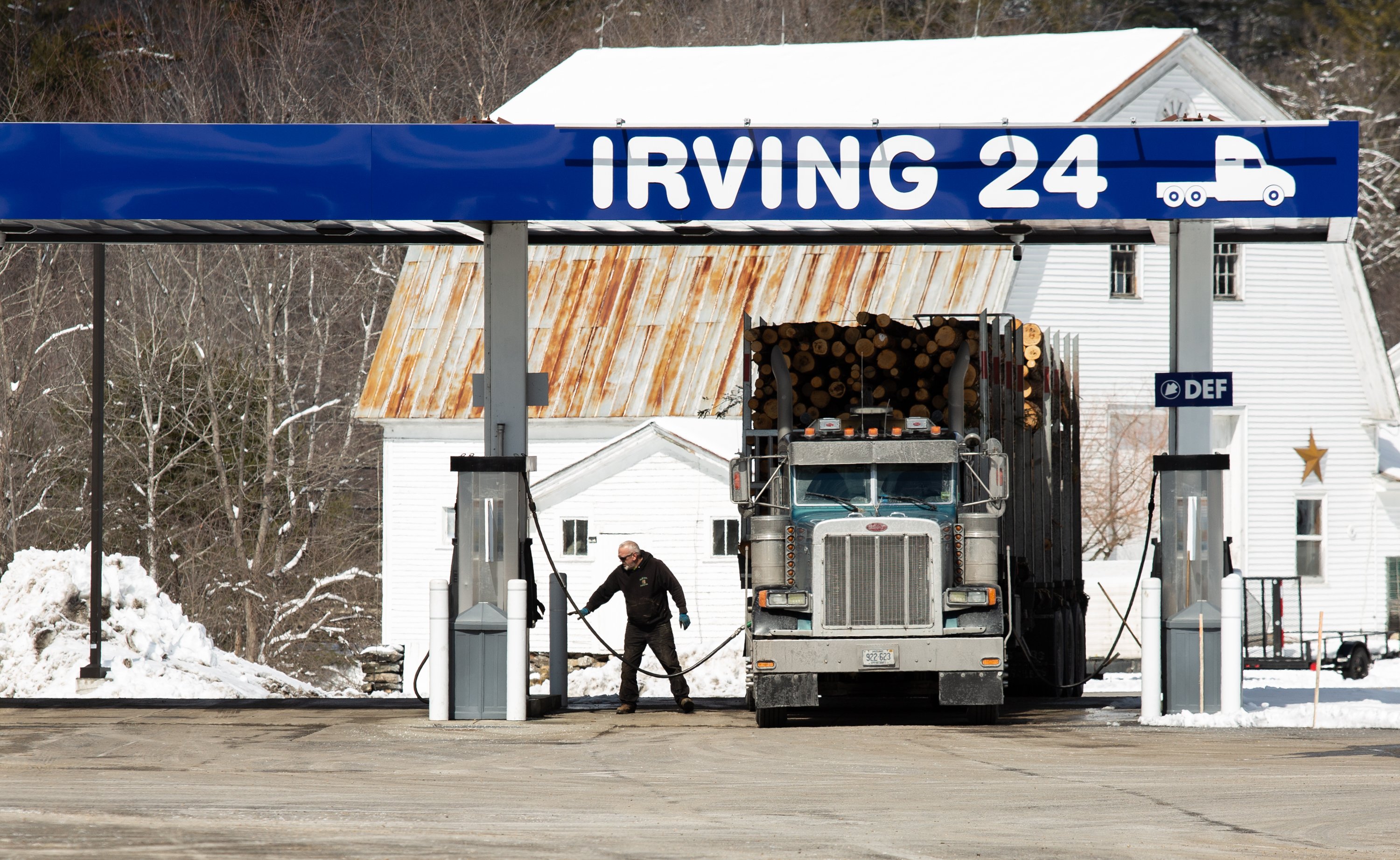
The crisis extends beyond the fuel tank to include lubricants, grease and equipment parts, all of which are becoming more expensive to produce and transport, he said. If mills don’t absorb part of these costs, the price of lumber will be the next thing to climb.
While larger operations might have some flexibility, smaller contractors have “no relief in sight,” Doran said. Many are now facing a grim choice between diversifying into other work, like home construction or excavation, where higher costs can be passed on, or scaling back their operations.
Doran points to Georgia’s 60-day fuel tax moratorium as a model that Maine should follow. He argues that even a 30-day reduction in fuel taxes could keep the economy moving, even if it temporarily impacts the state’s highway fund.
‘ONE MORE THING’
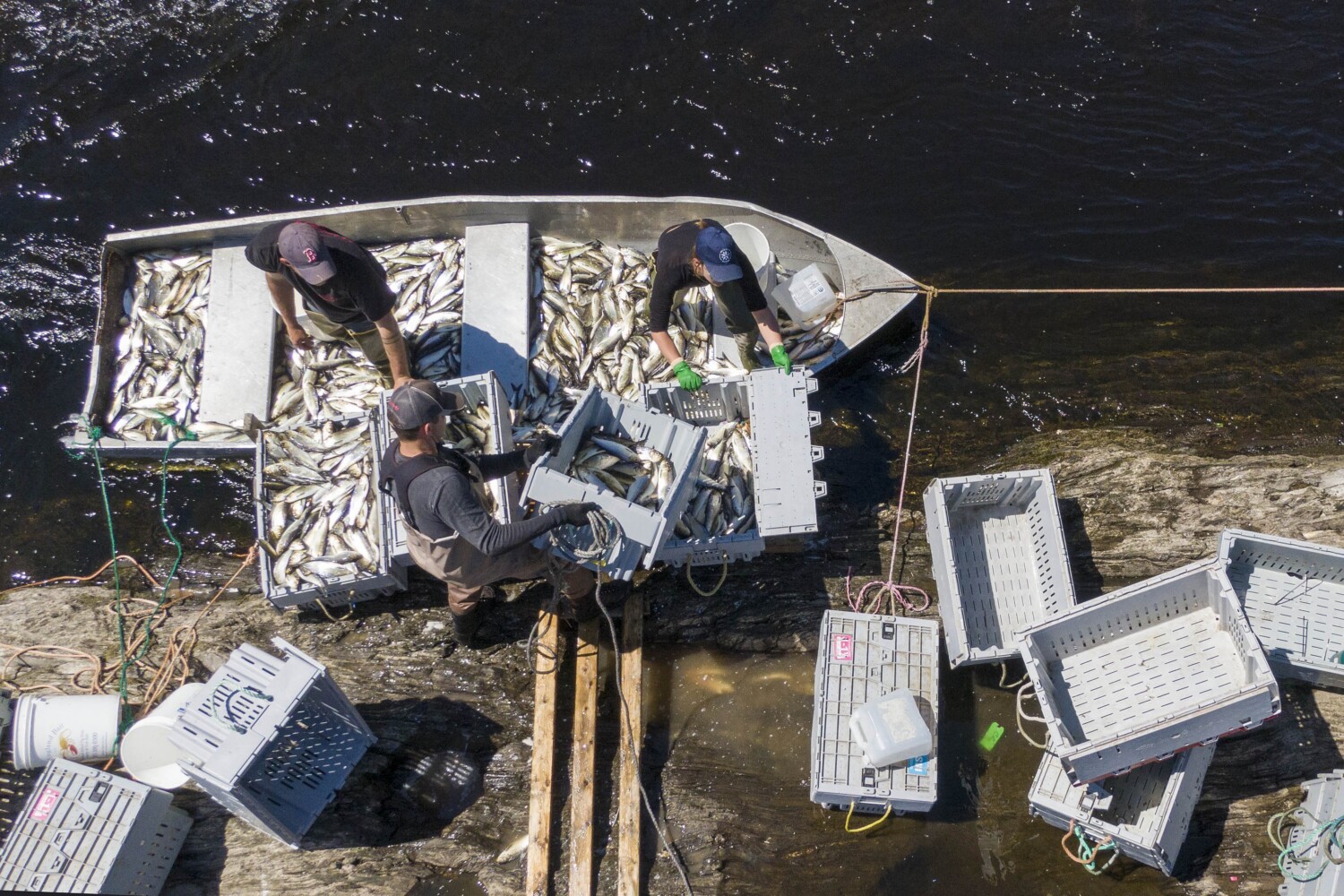
Lobstermen are also anticipating the squeeze even before the busy summer season begins. They were already reeling from the rising cost of going fishing before the Iran crisis caused fuel prices to soar, said Patrice McCarron, the executive director of the Maine Lobstermen’s Association.
“This is just one more thing,” she said. “One more thing that affects the cost of everything we do.”
The bulk of Maine’s lobster fleet is dormant now, with fishermen repairing their boats and their gear, but that winter work is usually funded off the profits from last year’s haul, and wouldn’t be influenced by the rising gas prices, she said. Any contracted work is usually booked in advance.
But for those who do chase winter lobster, which often fetch a high price, the high cost of diesel may be playing a big role in how long they allow their traps to set before heading to retrieve them in deeper offshore waters.
Some of the association’s members have told her that they are getting hit with transportation surcharges while trying to source bait for their wintertime fishing. While already high, the cost of the bait itself has remained steady, but there’s a surcharge tacked on to every delivery.
IT’S NOT JUST FOR TRACTOR FUEL
On the farm, the pain points aren’t just about powering a tractor. Higher costs for petroleum-based products — from fertilizer produced using fossil fuels to the plastic used to wrap hoop houses or package fruits and vegetables for market — are also taking a toll.
Jenni Tilton-Flood, a dairy farmer in Clinton, is worried that the high costs will eventually force farmers to produce less food, leading to higher prices at the grocery and making it too expensive for some people to drink her milk.
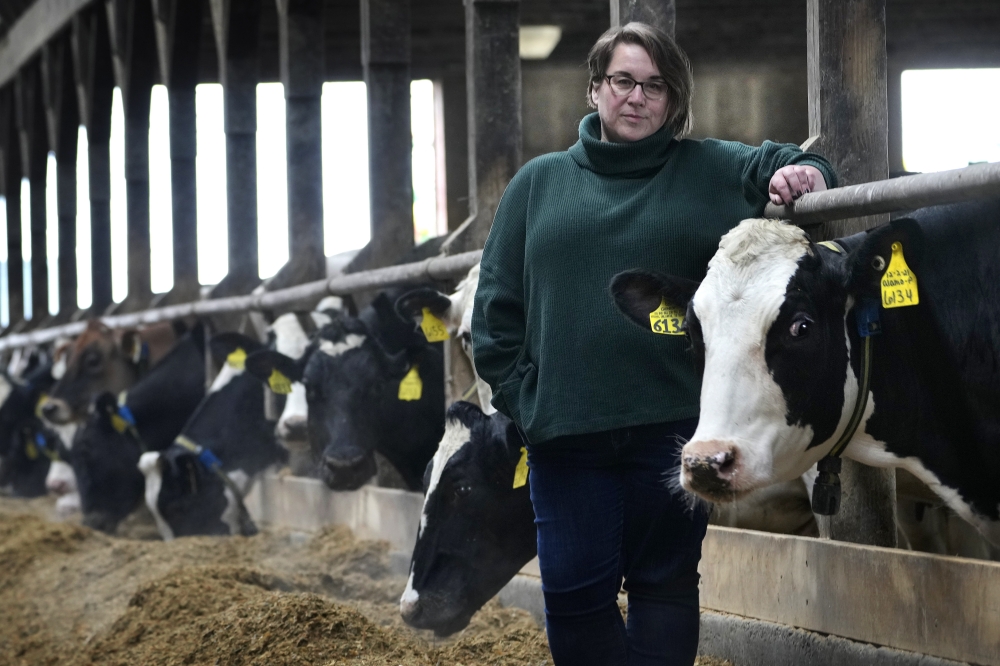
“For a farmer, it’s a lot like treading water with a weight belt,” Tilton-Flood said. “It’s not one weight, but all of them. You’re trying to keep your head above water, and they just keep adding more weight. I worry I’m about to get pulled under.”
Seth Kroeck, an organic fruit and vegetable farmer in Brunswick, just paid a 27% fuel surcharge on $230 worth of seeds he ordered from New York. That is on top of the $6 a gallon he paid for the diesel he used to fill up his farm truck at a local gas station Friday.
With fertilizers hard to obtain, or too expensive to buy, some farmers will see yields drop while the cost of production goes up, up, up, Kroeck said. Nobody wants to raise prices, but you can’t keep a farm afloat if you’re losing money with every harvest.
“I’ve already had the conversations about pricing with everybody,” Kroeck said. “If my costs are going up, I’m going to need to change my price. Farms operate at a very low margin. Like single digits. There’s really no cushion left.”
Some relief could be possible if state lawmakers agree to send a $45 million bond package to the voters in November that would fund drought relief, farmland protection and an agriculture, food and forest products investment fund. The bill is stalled in the House.
ON THE HOMEFRONT
The pain follows Mainers home, too.
Heating oil now averages $5.37 a gallon, a 41% jump since the war in Iran began, according to the latest weekly survey conducted by the Maine Department of Energy Resources. Filling up that standard tank now costs a family about $425 more than it did in February.
And the grocery receipt is getting longer while the bag stays lighter, even though the farmers like Tilton-Flood are not passing on their costs, at least not yet. Roughly 85% of all freight, including food, in Maine is moved by truck, according to the Maine Motor Transport Association.
Most trucking contracts include a floating fuel surcharge that is triggered once diesel passes a certain price point. As diesel approached $6 a gallon in early April 2026, industry officials said these surcharges became the primary driver of wholesale inflation for Maine grocers.