
The December 11, 1980 issue of Rolling Stone had a Dolly Parton cover story. Features on the band B-52s and NFL quarterback Kenny Stabler too. Towards the back, there was a mysterious ad titled “Wanted: Rock singer.”
Thumbing through that issue of Rolling Stone, the ad caught the eye of Mark Dixon, as he recounts in a fascinating new YouTube documentary by Brendan Borrell, since highlighted by outlets including Classic Rock and Ultimate Classic Rock.
In 1980, Dixon was the singer for a Niagara Falls, New York band called Avalanche. They played covers of popular melodic rock acts like Journey, The Babys and Jefferson Starship.
The ad in Rolling Stone promised “$50,000 MINIMUM GUARANTEE.” That’s the equivalent to about $200,000 today, according to Borrell, a journalist with bylines with New York Times, National Geographic and The Atlantic.
As Dixon recalls to Borrell, “I’d been trying to avoid day jobs for a long time.” His interest piqued, Dixon read on.
The ad copy stated, “Highly successful U.S. recording artist adding another vocalist: Male, high range, capable of Chicago, Foreigner, Boston, new Star-ship, Bad. Co style vocals.”
The ad concluded by asking for singers’ demo tapes to be sent to a post office box in White Plains, New York.
Dixon went to the basement and recorded on his reel-to-reel tape machine three songs, including “Lights” by Journey and “Let Me Take You Home Tonight” by Boston. He put his demo and contact info in an envelope and mailed it to the address in the ad. He didn’t think anything would ever come of it.
But a couple months later he got a phone call. On the phone was Tom Scholz, the guitar wizard and creative mastermind behind Boston, best known for their “Stairway to Heaven” style power ballad “More Than a Feeling.”
“And he goes, ‘Well, I’m producing a project for a band,’” Dixon says Scholz told him over the phone. “He wouldn’t tell me who the band was. ‘And they’re looking for a lead singer, and we’ve nailed you down [from] like 3,000 singers,’ or something like that.
Borrell first happened upon Dixon’s name while working on a book about Boston, titled “Power Soak.” Combing through a 1984 court transcription related to the band, in the doc, Borrell says in a voiceover, “It was just a passing mention. A Rolling Stone ad and a singer from Buffalo whose name never appeared again on the record. I knew I needed to hear the rest of his story.”
Scholz told Dixon he’d call him back later work out the details of his live audition. Earlier in his career, Dixon sang in a Led Zeppelin cover band. He knew he could cop the vocals of high-range singers like Zep’s Robert Plant and Boston’s Brad Delp.
Scholz called Dixon back a while later and asked him to come to his home studio in the Boston suburbs to audition in person. His audition song would be Boston’s “A Man I’ll Never Be.” Sholz said he picked the song because he had the tape handy and was very familiar with the track.
Boson’s self-titled 1976 debut album sold massively, on the strength of now-classics like “More Than a Feeling,” “Peace of Mind,” “Foreplay/Long Time,” “Rock & Roll Band” and “Smokin’.” The band’s 1978 sophomore LP featured title track smash “Don’t Look Back.”
In 1980, some of Scholz’s bandmates released an album without him, the self-titled solo debut by Boston guitarist Barry Goudreau. It was a strong release. And sounded damn near as anthemic as Boston.
When it was time for Dixon’s audition, Scholz picked him up at the airport. As Dixon tells Borrell in the doc, titled “Rock Singer Wanted: The Story of Boston’s Secret Frontman,” “It was unreal. One day, I’m just gigging in my own city in the Niagara Falls area, and now I’m hanging around this pop star. Every modern convenience you could see, as far as recording goes, down in his basement.”
Scholz, who’d studied engineering at MIT, had built much of that recording gear. He handed Dixon a microphone. In that big moment, Dixon delivered, nailing Delp’s sky-kissing sound.
Dixon says Scholz then “turned around with a look on his face and he said to me, ‘I don’t believe it. You sound just like Brad. This is amazing. I’ve never heard anybody sound like Brad.”
Even as Scholz drove Dixon back to the airport for a return flight back home, he still hadn’t revealed the band’s name he was auditioning for. Dixon resumed his life back in the Niagara Falls area and his weekend bar gigs.
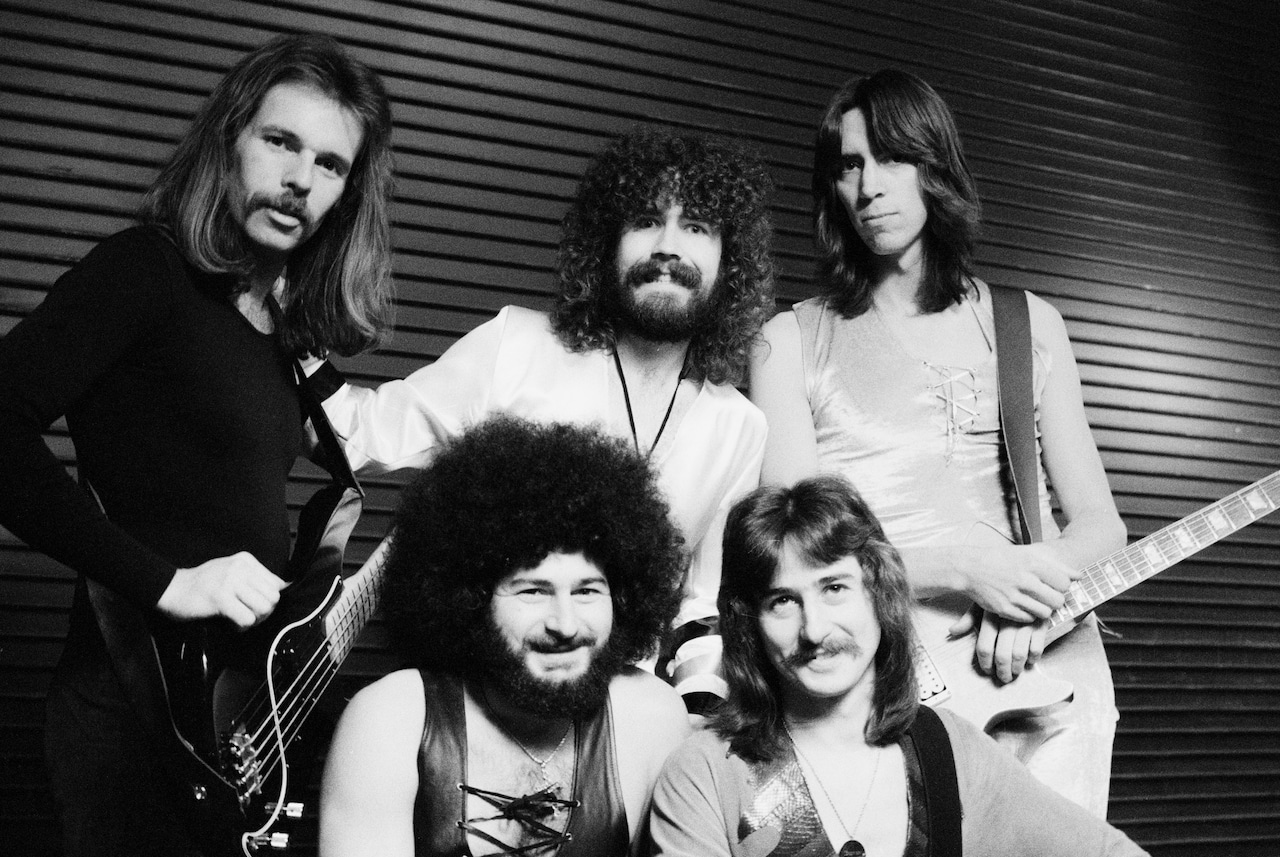
As Borrell says in the doc, “What Dixon didn’t realize was that he was a contingency plan. Rumors of Boston’s demise,” which Scholz had previously denied, “had some truth behind them.”
In May 1981, guitarist Barry Goudreau said he was quitting during a heated meeting at Scholz’s house. Then Brad Delp stormed out, his future uncertain.
Scholz was also under pressure from CBS Records, Boston’s label, for a third album by the band. As deadlines came and went, Borrell says, “royalties were in jeopardy and a legal battle loomed.”
In August 1981, Scholz met with CBS Records leadership in New York City. He told the label his plan to get the third Boston album done, in legal transcripts years later Borrell found.
“I mounted a one-man campaign to canvass the country,” Scholz says in the transcripts, “and find a vocalist who had the identical vocal sound as Brad Delp for the purpose of using both of them on the record, and then having this fellow do the live touring when Brad didn’t feel like going out.
Scholz played CBS a tape of “A Man I’ll Never Be,” with Delp’s original vocals and Dixon’s demo alternating line by line. No one could tell the difference between the two singers.
Scholz would put Dixon on retainer. CBS agreed on Scholz’s plan on the condition that it be kept a secret, inside the label and outside it.
Scholz had flown his own single-engine plane to his CBS meeting in NYC. He then flew straight to Niagara Falls airport, where Dixon was waiting in the lobby.
Scholz got out of his plane, Dixon says, “And he walked over and sat down and started talking to me about Boston, and how he liked what I did on the demo and so on and so forth. ‘And I want to let you know at this time that you will now be the new lead singer of Boston.’ And I said, ‘For real?’ He goes, “Yes, I want you to be my new lead singer. But you have to keep this quiet.’”
Scholz gave Dixon a check for “a few thousand dollars,” Borrell says in the doc, “climbs back into his plane and flies back to Massachusetts. Driving back home, Dixon says he felt like, “The hard times are over. It’s up to me to make good.”
Dixon says he followed a healthy regimen, including no smoking, watching his weight and not drinking anything harder than Diet Pepsi. Scholz mailed him a demo of a song called “Don’t Say Goodbye” with Delp’s vocals on it, and asked Dixon to practice singing it.
Dixon was then flown out to Scholz’s house to record his vocals for the song alone. Dixon wondered when he’d meet the rest of the band. But Scholz was famous for playing multiple instruments on Boston tracks and was an obsessive perfectionist in the studio.
Dixon remained mum on his movie-script worthy secret gig – for a while. But eventually he felt the need to explain to local band Avalanche why he was leaving, because his Avalanche bandmates were mad at him.
“It got back to Tom,” Dixon says in the doc. “I don’t know how it got back to Tom. He called me up one day furious. He was saying, ‘What are you doing running around your city telling me you’re by singer?’ I said, ‘Well, I had maybe told a couple people …’”
Scholz told Dixon it was OK but not to let it happen again. He called him back a few days later and said, according to Dixon, he had some news for him, but it wasn’t good news. Delp was coming back to the band.
Dixon wasn’t going to be the lead singer for Boston anymore, but Scholz said he’d send him another check and said he would hook him up with a cousin who was recording a demo for CBS in California. That didn’t happen.
“I was on top of the world,” Dixon says, “then I was back where I started, on the ground.
Dixon put about a year of his life into his secret gig as Boston’s new lead singer and hadn’t received the full $50,000 the job promised and he’d banked on. According to the doc, he only received about half that amount.
Dixon considered suing. But, Borrell says in the doc, “when he signed that last check from Scholz he waived any claim against him.” Dixon says he then sought solace in alcohol.
Eventually he stopped thinking about his Boston saga much, Dixon says, until talking with Borrell for the doc. “And then I got all depressed again.” He then laughs and adds, “No, it’s alright, I’m fine.”
Still, Dixon says Scholz “never really said why he let me go, just Brad was coming back. If he was leveling with me or not, I don’t know.”
Borrell told him what the record showed: “The label was pressuring the band, and there was this secret meeting in New York and that Scholz testified under oath that Dixon’s voice was indistinguishable from Delp’s.
Dixon still has his copy of that fateful 1980 issue of Rolling Stone with the covert Boston tryout ad in it.
In the doc, asked how he now makes sense of that time and righted his way again, he says, “People knew me in Buffalo and the Niagara Falls area as the ex-lead singer of Boston. They knew that. And that really helped my reputation and that got around to a lot of bands. They almost treated me like royalty.”
He’s been inducted into the music hall of fames of Buffalo and Niagara Falls. band “Who could ask for more?” he says in the doc. “Yeah, I would like the fame [of being Boston’s singer], I would like the money. You know what? I’m happy.” Later in life, Dixon sang for a Three Dog Night tribute band called ELI. He’s since retired from music.
Delp’s vocals and Scholz music were a supersonic combination that sold tens of millions of albums. Boston didn’t release another album until 1986’s “Third Stage,” the one with hits “Amanda” and “We’re Ready” on it.
Delp was a member of Boston from 1975 to 1990. He returned to the fold in 1994 until his 2007 suicide.
Boston’s later lead singers included Stryper frontman Michael Sweet and Frank Cosmo. More recently, Tommy DeCarlo, a former Home Depot employee, fronted the band, which last toured in 2017.
Borrell’s doc doesn’t indicate if he reached out to Scholz, who rarely gives interviews. Scholz also doesn’t appear to have really ever spoken publicly about Dixon.
Despite selling more than 30 million albums in the U.S., including more than 17 million of their debut, Boston hasn’t been inducted or even nominated for the Rock & Roll Hall of Fame.