
Florida Rep. Michelle Salzman, a Republican from Pensacola, has filed a bill for consideration in 2026 that would aim to help curb drug overdose deaths by decriminalizing drug-checking equipment.
Drug-checking or testing equipment, such as test strips, can be used to help detect the presence of potentially dangerous substances in a batch of drugs. Under Florida law, however, most testing equipment technically falls under the definition of “drug paraphernalia,” which is unlawful to use or possess with the intent to use.
Salzman’s bill, filed Wednesday, would build on a law passed by Florida lawmakers in 2023 that decriminalized the use of fentanyl test strips only. Fentanyl, a synthetic opioid roughly 50 times more potent than heroin, has driven a surge in drug overdose deaths in recent years, both alone and in combination with other drugs. According to the CDC, fentanyl was involved in nearly 50,000 overdose deaths nationwide in 2024, down from 76,282 deaths in 2023.
“The Legislature recognizes that drug-testing products, including test strips, reagent kits, and related products, are evidence-based harm reduction strategies that do not encourage drug use, but, instead, prevent overdose and death by allowing individuals and communities to identify the presence of dangerous controlled substances and adulterants,” Salzman’s bill reads.
While overdose deaths, including fentanyl-involved deaths, declined in Florida and nationwide last year, other risky substances such as xylazine — a non-opioid tranquilizer also known as “tranq” — have also entered the illicit drug market. As a central nervous system depressant, xylazine can exacerbate the life-threatening effects of other depressants, such as fentanyl.
A U.S. Drug Enforcement Administration report notes that xylazine has been involved in a growing number of drug overdose deaths, and is most often found laced (unbeknownst to the user) into drugs sold as fentanyl, cocaine and heroin. Xylazine use has also been linked to effects such as dizziness, low heart rate and necrotic skin wounds severe enough to require amputation.
Expanding legal protections for harm reduction
Under Florida law, only drug testing equipment capable of detecting fentanyl is currently lawful to possess, distribute and use. That is, the decriminalization of fentanyl test strips by lawmakers in 2023 didn’t apply to drug-checking tools capable of detecting non-fentanyl substances like xylazine.
Salzman’s proposal would amend Florida law to change that by clarifying that unlawful “drug paraphernalia” does not apply to “test strips, reagent kits, or any other narcotic-drug-testing products” used solely to detect whether a drug contains fentanyl, fentanyl analogues (e.g. carfentanil), xylazine, cocaine, amphetamines, cathinones, “or any other controlled substance or adulterant.”
If approved, Florida would join at least 30 states that have already legalized the possession of drug-checking equipment broadly, according to the Network for Public Health Law. An additional 11 states, including Florida, explicitly allow for the use of fentanyl drug-checking equipment only.
Under Florida law, the possession or advertisement of drug paraphernalia is a first-degree misdemeanor, punishable by up to one year in jail and a fine of up to $1,000. Giving drug paraphernalia to a minor under 18 is a second-degree felony, punishable by up to 15 years in prison, a fine of up to $10,000 or both.
Why was this unlawful in the first place?
Almost as a default, most states passed anti-drug paraphernalia laws decades ago based on a model created by the DEA in 1979. That model included drug testing equipment in its definition of unlawful drug paraphernalia.
A growing number of states, however, have moved to amend those paraphernalia laws in recent years in response to the U.S. overdose crisis and a recognition that the use of drug-checking equipment can be a safe and cost-effective way to save lives.
What’s next
The bill from Salzman — a pro-gun Republican who has demonstrated markedly less concern for deaths by firearm or those caused by Israeli troops overseas — has been filed for consideration by the Florida Legislature during the 2026 state legislative session. Next year’s legislative session begins Jan. 13, 2026, and is scheduled to last 60 days, through March 13.
The bill will have to be approved by a majority of members in smaller legislative committees, then receive majority approval from both the Florida House and Senate. The bill would take effect July 1, 2026, if approved.
Subscribe to Orlando Weekly newsletters.
Follow us: Apple News | Google News | NewsBreak | Reddit | Instagram | Facebook | Bluesky | Or sign up for our RSS Feed
Related Stories
Carfentanil, a powerful and potentially deadly tranquilizer, is often mixed into cocaine, meth, or counterfeit pills, says prevention nonprofit
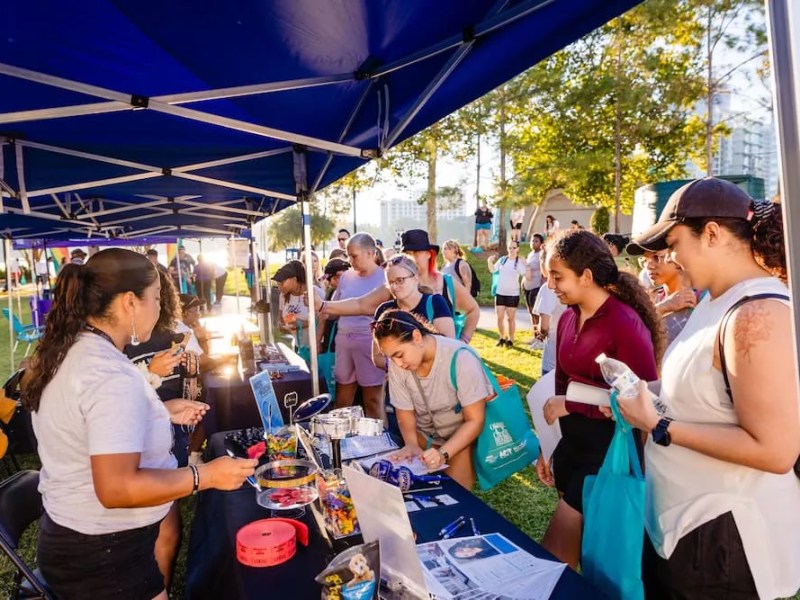
Project leaders plan to distribute test strips at bars downtown and during events deemed high-risk, like music festivals
Related
Source link