
This story originally published online at The Assembly.
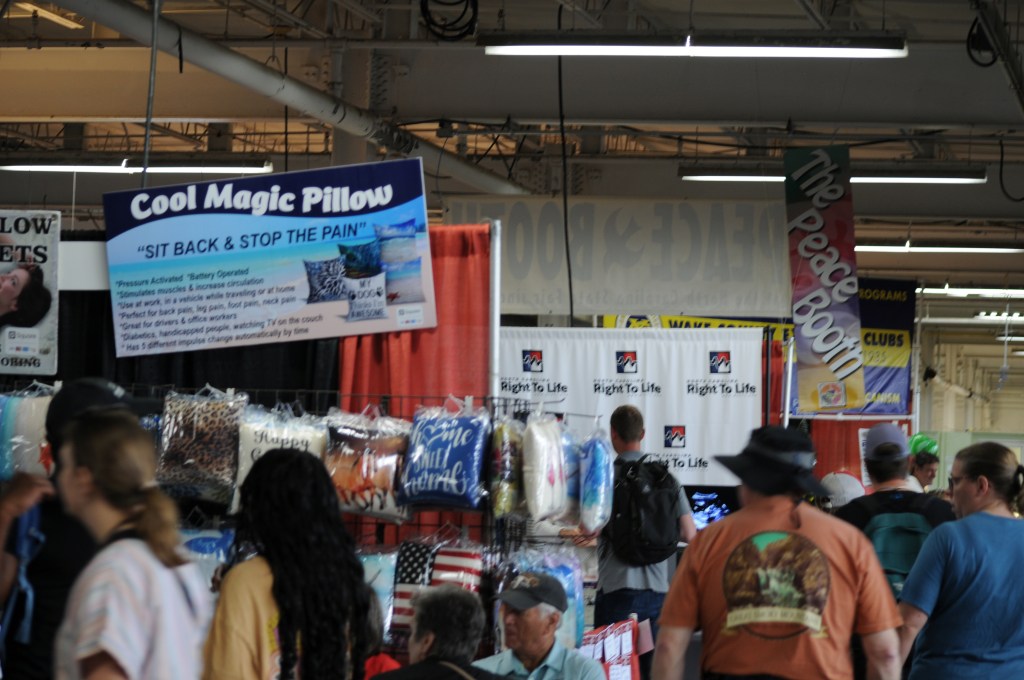
Every fall, the North Carolina State Fair brings Ferris wheels that fold out of trucks, long rows of livestock, and every battered and fried food imaginable to 344 acres in Raleigh. And in the white stucco Education Building, just down the hall from illuminated cases of jams and baked goods, there’s the Peace Booth, now in its 75th year.
“I know it’s a pipe dream, but would you like to sign a petition for nuclear disarmament?” Ingrid Moiffe, 66, a member of the Triangle Interfaith Alliance, calls out to passing fairgoers from behind an easel bearing two petitions for N.C.’s congressional delegation on Sunday afternoon.
“We got peanuts again!” Chris Baranski, 64, said as he looked at a nearby booth, where cases of North Carolina roasted peanuts sit underneath a fundraising sign. “What are the odds?”
“Pickles, too,” responded Jon Arnold, 76, another coalition member.
Behind the volunteers, a hand-painted backdrop that reads “Peace begins with ME … and you” shares a curtained wall with the Right to Life booth, with its line of plastic fetuses. That station is just a few feet away from the North Carolina Republican Party booth, which features a memorial portrait of Charlie Kirk.
The Peace Booth includes a rotating stand of pamphlets about different religious groups’ views on nonviolence. There’s also a stand of cardboard heads stuck on wooden sticks, featuring the likenesses of the dalai lama and musician Janelle Monae, and a small table where kids can make ornaments for this year’s “peace tree.”
The Peace Booth doesn’t sell anything, nor does it exist outside of the state fair. Renfrow Doak, a devout Quaker and World War II conscientious objector, started the booth in 1951, amid the outbreak of the Korean War and, notably, when the fair was still segregated.
The North Carolina State Archives houses Peace Booth papers beginning in 1986, when it was under the leadership of Raleigh Catholic Worker Movement organizer Father Charlie Mulholland and followed the fluctuating sponsors and members for years. There has long been a backbone of core churches, alongside long-standing secular groups like North Carolina Peace Action.
Over the years, petitions and materials largely tracked with current events: gun control in the early 2000s, the War on Terror into the early 2010s, and addressing racial violence in 2020.
Volunteers are there from 9 a.m. until 9 p.m., stationed between people peddling knives and margarita mix, peanuts and pickles. Groups each take a six-hour shift: This year, that’s included Raleigh Mennonite Church and Planet Peace Farm, a Wake County outdoor youth mental health organization. Most volunteers still come from religious groups with traditionally pacifist values, but the booth is explicitly nonpartisan and secular.
“Not everybody got the exposure to different types of thinking and people who have different opinions,” said BriAnne Dopart, a 44-year-old Durham resident and member of Amnesty International. “I think it’s good, especially for the young people, to see those people out there that are crazy enough to stand at a Peace Booth for several hours.”
The booth exists to promote “peace education; consciousness raising; how to become involved in an existing peace group ‘back home’; and, some positive action that enables the fairgoer to feel that he/she has done something for peace.”
But in its 75th year, the booth is at a crossroads.
The Big Tent
Josh McIntyre, 58, a Raleigh resident and Amnesty International member who has volunteered at the booth for over 20 years, kicked off Sunday’s shift. Before having a grandchild, he found it was a way to engage with children on pacifist values. He was ready with brightly colored fortune tellers, decorated with drawings of doves and rainbows, and a basket of peace cranes donated by the Raging Grannies.
McIntyre recalls some years of heightened “hostility” to the booth, like the October after September 11, when some attendees told them they didn’t think the booth had a place at the fair. In 2002, the Peace Booth recorded 956 signatures on a petition against a war in Iraq. Still, McIntyre said he tends to “enjoy election years more” because it’s a time when there is more cross-divide engagement.
For Dopart, also on the morning shift, it was both her first time volunteering and attending the fair. She said she got involved with Amnesty International recently, citing the September U.S. Supreme Court ruling that effectively allows for Immigration and Customs Enforcement to stop people based on their race. Dopart’s wife is Puerto Rican.
“She carries her passport around with her every day, all day,” Dopart said. “And so I had to do something.”
For Dopart, volunteering here was a step beyond attending marches. This Sunday came after the national No Kings rallies. Dopart said the physical space at the fair allows for more sustained conversation, in a place where the audience isn’t always friendly.
Another Amnesty volunteer, Marsh Hardy, a 76-year-old and longtime Raleigh resident, said he sees the booth as an opportunity to speak to who he once was: a young man from rural Kentucky, without significant exposure to activist circles or pacifist ideas.
And while some emphasized they don’t expect to change minds in the span of a few seconds or minutes, Hardy had a different take: “I have.”
Hardy said he found success during the years the Peace Booth had petitions against the death penalty, when he was able to expose people to research about the death penalty’s lack of proven deterrence.
But it can still be a tough pitch, said Cynthia Gallion, 66, of Raleigh. The longtime Amnesty member and booth volunteer said she sees peace as “universal” and nonpartisan, but it can become contentious at the fair.
“It seems almost like people are a little bit intimidated, almost a little bit uncomfortable, when we start talking about some of this stuff,” she said. “Like they’re out of their comfort zone, they’ve come here to have fun. … So what do you do?”
Credit: Photo by Caelan Bailey
Most fairgoers passing by look at the booth, then look away. Sometimes, children are enticed by activities like the peace-themed fortune teller origami desk, bringing adults with them. Other fairgoers are enticed by the rotating stand of faith statements, looking for one they align with, where a volunteer will often approach them and ask them to sign the petition.
At one point on Sunday, someone from the Sons of Confederate Veterans booth stopped by. He declined to sign the petitions but spoke to the volunteers about his own charity work repairing veterans’ gravestones and his support. “Who’s against peace?” he asked.
“At the Peace Booth, we encounter everybody who comes to the fair, right?” said Patrick O’Neill, who has volunteered since the 1980s. “So, you know, we see a cross section of the people. I think that what the State Fair is … it’s way bigger than a three-ring circus.”
A former volunteer, Thomas C. Martin, 53, valued his time and the conversations he had there. A lifelong North Carolinian who grew up going to the fair, Martin said he appreciated how it served as a “microcosm” of the state.
“In particular, I remember a veteran that I spoke to who had some very strong views on how North Carolina treats its veterans, and I had always thought of North Carolina as a veteran-friendly state,” Martin said. “And after speaking with him, I understood better that we are a military-friendly state but not a veteran-friendly state.”
Including veterans in the Peace Booth’s mission is a 21st-century addition, after partnering with the group Veterans for Peace. “One year, I suggested a petition to help veterans, and it was quite popular, so each year we now have similar petitions,” said Navy veteran Babs Freeman, who founded VFP’s Triangle chapter in 2008 and is now a member of the booth’s steering committee.
“Past veteran-themed petitions include reducing veteran homelessness, supporting veteran courts, and bringing deported veterans home,” Freeman continued. “Previously, the regular petitions would garner up to about 500 signatures, but the veteran ones have sometimes received over 1,000, which experienced coordinators advised me was big.”
This year there was a sense of urgency for the organizers. “Never have things been this bad,” the group wrote in an August fundraising letter, referencing the war in Gaza in addition to health care cuts under the Trump administration.
Still, many organizers commented that foot traffic in the Education Building seemed slow this year, though overall fair attendance is consistent with previous years.
What Comes After 75?
Sunday’s volunteers tended to be older and more likely to be white than the average North Carolinian. Many were more likely to be college-educated and originally from out of state, and also part of area activist groups.
The costs of running the booth include the flat vendor fee, in addition to fair tickets for volunteers. According to booth records from the 2010s, that typically runs around $2,500 to $3,000. The state fair’s vendor application page includes instructions that caution “[l]ess than 5% of all applications normally are accepted.”
Importantly, the booth must remain visibly active with volunteers and fairgoers throughout the day, as it occupies prime real estate that commercial vendors want. The Peace Booth relies on donors to cover the costs, breaking roughly even year to year.
The bigger question is continued volunteer recruitment and response from fairgoers. Debbie Biesack, 60, a longtime volunteer who serves as treasurer, said its future is “very unknown.”
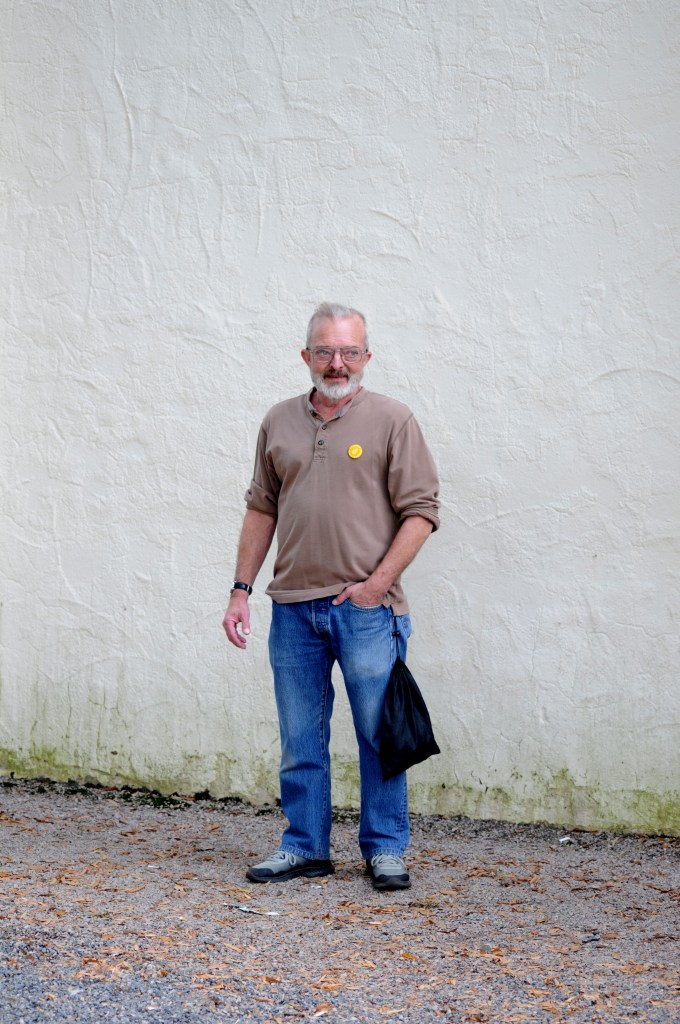
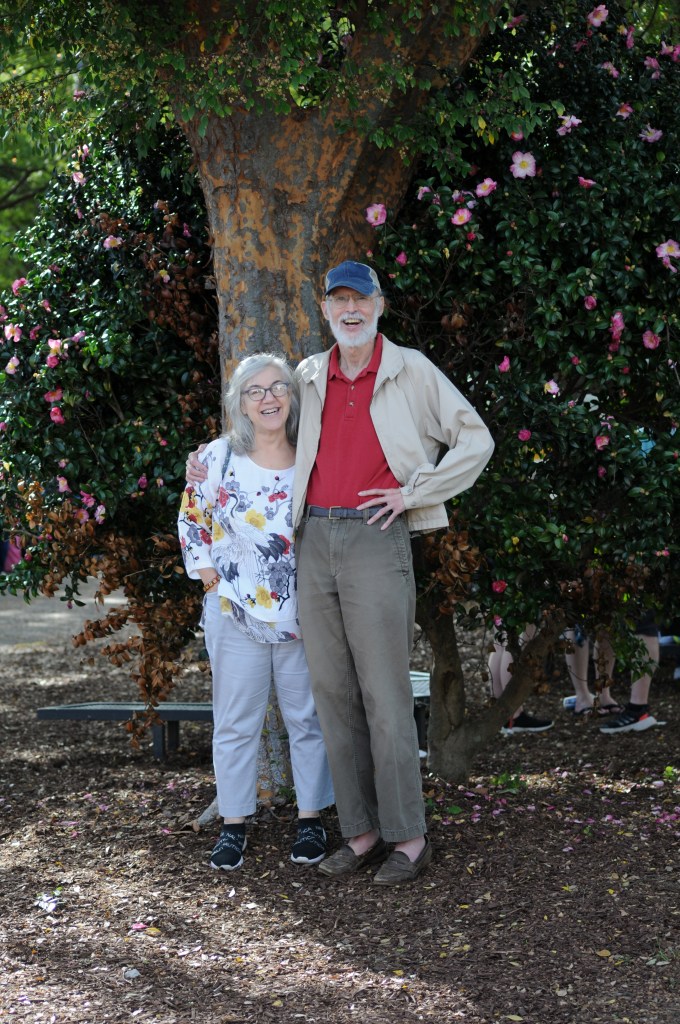
“Will there come a time when this isn’t effective anymore?” Biesack said. “Our volunteers are much older. At some point, they’re not going to be able to do it anymore.”
Biesack is a member of the 10-person steering committee, a group of committed volunteers who coordinate logistics and fundraising. Efficacy is largely measured by their ability to create a long-standing, active coalition of groups and volunteers to staff the booth.
“It’s been really hard to get young people to come in and be part of it,” Biesack said. “They just haven’t stuck with us for very long, but we keep hoping that we’ll find younger people who want to come in so we could sort of pass the mantle off to them.”
About midway through the day, Anali Martin stopped by. Martin grew up in the Mennonite Church in Raleigh and as a child went to the fair explicitly for the Peace Booth. While her exposure to nonviolence was initially through religion, she knows that often comes with other baggage.
“Young people are wary of it, for good reason, the organized group aspect,” said Martin, who is no longer part of the church. She pointed to mutual aid groups or other decentralized organizations as opportunities to “be a good neighbor.” She still stops by each year to sign the petitions—even though she’s been frustrated to see the same ones reappear, with little to prove the booth’s political efficacy.
Seeing political change is a long-standing tension for activist efforts. In 1996, booth organizers sent a box of postcards from children to President Bill Clinton; he responded in a letter that his “administration is working, along with the United Nations, to promote understanding and peace throughout the world.” In 1997, booth organizers archived newspaper clippings on Clinton’s rejection of a land mine ban.
Some other local organizers see the split as more about strategy than age. Mika Murphy, the membership coordinator for the Triangle Democratic Socialists of America, said his group has seen steady growth over the past few years. “Of course, there’s a style of organizing I see older organizers carry out,” said Murphy, 28. “But one thing I know from my organization is that we have 18-year-olds in our organization, and we have 70-year-olds.”
But Murphy said the Triangle DSA is also considering canvassing at the State Fair next year. “It’s kind of an ideal place,” he said. “If you organize with them, you know, they’ll spread your organization back to the areas they come from.”
Planet Peace Farm founder Jules Cohen, 64, said she has recruited high schools and college students to staff the Peace Booth for the past three years. But she noted it lacked a QR code or any digital entry point that might appeal to younger visitors.
Looking forward, Anali Martin said connecting the booth to larger international issues of nonviolence might help extend its appeal.
“The Peace Booth has been here for 75 years,” she said. “How much has it or has not changed with the times?”
Comment on this story at [email protected].
Caelan Bailey is a journalist based in the Carolinas who previously reported for West Virginia Public Broadcasting.