
i
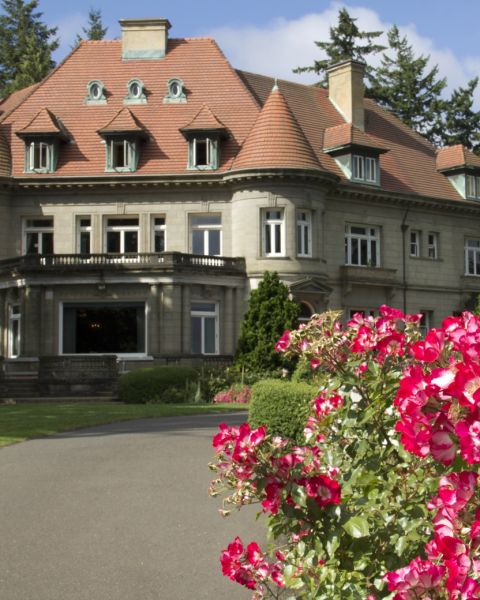
High above Northwest Portland, Pittock Mansion offers picture-perfect views of the city, as well as insights into Portland history.
Explore Portland’s past by visiting these parks, features and memorials.
5 min read
Incorporated in 1851, Portland may seem like a young city compared to many other parts of the country and world, but you can still find plenty of history everywhere you look. Here are some features and places for history lovers.
Chapman and Lownsdale Squares
Chapman and Lownsdale Squares — two adjacent public parks were originally divided by gender — Chapman Square was intended for women and children, and Lownsdale Square was for men — and was popular with public orators who drew crowds when they spoke their pieces. Today, these historic squares, originally acquired by the city in 1869, serve as quiet urban oases and feature prominent public art and lots of shade.
Benson Bubblers
Legend has it that while walking through his mill one day in 1912, Simon Benson, a teetotalling lumber baron and philanthropist, noticed the smell of alcohol on his workers’ breath. When Benson asked these men why they drank in the middle of the day, they replied there was no fresh drinking water to be found downtown. Upon hearing this, Benson donated $10,000 to the city to purchase and install 20 bronze drinking fountains, now known as the Benson Bubblers. Beer consumption in the city reportedly decreased by 25 percent after the fountains were installed.
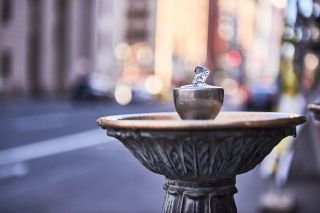
There are currently 52 bubblers in Portland — 46 of which are downtown. You can still sip from the original bubbler at the corner of Southwest Fifth Avenue and Washington Street. The city has a map to guide you to all of the Benson Bubblers in Portland.
Simon Benson House
Built by logger Simon Benson in 1900, this Queen Anne-style mansion was condemned in 1991, then moved four blocks to its current location on the Portland State Campus in 2000. After a nearly yearlong renovation, the Simon Benson House was reopened and now serves as the home of the Portland State University Alumni Association and the university’s visitor’s center.
Benson was also a philanthropist, best known for his enduring gift of public drinking fountains, which are still quenching Portlanders’ thirsts today (see above).
Hours: The Visitor’s Center is open 9 a.m.-5 p.m., Monday through Friday, except for holidays. Admission is free. Details are subject to change check PSU’s website for current information.
The Old Church
Built as a Presbyterian church in 1883, The Old Church represents the Victorian architecture that once filled Portland. Now hosting concerts and community events, the church boasts an interior rich in period detail like built-in umbrella racks, hand-carved fir pews, vaulted ceilings and Corinthian columns. Free concerts are offered every Wednesday at noon.
Hours: 11 a.m.-3 p.m., Tuesday through Friday, plus scheduled events. Admission varies; please check The Old Church’s website for current information.
Old Town Chinatown
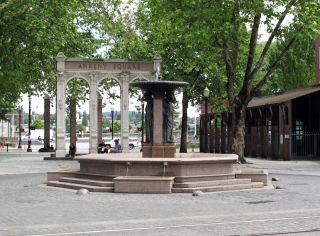
Bordered by the Willamette River, the Pearl District and downtown, Old Town Chinatown was Portland’s original city core. Today, many early sites and buildings remain, and the neighborhood is listed as a National Historic Landmark. Ankeny Plaza is still surrounded by cast-iron buildings from the mid-19th century and is also the site of Skidmore Fountain, the city’s oldest public sculpture.
There’s more history beneath the streets, as well — the Shanghai Tunnels were originally built to connect hotels and shops to the waterfront, so workers could bypass street traffic while stocking supplies. But legend has it they were also used to kidnap or “shanghai” people through trapdoors still found in Chinatown buildings. The unsuspecting victims were then allegedly shipped out and enslaved as laborers on the high seas.
Credit: Regional Arts & Culture Council; copyright owned by artist(s)
Skidmore Fountain
Skidmore Fountain was installed in 1888 in Ankeny Plaza, the commerce and entertainment center of its day. Brewer Henry Weinhard offered to pump beer from his brewery via Portland’s fire hoses through the pipes of the Skidmore Fountain for the fountain’s grand opening. Weinhard’s generous offer was vetoed by nervous civic leaders, who feared that residents will help themselves to the beer before it reached the fountain by poking holes in the city’s valuable fire hoses.
Brewer Henry Weinhard offered to pump beer from his brewery via Portland’s fire hoses through the pipes of the Skidmore Fountain for the fountain’s grand opening in 1888.
The 14-foot-tall mixed bronze and granite fountain may look ornate, but its purpose was practical: to quench the thirsts of Portlanders and their animal companions. A mid-1980s restoration preserved the square and assured a future for the fountain, which is Portland’s oldest piece of public art.
Pioneer Courthouse Square
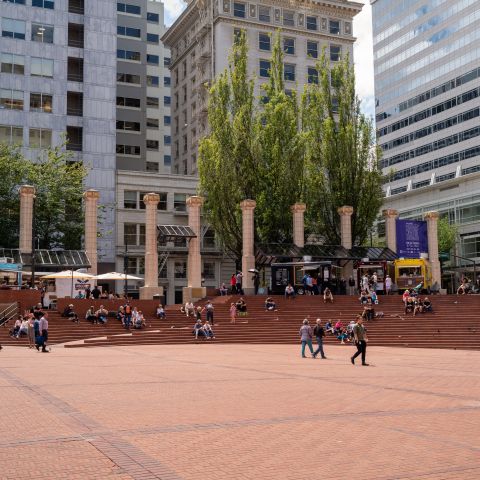
Located in the heart of downtown Portland, the city’s “living room” is close to shopping, restaurants, and hotels, and hosts hundreds of events each year.
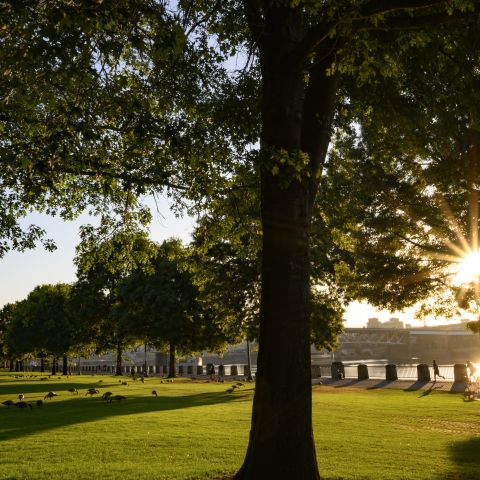
Governor Tom McCall Waterfront Park
Hugging the Willamette River in downtown Portland, this once bustling highway now offers a strollable, bikeable and dog-walkable public park with historical and cultural monuments, and kid-friendly fun.
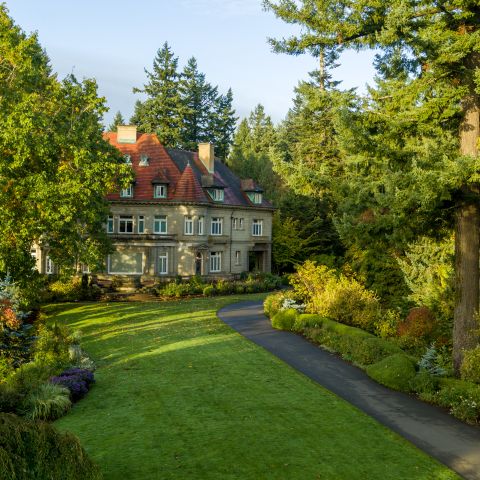
Pittock Mansion
High in the West Hills, beautiful Pittock Mansion offers picture-perfect views of the city and interesting insights into Portland’s history.
The Park Blocks
When developer Daniel Lownsdale donated a strip of his land to the people of the young city of Portland in 1852, some say he just wanted to create a buffer to protect his downtown investments from forest fires. Whatever his intent, Lownsdale also planted the seed from which one of the nation’s best park systems would grow. Lownsdale’s original gift of land constitutes a good portion of the South Park Blocks — 12 blocks of green that slice right through downtown, providing a place for farmers’ markets, respite-seekers and families.
Dedicated in 1869, the tree-lined North Park Blocks mirror the layout of their southern counterparts, but with a children’s playground, basketball courts and regular bocce ball games, these blocks tend to attract more activity.
Memorials
Japanese American Historical Plaza
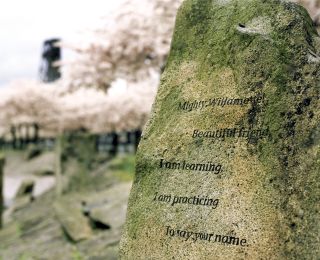
In downtown Portland’s Waterfront Park, the 13 stone markers in the Japanese American Historical Plaza commemorate the history of the people who were deported to inland internment camps during World War II. The stones are engraved with short poems, and from March-April, 100 cherry trees bloom around the award-winning monument, which was designed by Portland landscape architect Robert Murase. Guided tours are offered by the Japanese American Museum of Oregon.
Hours: 5 a.m.-midnight. Admission: Free.
Oregon Holocaust Memorial
The contemplative and educational Oregon Holocaust Memorial is set gracefully into a meadow in Portland’s beautiful Washington Park. The Oregon Holocaust Resource Center maintains the memorial and offers docent-led tours by request.
Hours: 5 a.m.-10 p.m. daily. Admission: Free.
Vietnam Veterans of Oregon Memorial
The somber, understated Vietnam Veterans of Oregon Memorial wraps a wheelchair-accessible spiral path inside a meticulously landscaped bowl of greenery. Along the path, visitors are reminded of the Oregonians who sacrificed their lives and safety in the war and at the trail’s end, a curved, black granite wall outlines three years of the conflict, contrasted by local events that happened simultaneously.
Hours: 5 a.m.-10 p.m. daily. Admission: Free.
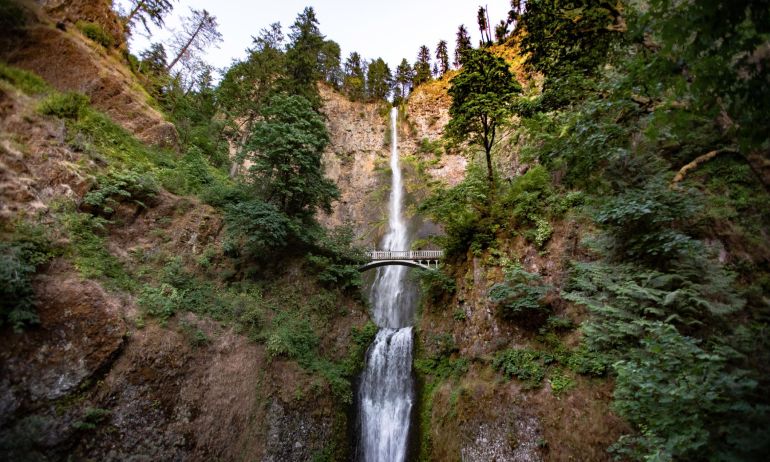
Multnomah Falls
Located just 30 miles (48 km) east of downtown Portland, Oregon’s tallest waterfall attracts visitors of all ages and abilities for stunning year-round sights of cascading water with complimentary flora and fauna.
Oregon City
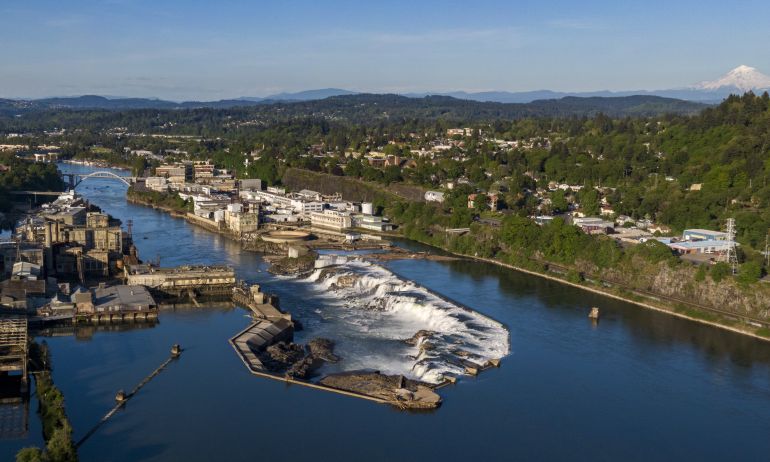
The final wagon stop on the Oregon trail, Oregon City welcomes visitors with food, drink, museums and outdoor activities.
Was this page helpful?