When I agreed in the summer to give a talk about Seven Days at Burlington’s Converse Home on December 4, I was hoping that my friend Jane Ewing would be in the audience. But she didn’t make it; Jane died on October 28 at age 98.
She was ready to go. Jane wasn’t afraid of death and was very open about it. In fact, we met in a cemetery.
In 2007, I wrote a story, “Burlington’s Burial Treasure,” directing readers to Lakeview Cemetery on North Avenue. Jane led an effort to restore the Louisa Howard Chapel there. On a tour of the grounds, she and her husband, John, pointed out noteworthy graves along the cemetery’s winding paths, including theirs — the granite obelisk in the cremation garden was already inscribed with their names, minus death dates.
She was 79 then but seemed much younger. “Age is nothing,” she told me at the time. Pointing to her head, she added: “It’s all up here.”
I thought to myself: I could be friends with this person.
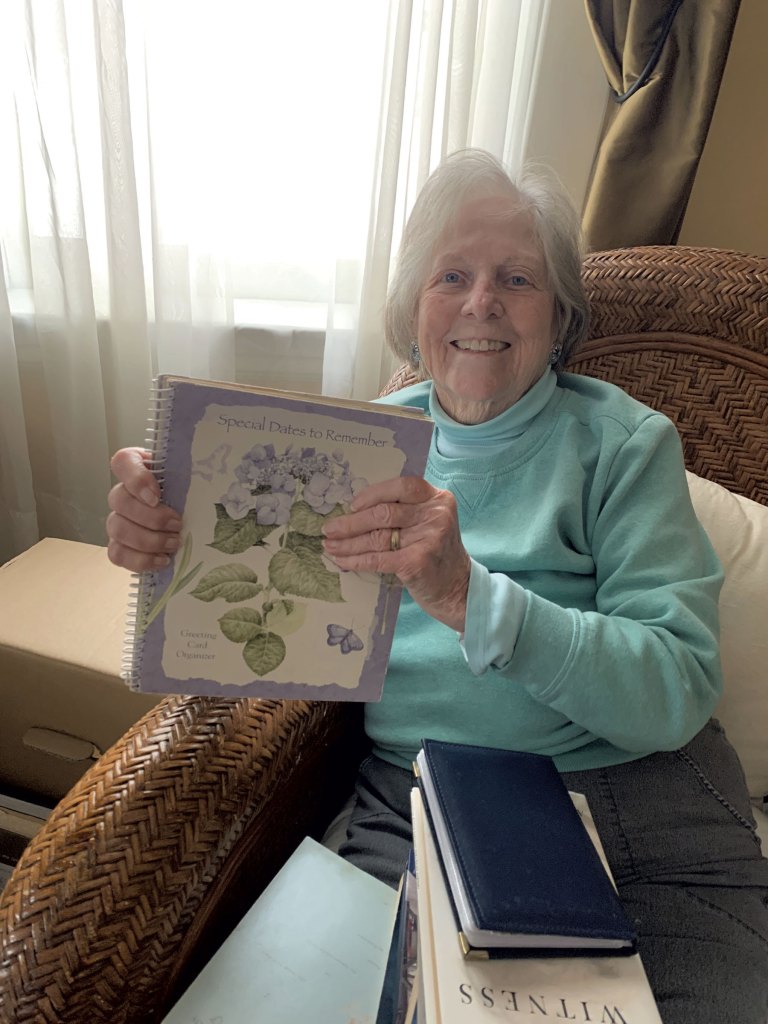
Over the years we’d occasionally run into each other, but I didn’t start seeing her regularly until 2023. That March, Seven Days publisher Paula Routly gave a talk at the Converse Home, and Jane attended — she was living in Paula’s mom’s old apartment there.
A few days after, I called Jane up and arranged a visit. When I walked into Room 214 for the first time, feeling a little nervous, Jane’s face lit up — she was happy to see me! And it was so easy to talk with her. I returned every two or three weeks after that — on Tuesdays at 10 a.m. — and she always gave me that same warm welcome.
Initially, she and I connected over what we were reading. The New York Times, the New Yorker, the New York Review of Books — Jane always had a newspaper or magazine on her couch or coffee table. She read Seven Days cover to cover every week. “The highlight of my Wednesday!” she’d say. She was a Super Reader, too.
Jane always sat in the same spot on her couch and inevitably had a small stack of books next to her. What a thrill it was to discover that we had similar tastes! We were both devouring new nonfiction titles about current events or history that might help us make sense of the politically divided, post-pandemic world.
We both bought Oath and Honor: A Memoir and a Warning by Liz Cheney; The Kingdom, the Power and the Glory: American Evangelicals in an Age of Extremism by Tim Alberta; The Splendid and the Vile: A Saga of Churchill, Family, and Defiance During the Blitz by Erik Larson. She loaned me Mark Leibovich’s humorous and smartly observed Thank You for Your Servitude: Donald Trump’s Washington and the Price of Submission and Timothy W. Ryback’s chilling Takeover: Hitler’s Final Rise to Power. Not exactly light reading.
I was thinking of Jane as we compiled this week’s Reading Issue. She was the only person in my life who read books like these and would talk with me about them. And those were just her “morning” books. In the evenings, she read novels. “I don’t know what I’d do if I couldn’t read,” she’d say.
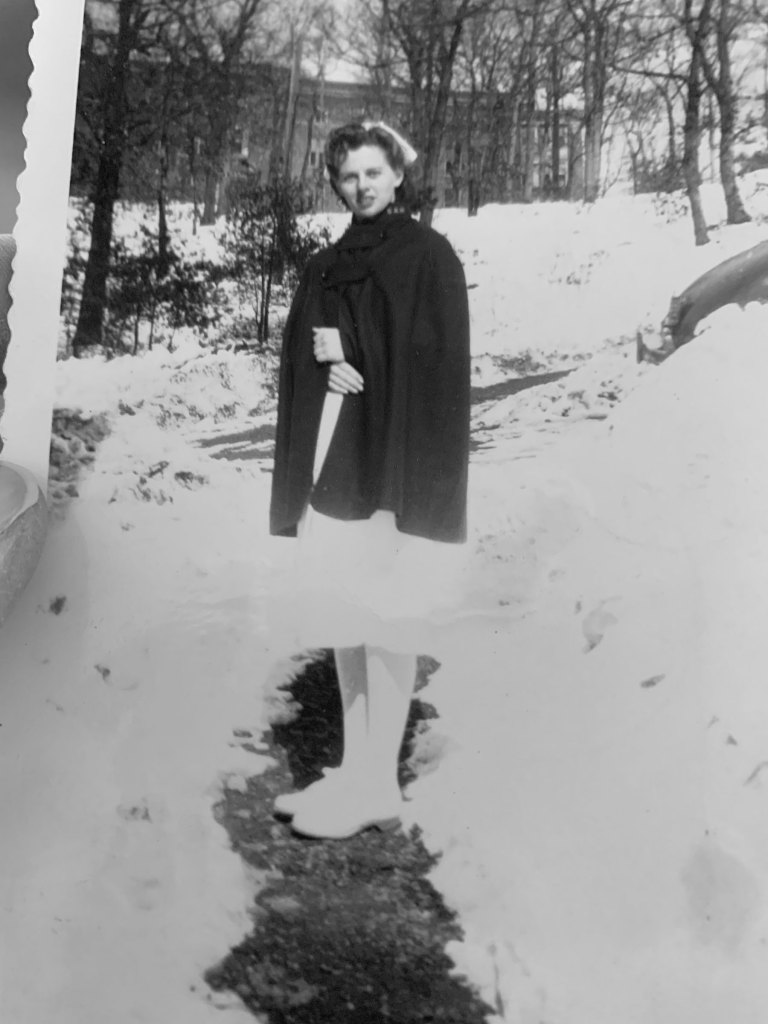
She also helped me put things in perspective. World War II was ancient history to me, but Jane lived through it: Born in 1927 in Northampton, Mass., she graduated from high school in 1946 and joined the U.S. Cadet Nurse Corps, created to fill a wartime nursing shortage. It paid for her training at the Leominster Hospital School of Nursing. When the doctors — all of them men — were going up or down the stairs, the nurses had to stand to the side to let them pass.
When I visited her on Election Day in 2024, I pulled out my phone to snap a selfie of us. Jane revealed that she’d grown up without a phone. When her parents wanted to call someone, they’d use the party line at her grandparents’ house.
In March of this year, I turned 50 and told her I was feeling old. Jane scoffed. “You’re just a kid!” she said.
Jane always asked after my wife and kids. And she’d tell me stories about her beloved blended family. One was about her mom, who dropped out of school in the eighth grade to help out at home but never stopped learning through books.
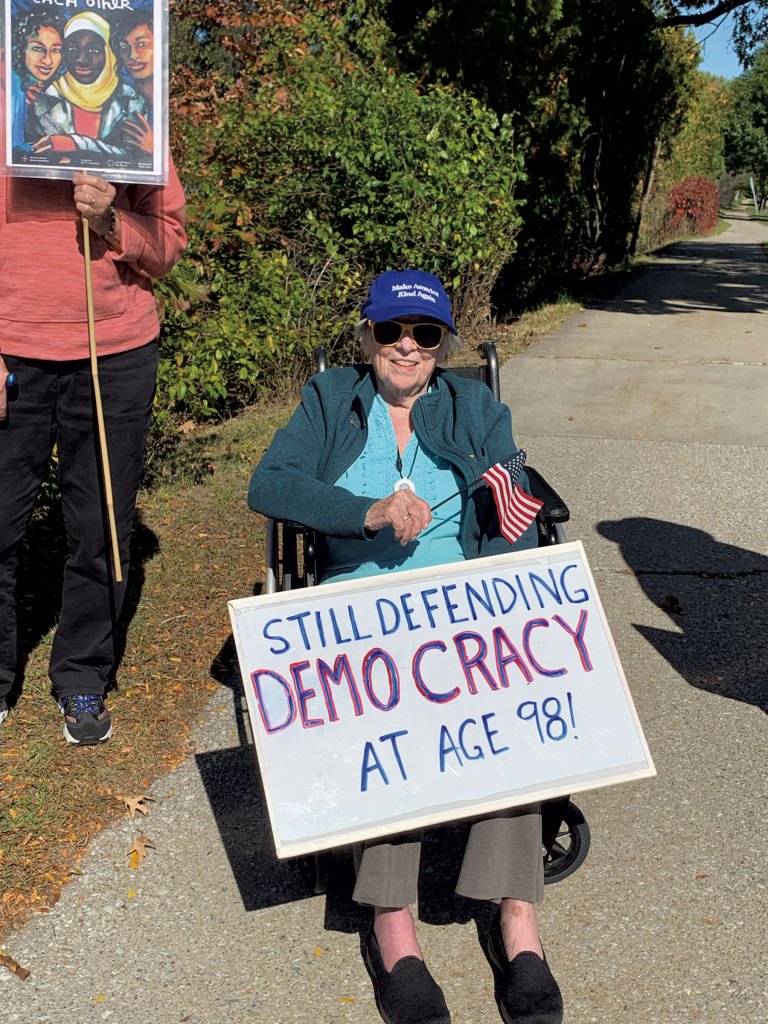
Jane got depressed about the state of the world. She missed John, who died in 2017. But she never gave up on life. “As my mother used to say, ‘Whattaya gonna do?’” she’d tell me. She kept getting up, doing her exercises, discovering and recommending things to read. I’m so grateful our lives overlapped.
This article appears in The Reading Issue 2025.