
The town of Fuquay-Varina will soon be in serious need of more water, but its plan to get that water faces sharp opposition from stakeholders in the eastern part of the state.
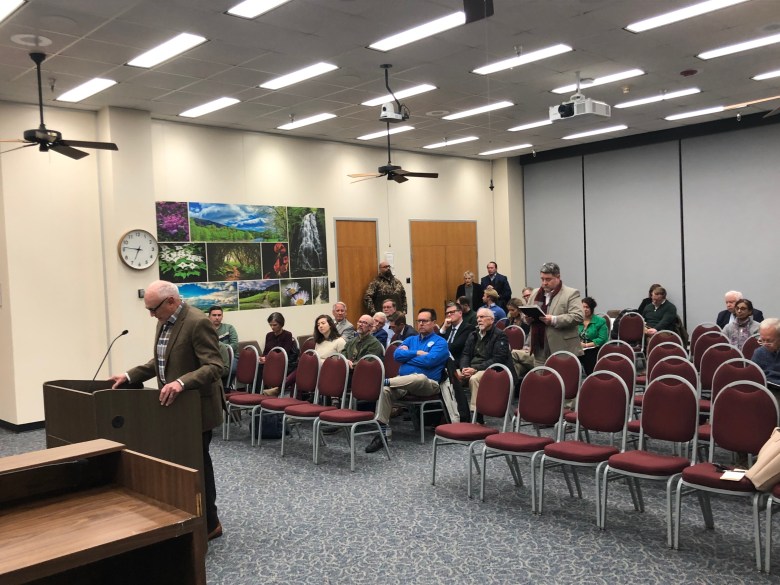
At a public hearing in Raleigh Tuesday evening, a dozen people from counties including New Hanover, Brunswick, and Cumberland added to the chorus of voices opposing the Town of Fuquay-Varina’s request to transfer a significant amount of water from one river basin to another, known as an interbasin transfer (IBT). The plan, which if approved would start after 2031, was based on 2055 water demand projections. The town is proposing to withdraw 6.17 million gallons of water per day (mgd) from the Cape Fear River Basin in Lee County for its residents’ use and then discharging the treated wastewater into the Neuse River Basin in Wake County.
Fuquay-Varina’s water service area straddles both river basins, and the town, population 49,000, currently withdraws 2 mgd from the Cape Fear River Basin and discharges treated wastewater into the Neuse. The town also has contracts with the City of Raleigh and Johnston and Harnett counties to receive a total of 7.25 mgd of water to meet its current need. But the Raleigh and Johnston County contracts are set to expire soon and water supplies are expected to fall short by 2030 due to the town’s rapid population growth and increased development, according to Maya Holcomb, a state Division of Water Resources representative who gave a presentation before the public hearing.
The issue isn’t unique to Fuquay-Varina, which, since 2020, has been working to secure the IBT from the Cape Fear River Basin to the Neuse. The town’s current proposal, if approved, would allow it to withdraw water from the public utility TriRiver Water’s treatment facility near Sanford, about 14 miles away. In late 2022, Wake County began working on a 50-year One Water plan to ensure an ample water supply for the estimated 250,000 new residents who will have joined the county’s current population of 1.1 million by 2070. The draft of the One Water plan, which goes before county commissioners early next year, does not address Fuquay-Varina’s IBT request.
For an interbasin transfer above 2 mgd, the town is statutorily required to obtain a certificate from the state Department of Environmental Quality’s (DEQ) 15-member Environmental Management Commission. As part of that process, an environmental impact statement (EIS) is required, as are public hearings and a formal petition to the commission. The commission’s members, composed of appointees from the governor, senate president pro tem, house speaker, and agricultural commissioner, ultimately decide whether to grant the interbasin transfer certificate, modify it, or take no action.
Tuesday’s public hearing was the second of three currently scheduled to address the EIS tied to Fuquay-Varina’s request for an IBT certificate. In the statement, which offers several alternatives the town could pursue to fulfill its water needs, the town stated that “hydrologic modeling indicates minimal quantity impact to Neuse and Cape Fear Rivers” for its proposed request.
“[The proposed request] was selected as preferred due to fulfilling the project purpose and need, minimal environmental impact, and the least financial impact on the Town of Fuquay-Varina’s ratepayers,” the EIS states.
Speakers—mostly water resources experts from the public and private sectors, including the Lower Cape Fear Water and Sewer Authority, the Cape Fear Public Utility Authority, and county and municipal utilities—all spoke in opposition to allowing Fuquay-Varina to withdraw the 6.17 mgd of water from the Cape Fear River basin without returning any treated wastewater. They also asked DEQ to schedule an additional public hearing in the eastern part of the state.
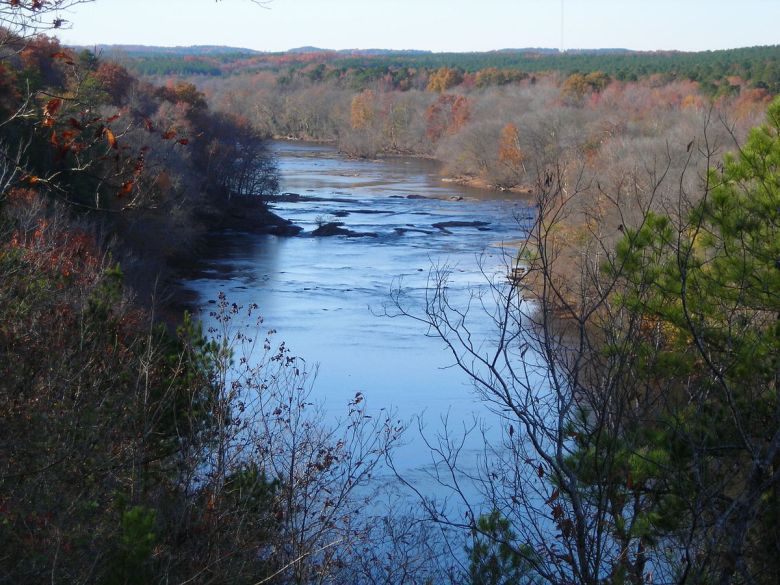
The Cape Fear River Basin is the drinking water source for about 1.5 million people in Eastern North Carolina, and speakers said withdrawing such a large amount of water without returning it threatens the functioning of water infrastructure downstream, economic development opportunities in that region, and public health, with less water available to dilute contaminants.
The chemical company Chemours is located downstream of the proposed transfer point, noted speaker Christopher Giesting, the deputy director of water operations for Brunswick County public utilities. Chemours is known for discharging a group of chemicals known as PFAS, and reduced river flow would mean less water available to dilute contaminants including PFAS and 1,4-Dioxane.
“The upstream [IBT] effectively indebts the Cape Fear River, reducing flows to the downstream communities that rely on this water just as much as upstream users,” Giesting said. “Water transfer to another river basin is water that will never return to the Cape Fear River.”
In a response to questions from the INDY regarding whether the town had considered discharging wastewater back into the Neuse River Basin as part of its IBT request, Fuquay-Varina communications staff noted that the town has been “working closely with [DEQ] to address [DEQ’s] comments on the Town’s various drafts of an Environmental Impact Statement,” versions of which were submitted to DEQ in 2022, 2024, and 2025.
“The Town looks forward to receiving additional stakeholder comments on the draft EIS and the Town’s proposed IBT at these public hearings and encourages stakeholders to attend and provide public comments,” a spokesperson wrote.
In November, the Lower Cape Fear Water and Sewer Authority—the largest regional water system in Eastern North Carolina, responsible for providing water to local governments and industry in five counties in the region—passed a resolution opposing Fuquay-Varina’s IBT request.
“The Town of Fuquay-Varina has not provided any measures or alternatives to avoid detrimental impacts upon the currently authorized local water supply plans of the Cape Fear River Basin’s water utilities,” said Matt Nichols, a Wilmington attorney who serves as the general counsel for the Lower Cape Fear Water and Sewer Authority. “We have significant concerns regarding adverse impacts to the communities we serve: risk of water shortages during periods of drought, less potential future economic development opportunities, and reduced water flow and water quality for recreational use.”
Cumberland County’s board of commissioners also voted unanimously last month to oppose Fuquay-Varina’s request. It’s a familiar battle for the county, which is home to Fayetteville. In 2015, the City of Fayetteville and its Public Works Commission sued the state to stop an approved IBT from the Cape Fear Basin to the Neuse Basin that would have served Cary, Apex, Morrisville, and Research Triangle Park. A 2018 settlement mandated that, though the Triangle communities could use the water, they had to return a significant amount to the Cape Fear River Basin.
“The Town of Fuquay-Varina’s request as written gives the impression that the needs downstream do not matter,” said Courtney Barnes, a water resources analyst for NC One Water who joined all the other speakers in calling on DEQ to reject the proposal. “When an upstream community asks to take this much water out of a shared system without meaningful alternatives prioritized, it shows a flat-out disregard for our most life-sustaining resource and a troubling lack of environmental stewardship.”
A final public hearing is scheduled tonight at 6 p.m. at the Chatham County Agriculture & Conference Center in Pittsboro. Written comments may also be submitted by mail or email before February 1, 2026.
Send an email to Wake County editor Jane Porter: [email protected]. Comment on this story at [email protected].
Source link