
Is Mardi Gras immune to tariff concerns?
Maybe “immune” isn’t the word. According to some of the people who work year-round to make sure Mobile’s maskers are well supplied with beads, plush toys and light-up trinkets, it’s been a very challenging year.
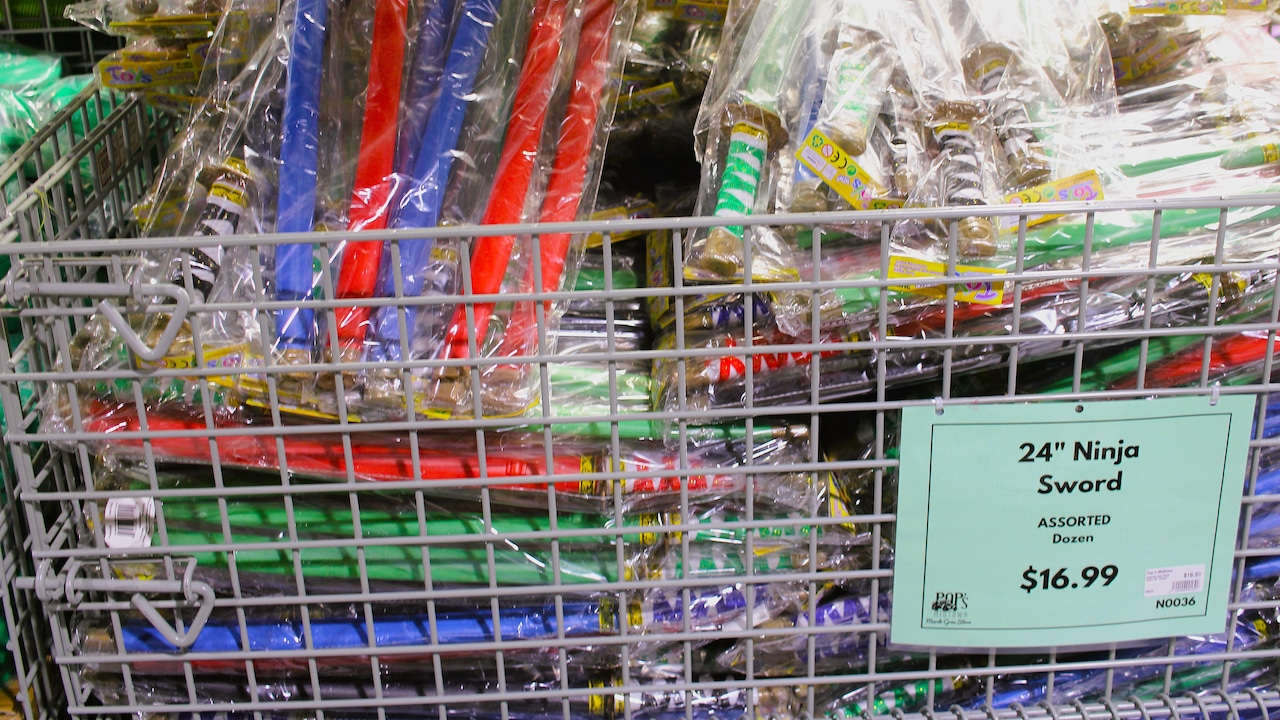
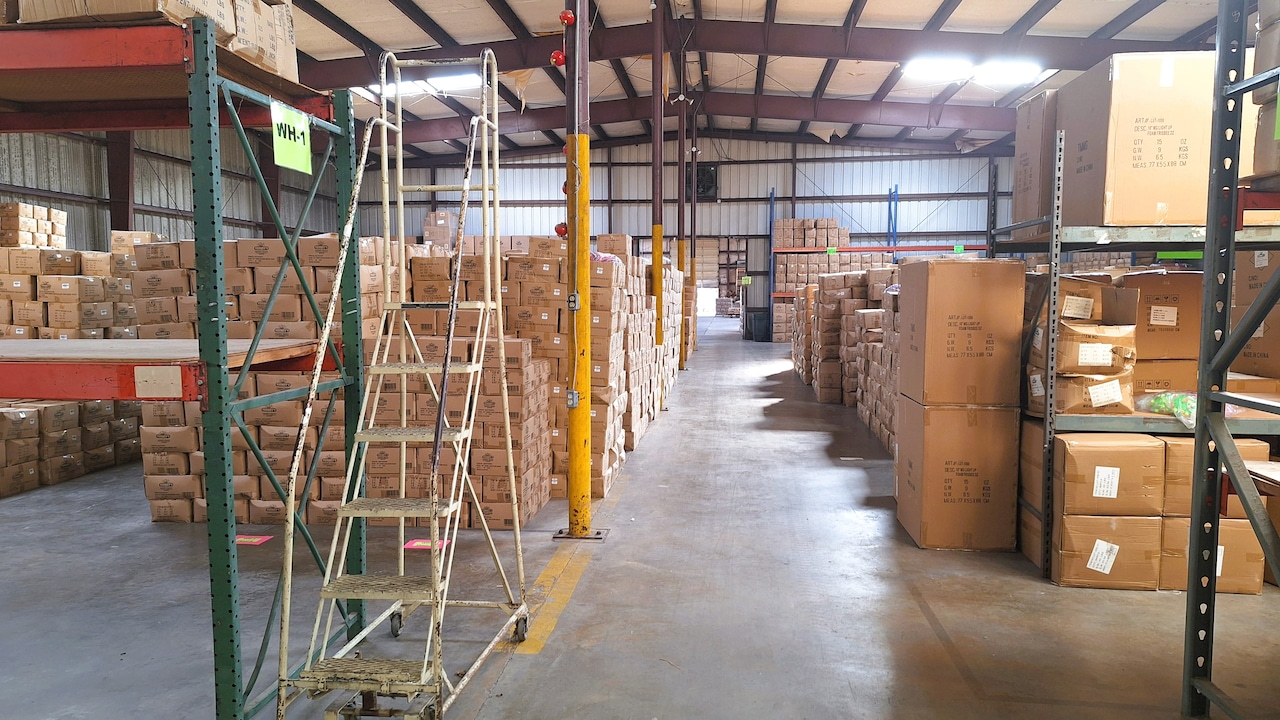
Fat Tuesday falls early in 2026, meaning that Carnival preparations are already intruding into the Thanksgiving-to-Christmas holiday season. The shelves and warehouses are full at Toomey’s Mardi Gras, a family-owned importer that has specialized in seasonal merchandise for years. The same is true at Pop’s Midtown, a smaller, younger business that includes Mardi Gras in its rotation of seasonal specialties.
At both places, buyers said they’ve been grappling with uncertain economics all year.
“The tariff thing, I mean, that has just been a roller coaster, because it has been so day to day,” said Mandi Cameron, who owns Pop’s with her husband, Josh Cameron. “I have to tune it out because nothing matters until it gets here. And we don’t have the luxury of waiting. When everything first started with the unsettlement of tariffs and what they were going to be, that was at the very beginning of the buying process. There are certain things that we have to order at a certain time, no matter what. And it just is what it is.”
“I’ve lost a few hairs worrying about it for sure because it was so erratic for a while,” said Stephen Toomey. “And we bring in containers year-round. So when it jumped to 145 percent early spring, I was freaking because I was gonna have to put in a bonded warehouse until the tariffs settled a little bit. But I didn’t have to do that.”
Such worst-case scenarios haven’t come to pass. But the on-again, off-again nature of the Trump administration’s tariff fight, with its suspensions, extensions, negotiation and litigation, have forced people to make some adjustments.
The Camerons said they saw it happening early in the year, as parading organizations grappled with the possibility that custom orders could cost them a lot more than in the past. Suddenly it seemed that items bearing an organization’s name and logo, or reflecting its theme for the year, would be more of a luxury than a necessity.
“Those custom items are purchased well ahead of time,” said Mandi Cameron. “We start talking to organizations, really, in April, shortly after Mardi Gras is over. You know, we’re already living in the next year at that point.
“I’ve seen organizations that have waited way longer than they ever have before,” she said. “And then there are other organizations that do their own purchasing, but of course we still run in the same circles, so we talk. They were holding off on their order … or there were some organizations that had decided they weren’t going to do anything custom at all and they wanted to go ahead and come buy leftover product that was at pre-tariff price.”
“They are being forced to pick and choose what they can get their name on.” Said Josh Cameron. “They’re like, ‘Well, I guess we don’t really need to have this,’ you know, because of the price. So they’re being forced to make financial decisions as well.”
Toomey said that despite the ups and downs of the year, Mardi Gras continues to be big business.
“We sell to Buc-ee’s,” he said. “I mean, we sell the krewes, we sell to the casinos where we brand their information on the product, and we have a whole team that handles all that kind of stuff. We just had 30 pallets going up to Louisiana. Truckloads are going out regularly.”
Mere economic concerns won’t stop that, though they require adjustments.
“We’re paying 30% on our goods, which is a big number when you bring in as much as we do,” said Toomey. “You know, it’s a big number which we never paid before. Because toys were always kind of [tariff] free.
“We ate a good bit of it because we just didn’t want to strap Mobilians and all of our other customers,” he said. “You know, we paid 30%, but we probably didn’t raise our prices no more than 10%, on some of our items. … People understand that. I mean, you go shopping nowadays and it is what it is.”
The Camerons felt the same pressures, they said.
“Up until the holidays most everything had come under that grace period,” said Mandi Cameron. “Remember, they kept having a 90-day extension, a 90-day extension. And that was just helping get everything that had already been produced and was waiting to get on a boat or was on the boat to get here. So none of that stuff was affected. Everything that’s heading for the holidays though, and obviously Mardi Gras, I think that’s when everybody will start to see and realize what is going on here.”
“As far as eating costs, we’ve done it every season,” said Josh Cameron. “Every season. Starting a business is very difficult. And you hear, oh, well, you’re supposed to have this margin. You’re supposed to have that margin. You’re supposed to, but we know our market. We have to price it to sell it. And it’s not going to be any different this year.”
The most commonplace throws, such as the smallest, most run-of-the-mill beads, are commodities with a more or less fixed price, said the Camerons. Everybody sells them, so there’s no wiggle room. With premium throws, there’s a little more room to play with the numbers: How much per item, how many in a package or a case.
“We’ve had to, of course, make adjustments,” said Mandi Cameron. “I do think that it affected the way that I was ordering my custom items, at first, because there were certain things that had never had a tariff before that all of a sudden did.”
“I was really hesitant,” she said. “Something like plush toys, for instance. Anything that’s plastic originates in China. It can say made in the USA. But if it’s got some kind of plastic component, guess where that came from?
“It’s been a roller coaster domestically,” she said. “We have relationships with factories over overseas, but of course we still purchase from domestic companies as well. And that was almost harder, because they could not, day to day, put a price on anything. I can’t tell you how many catalogs we have around here that would normally have a price. It’s just all pictures with an item number this year. No prices.”
“The Chinese companies, when you’re dealing overseas, everything with them stops at their port, so the price is the price,” she said. “You know, they’re getting it here. That’s when you start [with] the added cost. But overseas, you know, they’re just like us. They’ve got families to feed and businesses to run and staff to support. We’re all kind of like, you know, ‘What do you think?’ ‘What do you mean, what do I think?’ Nobody’s for it. They’re certainly not for it either. It’s tough because the costs get ultimately passed on to the consumer, but it’s small businesses like ours that have to risk purchasing the product to begin with.”
It’s a hassle. But you don’t stay in this business unless you’ve got Mardi Gras in your blood. Chaos comes with the territory.
“Every year it’s been something,” said Mandi Cameron. “If it’s not tariffs, you know, it was a port strike. If it’s not a port strike, it’s a shipping container shortage. Before that it was COVID. … Where we work well together and how we have succeeded is being adaptive, adapting to a change. Because that’s the only constant around here.”
Toomey takes comfort in some family wisdom.
“The show must go on,” he said. “My daddy always said there’s three things that you can’t get out of people. He said it’s fishing, hunting, Mardi Gras. Daddy didn’t fish or hunt, but he did do Mardi Gras. You know what I mean? There’s a lot of truth to that.
“It’s definitely a gamble,” said Mandi Cameron. “And I say we’re gamblers at heart. I mean we kind of have to be, in this kind of business. But we know how important Mardi Gras is to this community and you know, we’re not sacrificing on providing the best that we can for our customers.”