
1/4
Swipe or click to see more
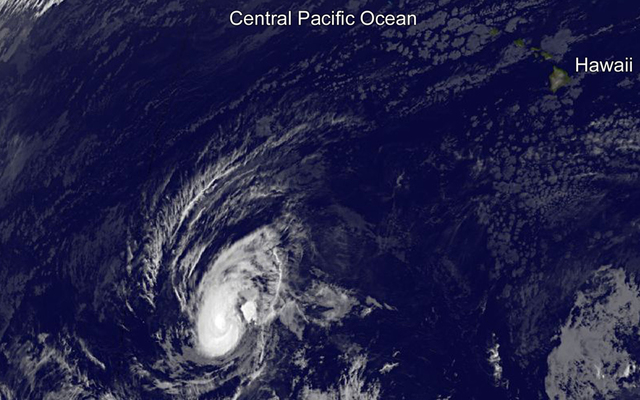
NASA/ NOAA GOES PROJECT This image taken from NOAA’s GOES-West satellite shows Tropical Storm Pali in the Central Pacific on Sunday.
2/4
Swipe or click to see more
NASA/ NOAA GOES PROJECT
This image taken from NOAA’s GOES-West satellite shows Tropical Storm Pali in the Central Pacific on Sunday.
3/4
Swipe or click to see more
NOAA
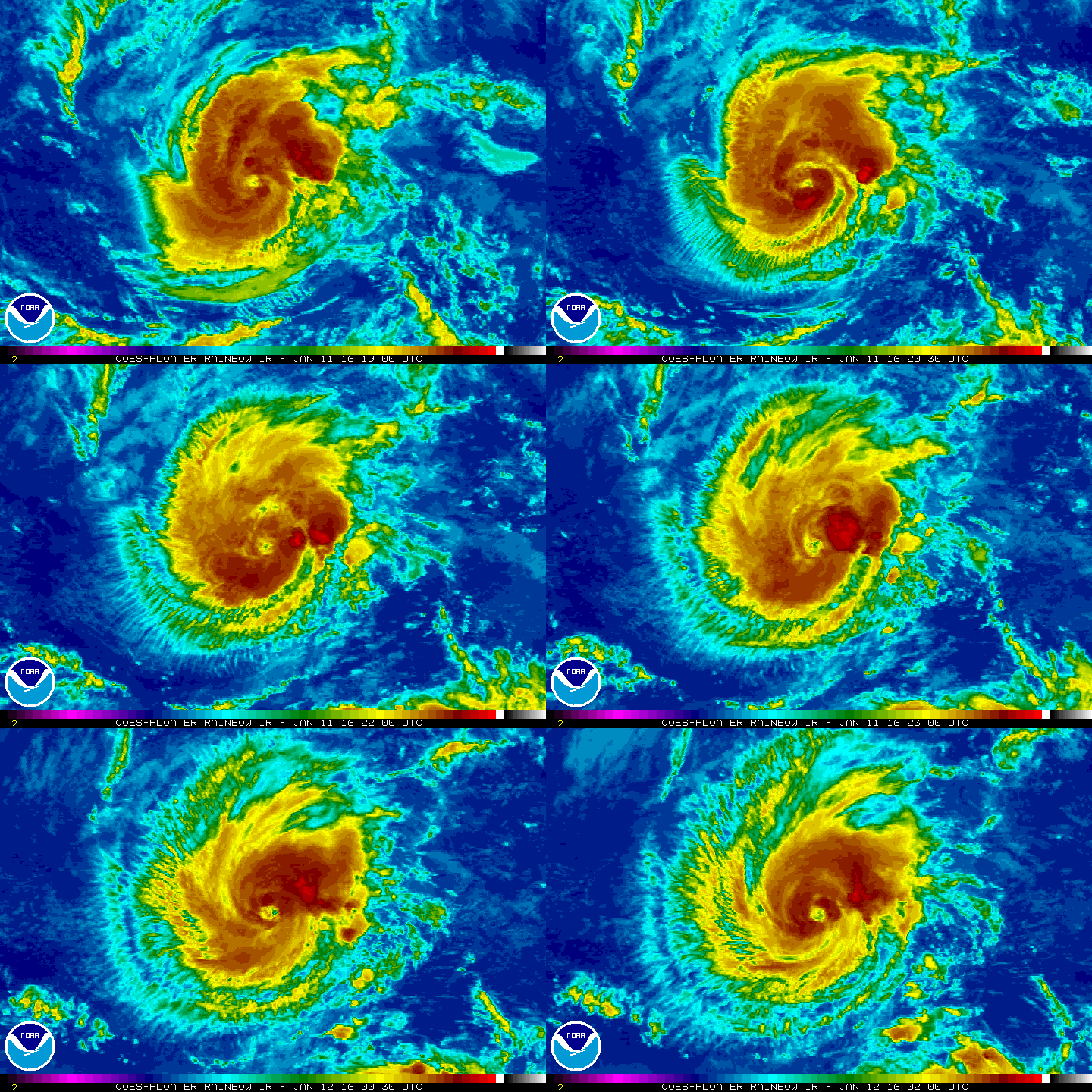
Hurricane Pali is in an area of warm water with little shear more than 1,300 miles southwest of Honolulu.
4/4
Swipe or click to see more
CENTRAL PACIFIC HURRICANE CENTER
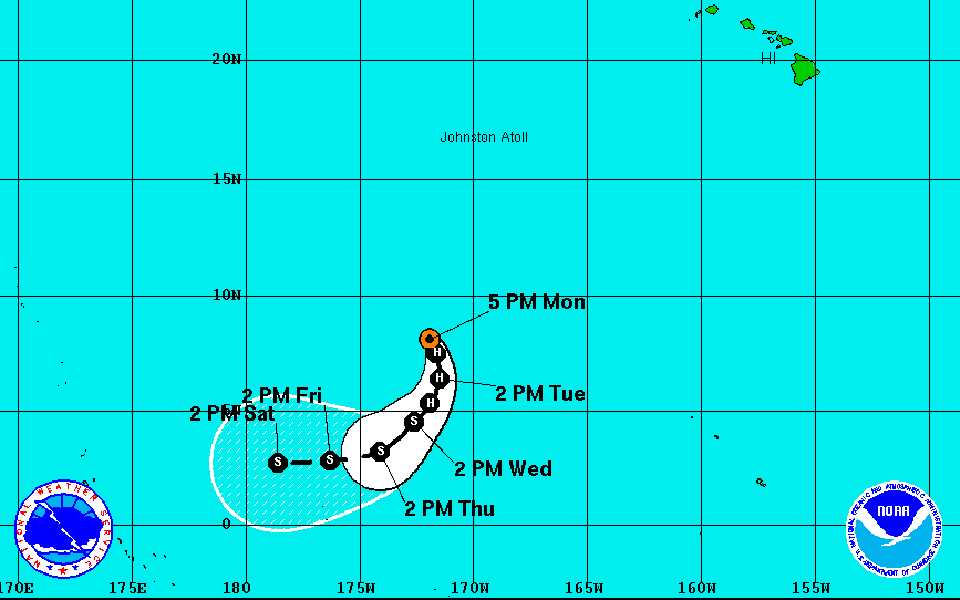
Pali became the earliest hurricane on record in Central Pacific today.
Pali intensified into a category 1 hurricane today with sustained winds of 85 mph, far southwest of Hawaii.
The storm is the earliest hurricane on record in the Central Pacific.
Surf generated by Pali when it was a tropical storm brought 3- to 5-foot surf to the south shores of Oahu today. The swell is expected to decline to 2 to 4 feet tonight, but could continue for several days at small to moderate heights.
The storm is too far away to bring more than surf to Hawaii.
At 5 p.m., Pali was moving east-southeast at 6 mph, about 1,305 miles southwest of Honolulu and 615 miles south-southwest of Johnston Island.
Satellite images show Pali’s eye becoming better defined, and the storm is expected to maintain its strength tonight before beginning to weaken Tuesday.
Don’t miss out on what’s happening!
Stay in touch with breaking news, as it happens, conveniently in your email inbox. It’s FREE!
Hurrricane Pali remains in an area with warm ocean waters, due to El Nino.
Hurricane Ekaka is the only other January hurricane on record since 1949. It formed as a tropical depression on Jan. 28, 1992 and became a hurricane on Jan. 29.
Pali is already the earliest tropical storm to form in the Central Pacific and one of only three tropical cyclones to form in January.
It follows a record-breaking hurricane season that saw 15 tropical cyclones enter the Central Pacific. Hurricane season officially ended on Nov. 30 and the 2016 hurricane season is not scheduled to officially begin until June 1.
The increased number of tropical cyclones has been attributed to El Nino, a period of unusually warm Pacific waters.